Vaidyanath Jyotirlinga: Where Shiva became the Divine Healer

RIYA SHARMA
HRDYAM - DISCOVER SACRED JOURNEYS, WISDOM & WELLNESS
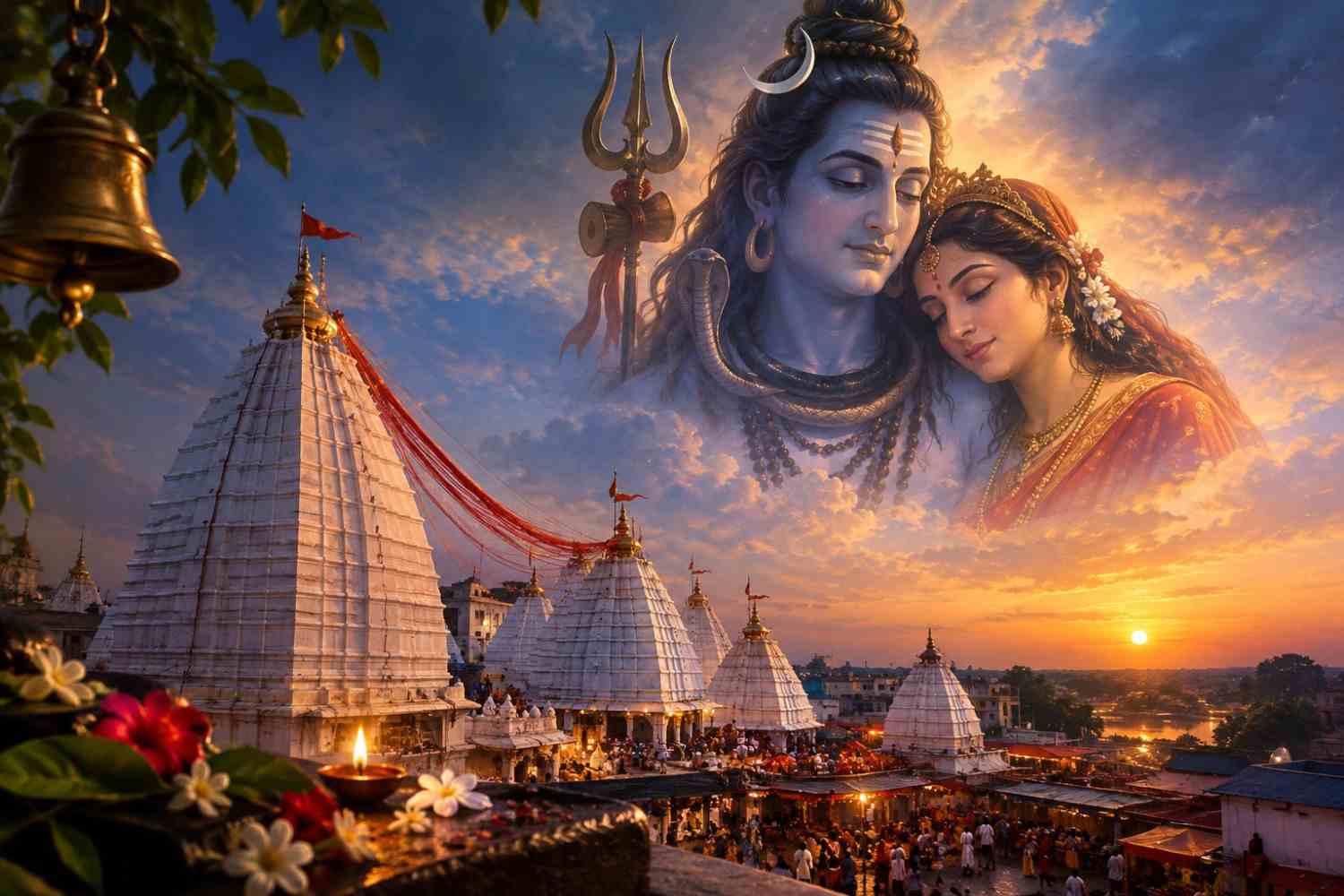
While there are several Shiva temples associated with mountains and rivers, others have a rich legend behind them. The legend of Vaidyanath Jyotirlinga, or Baba Baidyanath Dham, relates the temple to its association with Lord Shiva as a healer. Situated in Deoghar, Jharkhand, the temple is among the twelve Jyotirlingas of Lord Shiva and exists within the larger temple complex of 22 temples.
The legend of Vaidyanath is strongly associated with the ardent devotion of Ravana towards Shiva. Legend has it that while Ravana tried to take the Jyotirlinga to Lanka, Lord Shiva gave him certain conditions, which in turn resulted in the presence of the lingam in Deoghar. This temple thereby has a strong link to one of the most devoted servants of Lord Shiva.
However, this temple does not simply belong to an old story or myth. Each year, particularly during Shravan, pilgrims visit this temple as part of a holy journey. Kanwariyas carry the water of the Ganga collected from Sultanganj to Deoghar, covering around 105-109 kilometers.
| Feature | Details |
|---|---|
| Temple | Baba Baidyanath Temple / Vaidyanath Jyotirlinga |
| Location | Deoghar, Jharkhand |
| Deity | Lord Shiva as Vaidyanath |
| Jyotirlinga | One of the 12 revered Jyotirlingas |
| Temple complex | 22 temples |
| Main temple height | Around 72 feet |
| Major pilgrimage | Shravani Mela / Kanwar Yatra |
| Kanwar route | Sultanganj to Deoghar |
| Sacred water | Ganga water carried from Sultanganj |
| Associated Shakti tradition | Deoghar is also identified with a Shakti Peetha |
| Major festivals | Shravan, Maha Shivaratri, Basant Panchami, Bhadra Purnima |
Where is Vaidyanath Jyotirlinga located?
Baba Baidyanath temple is situated in Deoghar, which happens to be a part of Jharkhand, a city that got its name from the very fact that it was an abode for many deities. It forms an important part of the Deoghar pilgrimage area and is also popularly known as Baba Dham or Baidyanath Dham.
It should be noted that while most Jyotirlingas have metropolitan cities surrounding them, the Vaidyanath Jyotirlinga has made the pilgrimage unique because of the presence of a town temple. The streets around the temple see increased activity during the pilgrimage season, while the whole of Deoghar offers religious places along with many hills and ashrams, among others.
The significance of the temple's location comes into play during Shravan, when Deoghar becomes the destination of the long Kanwar Yatra that starts at Sultanganj in Bihar and involves bringing the Ganga Jal for offering to the Jyotirlinga at the end of the pilgrimage.
Why is Vaidyanath known as the divine healer?
Vaidyanath is a name that is linked to Shiva in terms of him being a healer or physician. The spiritual significance associated with the identity of Vaidyanath pertains to the aspect of restoration and healing associated with the Jyotirlinga.
The healing concept can be seen in a more spiritual context, considering the mythology associated with the temple. Devotion of Ravana, along with his suffering and Shiva's intervention, becomes an important aspect in the tale where the Lord comes as both a powerful God and a healer who restores the broken things. It can be seen in the conventional name of Vaidyanath.
The concept of healing is also related to the personal prayers that devotees offer to Baba Baidyanath. The pilgrimage does not involve seeing a Jyotirlinga alone; rather, it involves offering one's sufferings, wishes, and desires to Shiva.
What is the story of Ravana and the Vaidyanath Jyotirlinga?
The most popular of all the legends about Baidyanath has its origin from the story involving Ravana, who was the king of Lanka and a devoted follower of Shiva. While searching for the presence of Shiva in Lanka, it is said that he had practiced rigorous penance and even offered his heads as a mark of respect towards the lord.
However, there was one condition for that-Ravana could take the Jyotirlinga anywhere he liked, but he would not be able to place it on the ground in his journey because once he did so, the linga would get fixed at the same spot forever.
On his way, Ravana stopped somewhere and gave the Jyotirlinga to the boy he saw there. As per the legend, it was none other than Lord Vishnu who came in that form. The boy placed the linga on the ground, and when Ravana arrived at that spot, he could no longer move the linga from its place and, in rage, he pressed his thumb on it.

How did Baba Vaidyanath Temple develop?
The current Baba Vaidyanath temple is a stone-made temple facing east, standing at a height of 72 feet and having a pyramidal tower. The temple complex is much bigger than just this main temple, and contains 22 temples of various gods. In this way, there is a compact sacred space in which Shiva, Parvati, and other deities are being worshiped in one temple complex.
The most significant thing about the main temple is its appearance: stone-made and having a rather high shikhara. The three golden pots are on top, as well as the Panchsula, which is a five-pronged trident, and the Chandrakanta Mani, an eight-petalled jewel in the shape of a lotus flower.
There is something really special about this temple complex due to the presence of other temples. Not only does it contain the Baba Baidyanath temple, but also shrines for Maa Parvati, Maa Kali, Maa Gayatri, Kaal Bhairav, Lakshminarayan, and some other gods.
Why is the Parvati Temple important at Vaidyanath Dham?
One of the unique characteristics of Deoghar is the proximity of Baba Baidyanath and Maa Parvati, who have their shrines in the same sacred complex. This has been highlighted in the official history of the district of Deoghar, in which the Jyotirlinga and Shakti Peetha have been mentioned to be present side by side at the same location.
Both shrines share a unique bond as they are linked with a sacred red thread, symbolizing the bond between Lord Shiva and Shakti. What makes the symbolism even more unique is the presence of both masculine and feminine aspects of the divine in the same pilgrimage site.
It is thus not only a site of worship associated with the Jyotirlinga but also a meeting point of the two streams of Hinduism.
What makes the Shravani Mela at Vaidyanath so extraordinary?
The peak time when devotion is shown at Baidyanath Dham is Shravan. In Shravan, devotees called Kanwariyas bring Ganga water from Sultanganj and make their way to Deoghar by shouldering the water. As per the District Administration, the distance between Sultanganj and Deoghar is approximately 109 km, and the devotees walk the path chanting ‘Bol Bam’.
It becomes an entirely different experience for the entire region. Devotees in saffron robes march along the path with their own kanwars and walk towards Baba Dham. After reaching Deoghar, they bathe in Shivaganga and enter the temple, offering Ganga waterto the Jyotirlinga.
The magnitude of the event is immense. According to various official estimates, between 50 lakh and over a crore devotees participate in the month-long Shravani Mela each year, making it one of the largest religious gatherings in the world.
Why do Kanwariyas begin the journey at Sultanganj?
The reason why Sultanganj holds significance is that the flow of the Ganges here is towards the north, and traditionally, devotees collect the water here to begin their journey to Baba Baidyanath. This water is kept untouched till it is offered to the Jyotirlinga.
The pilgrimage becomes a journey of offering water to the temple. By walking for over 100 kilometres, the ritual of offering gets transformed into a journey of devotion and self-discipline.
That’s why the route from Sultanganj to Deoghar has been an integral part of the Baidyanath Dham pilgrims’ experience. Even though the destination is the temple, it is a journey through which they get to the temple.
What rituals and timings are followed at Baba Vaidyanath Temple?
Baba Baidyanath Temple adheres to the pattern of worship throughout the day, where the temple is normally considered open in the morning and evening. Incredible India at the moment mentions timings of the temple from 4:00 AM to 2:00 PM and 6:00 PM to 8:00 PM. Timings of the temple may vary during festivals and special days, so it is recommended to check out the up-to-date timings prior to visiting.
| Period | Temple Timing |
|---|---|
| Morning | 4:00 AM-2:00 PM |
| Evening | 6:00 PM-8:00 PM |
The mood of rituals is especially powerful during the month of Shravan, when the main offering is performed in the form of the Ganga water, which is transported by the Kanwariyas to the temple. The offering is related to the main process of worshiping Jyotirlinga.
Another significant day for Baba Baidyanath is Maha Shivaratri. The temple operates all year round, but the atmosphere on Shiva-related holidays is different.
What can you explore around Deoghar?
Touring Baba Baidyanath can be linked with various other destinations in Deoghar. One of them can be Naulakha Mandir. This temple is famous for housing the idols of Radha and Krishna and also offers a very different setting from the crowded environment of Baba Dham.
Trikut Pahar gives a completely different perspective about Deoghar. The site has trekking trails, viewing points, and a ropeway. The whole surroundings become greener during monsoons. Incredible India mentions that the ropeway operates from 9:00 AM to 4:30 PM. However, the condition of the destination needs to be checked before making plans to tour the same.
Tapovan, Nandan Pahar, Satsang Ashram, and Rikhiapeeth are other tourist destinations that have been associated with Deoghar.
Important places around Deoghar
| Place | Why Visit |
|---|---|
| Baba Baidyanath Temple | Main Jyotirlinga shrine |
| Maa Parvati Temple | Associated Shakti shrine within the sacred complex |
| Naulakha Mandir | Temple dedicated to Radha and Krishna |
| Trikut Pahar | Hill landscape, trekking and ropeway |
| Tapovan | Spiritual and natural attraction |
| Nandan Pahar | Recreational and scenic destination |
| Satsang Ashram | Important spiritual institution |
| Rikhiapeeth | Yoga and spiritual centre |
What changed around Vaidyanath Dham?
The 2026 Shravani Mela featured a high emphasis on pilgrimage management. The Deoghar administration came up with arrangements that included infrastructure, sanitization, health, transport, security, and crowd management for the massive yearly event.
Among the developments was an AI-based Integrated Mela Control Room, deployed by the Deoghar district administration for Shravani Mela 2026. The system used AI-enabled cameras, drones, facial recognition, automatic number plate recognition and a chatbot for devotee assistance, alongside traditional crowd-management measures.
The temple complex had also been prepared for the festival of 2026. The district administration had come up with arrangements for the decoration with flowers and electric lighting of the 22-temple complex, among other arrangements, including mist-cooling systems at some pilgrim-management centers.
How can you reach Vaidyanath Jyotirlinga?
There is very good air, rail, and road connectivity to Deoghar. The most convenient air route is provided by Deoghar Airport. However, according to the district administration, the three railway routes of Deoghar Junction, Baidyanathdham Junction, and Jasidih Junction are also present.
If pilgrims use railways for their visit to Deoghar, then Jasidih Junction plays a crucial role as it offers good rail connectivity to the area. Visitors may further travel to the temple using the available public transport.
The road connectivity of Deoghar includes the connection with major cities of Jharkhand, Bihar, and other surrounding states. However, pilgrims undertaking the complete Kanwar Yatra journey will start from Sultanganj on foot and reach Baba Baidyanath, which makes their journey much longer than a usual journey by road to Deoghar.
Why does Vaidyanath stand apart among the Jyotirlingas?

Vaidyanath is unique in that its identity is based on the ideas of healing, devotion, and pilgrimage endurance. First, the name “Vaidyanath” is associated with Shiva as the god-physician, and the legend about Ravana brings the story of devotion, divine action, and the creation of the Jyotirlinga of Deoghar.
The link between the temple and Shakti adds another dimension to the pilgrimage. The existence of the Parvati temple next to the Jyotirlinga indicates the proximity of Shiva and Shakti and makes Deoghar sacred both for the Shaiva and Shakta religions.
And finally, there is the Shravani pilgrimage. There are not many Jyotirlinga pilgrimages that involve such a long pilgrimage of devotion performed by millions of people. The pilgrimage from Ganga to Shiva becomes one of the stories of the Vaidyanath pilgrimage.
Frequently asked questions about Vaidyanath Jyotirlinga
Is Vaidyanath Jyotirlinga the same as Baba Baidyanath Dham?
Yes. Baba Baidyanath Dham in Deoghar, Jharkhand, is known as the Vaidyanath Jyotirlinga, which is one of the most famous Jyotirlingas of Lord Shiva.
What does the name 'Vaidyanath' imply regarding Shiva?
Vaidyanath, in the name, refers to the Shiva who heals and relieves the people of their sufferings.
Why is there a relation between Ravana and Baba Baidyanath?
According to the legends, Ravana had obtained the blessings of Shiva in the form of Jyotirlinga and tried to take it to Lanka. The reason for placing the lingam at Deoghar was that he placed it on the floor during his journey to Lanka.
Why do Kanwariyas carry the Ganga water to Baidyanath Dham?
The Ganga water is taken from Sultanganj to Baba Baidyanath Temple by the Kanwariyas on foot during the month of Shravan.
Baidyanath Dham is also connected with which other form of temple-Shakti Peetha?
Yes. The administration of the district of Deoghar considers this temple as being both Jyotirlinga and Shakti Peetha. The Shiva and Shakti temples stand next to each other inside the complex.
What is the ideal time for visiting Baba Baidyanath Temple?
If you wish to have pilgrim visits away from the crowds, then you can visit any other time except during Shravan. Shravan month is perfect for the Kanwar pilgrimage visit.
How can HRDYAM help you explore Vaidyanath Jyotirlinga?
Deoghar pilgrimage is not only about reaching Deoghar and coming back after darshan. The story of Baba Baidyanath starts becoming clearer when the temple, the Shravani route, Sultanganj, and other holy sites connected to Deoghar are seen as elements of one and the same journey.
With the help of HRDYAM, visitors will be able to plan their journey based on their own pace, be it an intensive Jyotirlinga trip, a wider Deoghar religious journey, or a Baidyanath pilgrimage combined with other sites in the vicinity.
For families and intergenerational tourists, planning will play an especially important role during high traffic seasons like Shravan. Time for travel, accommodation, visiting temples, moving locally, and relaxing can all be organized together instead of individually.
The idea is to create a meaningful pilgrimage to Baba Baidyanath, which at the same time would stay true to the essence of Deoghar-its Shiva in the form of Vaidyanath, the devotion of the Kanwariyas, and the pilgrimage spirit of the place.
Conclusion
While the Jyotirlinga at Vaidyanath is unique compared to others that are focused only on the architectural aspects of the temple, the most defining characteristic of the place is the notion of Shiva as the divine healer and the folklore surrounding the sanctity of Deoghar.
In addition to the relation to Shakti, the multi-shrine complex, and the unique Shravan yatra of Vaidyanath, the pilgrim also gets an opportunity to explore aspects of mythology, architecture, ritual, people's involvement, and the tradition of the long pilgrimage all at once.
But above all else, Vaidyanath teaches us that Indian pilgrimage is not always about the site, but the journey itself. Through the Ganga water brought from Sultanganj to the end offering at Baba Dham, the path to Shiva becomes a prayer itself.
Spiritual travel researcher, Vedic cultural writer, and contributing editor at HRDYAM.
You Might Also Like
Tags
More Articles
View all
Ramanathaswamy Jyotirlinga: where Rama worshipped Shiva
Rameswaram lies in the very south of India, where the land ends with an island surrounded by the sea. This place is the confluence of the stories of Lord Rama and Lord Shiva. It is one of the twelve h

Nageshwar Jyotirlinga: The Shiv temple that is known as the Protector from Poison
On the western coast of Gujarat, between Dwarka and Beyt Dwarka, there is an unusual Shiva temple. Unlike most other Jyotirlingas, the temple of Nageshwar is not surrounded by high mountains or hidden

Trimbakeshwar Jyotirlinga: Where Shiva and the Godavari meet
There are places where rivers start, and there are other places where the starting point of the river finds its significance in the holy memories of a civilisation. The Trimbakeshwar of Nashik in Maha