10 Most Powerful Temples in India to Fulfil Your Wish

RIYA SHARMA
HRDYAM - DISCOVER SACRED JOURNEYS, WISDOM & WELLNESS
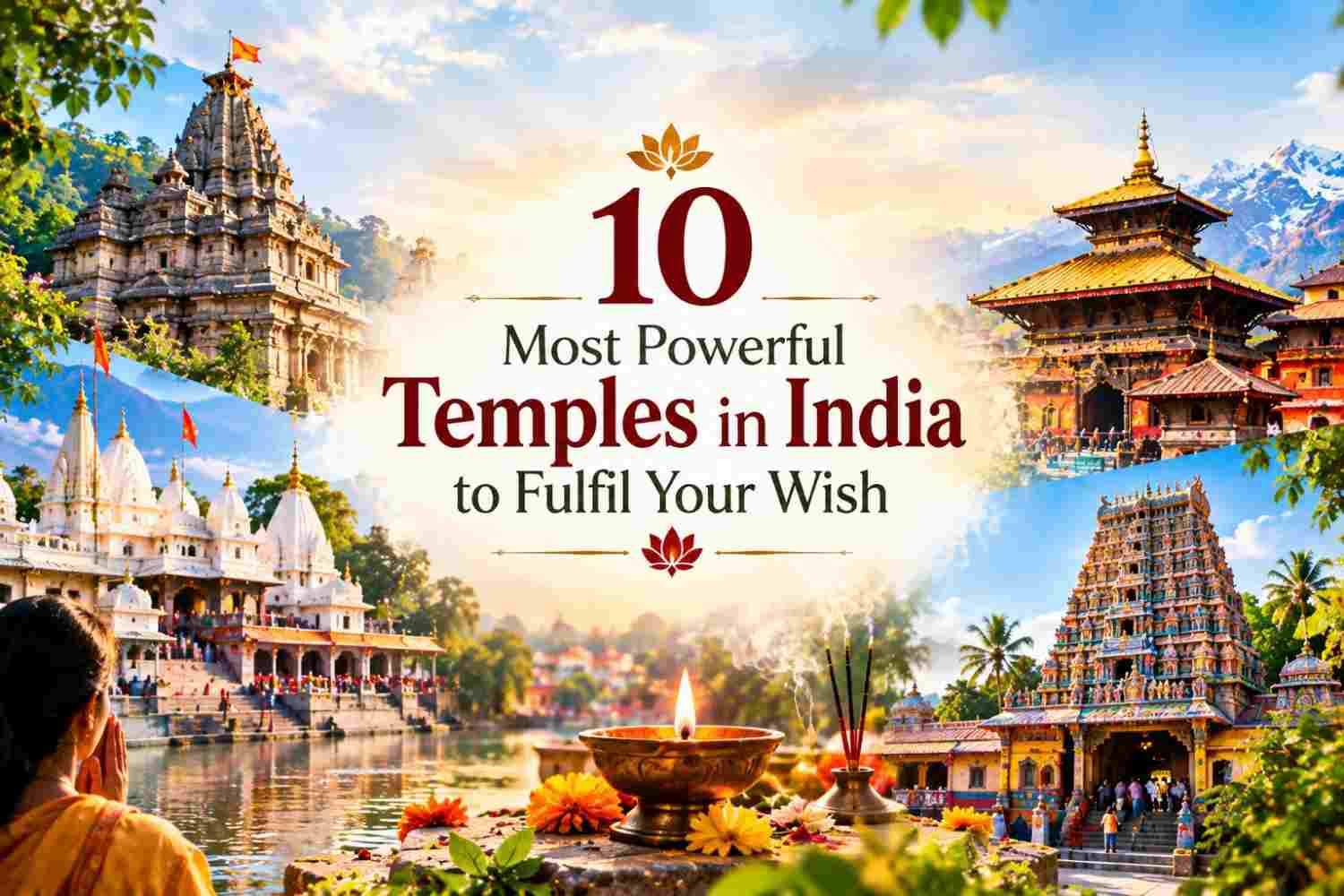
Indian temples are not just spaces for worship but are alive with faith, tradition, mythology, and community life. Devotees have come to some temples with their own private intentions for many years, in hope of a fresh start, prosperity, success at their jobs, good marriages, healthy families, protection, spiritual enlightenment, and overcoming problems.
It is important to understand that the power of the temple to "fulfil a wish" is a matter of faith and belief; it cannot be scientifically proven. The uniqueness of such temples is based on the interaction between their mythology, long-standing rituals, sacred geography, and the personal relationship of devotees to them.
Here are the top 10 most powerful and wish-fulfilling Indian temples that attract millions of pilgrims.
Why do devotees believe these temples can fulfil wishes?
Wish-fulfilling temples are mostly based on the mythological traditions of the deity associated with each temple. For instance, people may go to different temples based on their different purposes: pray to Lord Ganesha to clear obstacles, Goddess Shakti for strength and fertility, Lord Shiva for liberation, and Lord Venkateswara for prosperity and vow fulfilment.
There is something else special about the pilgrimage process. By leaving behind his or her ordinary environment and undergoing rituals and patiently waiting for darshan and declaring an intense intention, one may become more focused.
Therefore, one should not look at a pilgrimage process as a business transaction, like "I prayed and now my wish must come true". Instead, many devotees regard prayers as ways to gain clarity, courage, divine grace, and to continue striving towards wish fulfillment.
The 10 temples at a glance
| Temple | Location | Deity | Commonly associated with |
|---|---|---|---|
| Tirupati Balaji Temple | Tirupati, Andhra Pradesh | Lord Venkateswara | Prosperity, success and fulfilment of vows |
| Vaishno Devi Temple | Katra, Jammu & Kashmir | Mata Vaishno Devi | Personal wishes, protection and family well-being |
| Somnath Temple | Prabhas Patan, Gujarat | Lord Shiva | Strength, resilience and new beginnings |
| Kedarnath Temple | Uttarakhand | Lord Shiva | Spiritual transformation and inner strength |
| Kamakhya Temple | Guwahati, Assam | Goddess Kamakhya | Fertility, relationships and Shakti |
| Kashi Vishwanath Temple | Varanasi, Uttar Pradesh | Lord Shiva | Moksha, spiritual liberation and peace |
| Siddhivinayak Temple | Mumbai, Maharashtra | Lord Ganesha | Removing obstacles, career and success |
| Meenakshi Amman Temple | Madurai, Tamil Nadu | Goddess Meenakshi | Relationships, harmony and family life |
| Jagannath Temple | Puri, Odisha | Lord Jagannath | Devotion, renewal and spiritual fulfilment |
| Sai Baba Temple | Shirdi, Maharashtra | Sai Baba | Faith, guidance and hope during difficulties |
1. Why is Tirupati Balaji Temple considered powerful for wishes?
Sri Venkateswara Swamy Temple, known colloquially as the Tirupati Balaji Temple, is located at a height above the Tirumala Hills. It is dedicated to Lord Venkateswara, a representation of Lord Vishnu, and is considered among the most prominent pilgrimage sites in India.
The significance of the temple comes from the tradition of worshipping Lord Venkateswara as the protector of devotees amid the challenges of the Kali Yuga period. Devotees come to make vows for prosperity, career, family, and their own personal aspirations. The most well-known tradition is hair tonsure, where devotees renounce their ego and wealth before the god.
Another aspect related to the significance of the temple is its location on the seventh hill of the Seshachalam Hills. According to official tourism sources, Tirumala is described as the “Temple of Seven Hills,” while TTD maintains a well-developed network of darshan, sevas, accommodation, and pilgrimage services.
Most suited for: prosperity, career aspirations, major life vows, and new beginnings.
2. What makes Vaishno Devi Temple a wish-fulfilling pilgrimage?
The Mata Vaishno Devi pilgrimage is unique in that the trip is a major part of the pilgrimage process. It is located on the Trikuta Hills close to Katra, and pilgrims follow a journey covering about 12 km up from the starting point.
Mata Vaishno Devi is officially referred to as “Moonh Maangi Muradein Poori Karne Wali Mata,” which translates to “Mother who fulfils the wishes of her children.” However, the devotees do not come across any typical idol in the Holy Cave; the sacred presence is symbolized by three natural rocks named Pindies.
In this respect, the pilgrimage is all about perseverance. Getting to the shrine following a journey through the mountainous region is physically significant to the devotees in terms of their perseverance, submission, and faith.
The Shrine Board offers services to the pilgrims, including accommodation, langar, and online services, while some pilgrims can opt for helicopter transport.
Best for: Personal wishes, protection, family welfare, and prayers requiring perseverance.
3. Why is Somnath Temple associated with strength and fulfilment?
Overlooking the Arabian Sea in the state of Gujarat, the Somnath Temple is one of the twelve Jyotirlingas of Lord Shiva. The temple's legend is linked with resilience as it has faced multiple instances of destruction and rebuilding.
The current structure was restored in the Chalukyan style of architecture following India’s independence in the year 1951. This has resulted in adding another dimension to the temple, which is more than just mythology. It has now evolved into a representation of faith overcoming odds.
Devotees visiting the Somnath Temple can pray to Lord Shiva for guidance during their hardships, courage to start afresh, and to overcome challenges in life.
Its proximity to the Arabian Sea and the Prabhas Patan adds to the spiritual pilgrimage experience.
Best suited for: resilience, strength, overcoming hardships, and new beginnings.
4. Why does Kedarnath hold such a powerful place in Shiva worship?
Unlike Somnath, Kedarnath Temple finds itself in an entirely different landscape. Kedarnath is found within the Garhwal Himalayan range, which rises to 3,580 metres, and is set against an awesome backdrop of mountains and the Mandakini River.
Kedarnath is one of the twelve Jyotirlingas and one of the four places that make up Chhota Char Dham of Uttarakhand. It is said in the legend that the Pandavas had sought Lord Shiva after the Mahabharata war. At this point, Shiva took the form of a bull and went underground, with his hump forming at Kedarnath.
Therefore, Kedarnath has come to mean much more than wish fulfilment to most pilgrims. The hard journey is part of the discipline, whereas prayers are done for forgiveness and spiritual transformation.
Kedarnath Temple is very seasonal; hence, it is advised that pilgrims do well to look up information concerning travel to Kedarnath prior to the journey.
Most suitable for: spiritual transformation, inner strength, forgiveness, and getting rid of burdens.
5. What makes Kamakhya Temple important for powerful wishes?
The Kamakhya Temple can be found on the Nilachal Hill in Guwahati and is one of the most significant pilgrimage centers dedicated to the worship of Shakti in India. What distinguishes the temple from the rest is that the shrine here does not have an idol; instead, there is a stone figure, symbolizing the feminine creative power of the goddess.
Kamakhya is known to be closely connected with the Shakta and Tantric traditions. It is especially popular among people for its connection to fertility, motherhood, relationships, and Shakti as creative energy.
The most famous ceremony that takes place in Kamakhya is the Ambubachi Mela.
Moreover, Kamakhya itself is surrounded by temples of the Dashamahavidyas, giving it a special role in the Shakta tradition.
Thus, when visiting this place, instead of seeing it as just another “wish temple,” it is essential to understand its symbolism and meaning as feminine energy, creation, and the cyclical process of life.
Best suited for: fertility, relationships, feminine energy, family aspirations, and Shakti traditions.
6. Why do devotees visit Kashi Vishwanath for liberation?
Kashi Vishwanath Temple at Varanasi is one of the oldest temples of Shiva in India. Located on the western side of the river Ganga, this is one of the twelve Jyotirlingas and is devoted to Vishwanatha- the God of the Universe.
Thus, the nature of wishes in the case of Kashi is slightly different from that in the case of prosperity-oriented pilgrimage sites. In many cases, people arrive here in search of moksha and spiritual peace. The sacred geography of Kashi-temple, Ganga, ghats, cremation grounds, and countless shrines-creates a bigger spiritual space for the temple.
It should be noted that the Kashi Vishwanath temple is very modern and convenient for the pilgrims. For example, its official website offers such facilities as Sugam Darshan, Aarti booking, Rudrabhishek booking, and live Darshan.
All the above-mentioned facts make the Kashi Vishwanath temple one of the best pilgrimage spots in India.
Suitable for: moksha, spiritual peace, transformation, and prayers about the purpose of life.
7. Why is Siddhivinayak Temple linked with success and removing obstacles?
Siddhivinayak Temple is located in the neighborhood of Prabhadevi, and it is considered to be one of the most popular Ganesha temples in the nation. Lord Ganesha is worshiped at the onset of all significant events, as it is considered that he removes all obstacles and signifies wisdom.
This makes Siddhivinayak very famous among those people who want to begin something really big in their lives, like opening a new enterprise, taking examinations, commencing a professional life, and making a start of a new phase in their lives.
Since the name of this temple signifies Siddhi, which means achievement, it makes the prayers for success much more significant. According to Incredible India, the temple is well known for Ganesha's blessings on the eve of difficult ventures.
Recommended for: career, education, entrepreneurship, new beginnings, and removal of obstacles.
8. How does Meenakshi Temple connect wishes with relationships and family?
Another form of wish-based pilgrimage is represented by the Meenakshi Amman Temple, located in the city of Madurai. The temple is mainly dedicated to the Goddess Meenakshi and Lord Sundareswarar. The connection of the temple to their divine marriage makes it special for devotees who are interested in issues related to marriage, relationships, harmony, and family.
From an architectural point of view, this is one of the most important temples in India, which consists of 14 enormous gopurams and the Thousand-Pillared Hall. The sculptures, halls, and traditions of the temple are the embodiment of the religious culture of the Tamil region.
Thus, visiting the temple is a combination of praying and getting acquainted with the artistic traditions of South India.
Suitable for: marriage, relationships, harmony in the family.
9. Why is Jagannath Temple in Puri considered spiritually transformative?
Jagannath Temple in Puri is one of the most prominent pilgrimage sites of Vaishnavism in India and represents one of the Char Dham pilgrimage sites.
It is the abode of Lord Jagannath, together with his siblings, Balabhadra and Subhadra.
The significance of the temple in part comes from its unique religious practices. Once a year during the Rath Yatra festival, the holy icons leave the sanctuary and pass through the streets of Puri.
As a result, Puri is not only a temple site but rather a whole sacred system where the temple rites, dietary traditions, festivals, architecture, geographical location, and local culture come together. "Incredible India" says that the temple has been the centre of the cult of Jagannath for almost a thousand years.
As a consequence, wishes made to Jagannath may be linked with surrender, devotion, and spiritual rebirth rather than any concrete material wish.
Best for: spiritual rebirth, devotion, family prayers, and releasing oneself from worries.
10. Why does Shirdi remain a powerful destination for people seeking hope?
Unlike the other ancient deity temples, the Sai Baba temple in Shirdi represents an unusual spiritual tradition, namely the one established by Sai Baba of Shirdi, whose teachings combined devotion, compassion, faith, and service.
Historical records of Shri Saibaba Sansthan Trust confirm Sai Baba's lengthy connection to Shirdi, starting from his first visits to Shirdi until the formation of devotional traditions in honour of him.
The devotees usually come to Shirdi if they find themselves in uncertain situations or face problems. Here they seek not a particular rite for their particular wishes but rather Shraddha and Saburi.
In this way, Shirdi becomes especially important for those who seek spiritual comfort during hard times.
Best suited for: hope, patience, guidance, hard times, and peace of mind.
Which temple should you visit for a particular wish?
Temples have different customs; therefore, selecting the pilgrimage according to the nature of your intentions will help you gain more from the experience.
| Your Intention | Temple to Consider | Spiritual Association |
|---|---|---|
| Career, business or success | Siddhivinayak | Wisdom and removal of obstacles |
| Prosperity and major vows | Tirupati Balaji | Devotion, surrender and fulfilment |
| Marriage and relationships | Meenakshi Temple | Divine union and harmony |
| Fertility and Shakti | Kamakhya | Feminine creative power |
| Strength during difficulties | Somnath | Resilience and Shiva worship |
| Spiritual transformation | Kedarnath | Austerity, surrender and Shiva |
| Moksha and liberation | Kashi Vishwanath | Shiva, Ganga and moksha tradition |
| Personal wishes and protection | Vaishno Devi | Mother Goddess and perseverance |
| Spiritual renewal | Jagannath Puri | Devotion and surrender |
| Hope during difficult times | Shirdi | Faith, patience and guidance |
What is changing in India's temple pilgrimage landscape in 2026?

Temple tourism is increasingly being looked at as an integral part of India's overall tourism and heritage infrastructure. This does not mean converting temples into conventional tourist destinations; rather, there is now an increasing focus on ensuring that pilgrimages are safer, more accessible, and well-managed without losing their sanctity.
In February 2026, the Ministry of Tourism identified pilgrim-destination management under the PRASHAD scheme, including facilities like pedestrian walkways, sanitization, drinking water facilities, CCTV surveillance, waste management, fire safety, and signage. The Ministry observed that pilgrim management now increasingly includes consideration for crowd flow and carrying capacity.
This initiative has also increased in scope. A statement by the government in July 2026 revealed that tourism projects worth Rs. 5,756.62 crore had been sanctioned under various schemes, including pilgrimage infrastructure projects. Under the PRASHAD scheme, pilgrimage infrastructure was sanctioned for the town of Annavaram Temple Town and also included developmental projects related to temples in many other states.
Also, there has clearly been a trend of developing pilgrimage destinations rather than focusing on individual monuments. In September 2026, the plan was announced for larger temple complexes in Mathura and Vrindavan, following the development model seen in Ayodhya and Kashi.
These are significant because the future of pilgrimage will be determined not only by darshan but also by access, crowd control, lodging, sanitation, senior-friendly amenities, and conservation of sacred heritage.
How can HRDYAM help plan a meaningful temple pilgrimage?
An authentic temple pilgrimage does not only involve reaching the temple gates; rather, one may need to select the destination, learn about the spiritual significance of that particular temple, book transport and accommodation, schedule the darshan, plan keeping in mind senior citizens, and allocate sufficient time for the same.
Here is where the spiritual travel ecosystem of HRDYAM becomes relevant. The HRDYAM platform combines temple discovery, pilgrimage journeys, pujas, and other spiritual activities.
HRDYAM also emphasizes senior citizen pilgrimage experiences. This is very significant because the major temples in India are handling large crowds of pilgrims and visitors. Their idea is to organize spiritual travel while still preserving the essence of pilgrimage.
In this regard, HRDYAM may not only be seen as a planner of the spiritual journey but as a guide for discovering and learning about the traditions of the sacred sites, as well as planning the journey according to the needs of the pilgrim.
Spiritual travel researcher, Vedic cultural writer, and contributing editor at HRDYAM.
You Might Also Like
Tags
More Articles
View all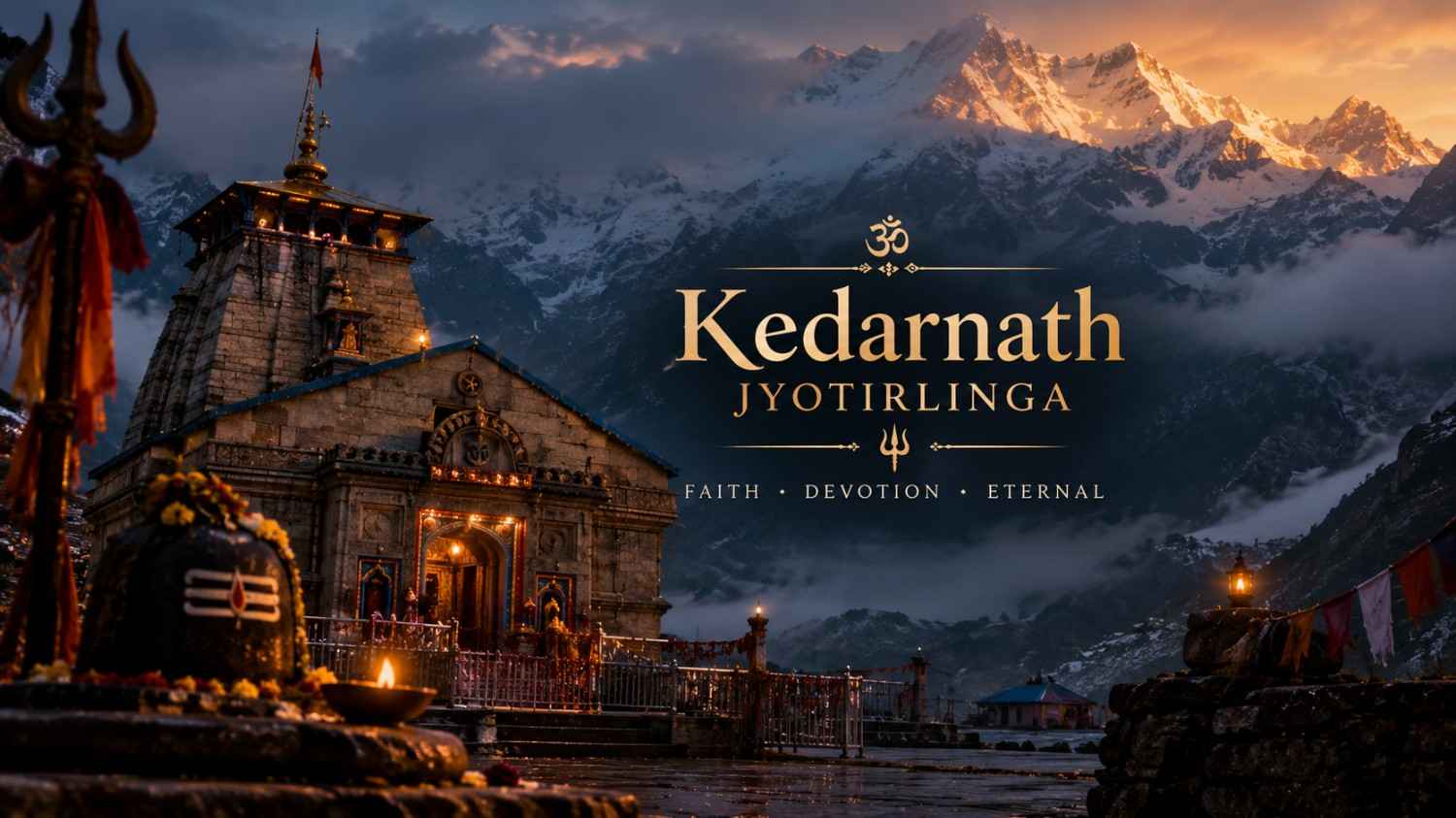
Kedarnath Jyotirlinga: Why is this Himalayan Shiva Temple so sacred?
There is one particular place on the way to Kedarnath where it seems like the scenery itself changes the pace of pilgrimage. Indeed, at Gaurikund, the road ends and the trek starts; the Mandakini Rive

Omkareshwar Jyotirlinga: Why is the Shiva Temple shaped by the Narmada?
Narmada meanders past an island which, according to tradition, takes the form of Om, the mystical sound. In the midst of this island lies Omkareshwar Jyotirlinga, and on the opposite bank is located t

Mahakaleshwar Jyotirlinga: Why is Ujjain known as the city of Mahakal?
Early morning, before dawn, while Ujjain sleeps, something strange happens inside the Mahakaleshwar Temple. The sacred lingam is roused, ceremonies begin, and the celebrated Bhasma Aarti gives the tem