Kashi Vishwanath Jyotirlinga: the city of Shiva

RIYA SHARMA
HRDYAM - DISCOVER SACRED JOURNEYS, WISDOM & WELLNESS
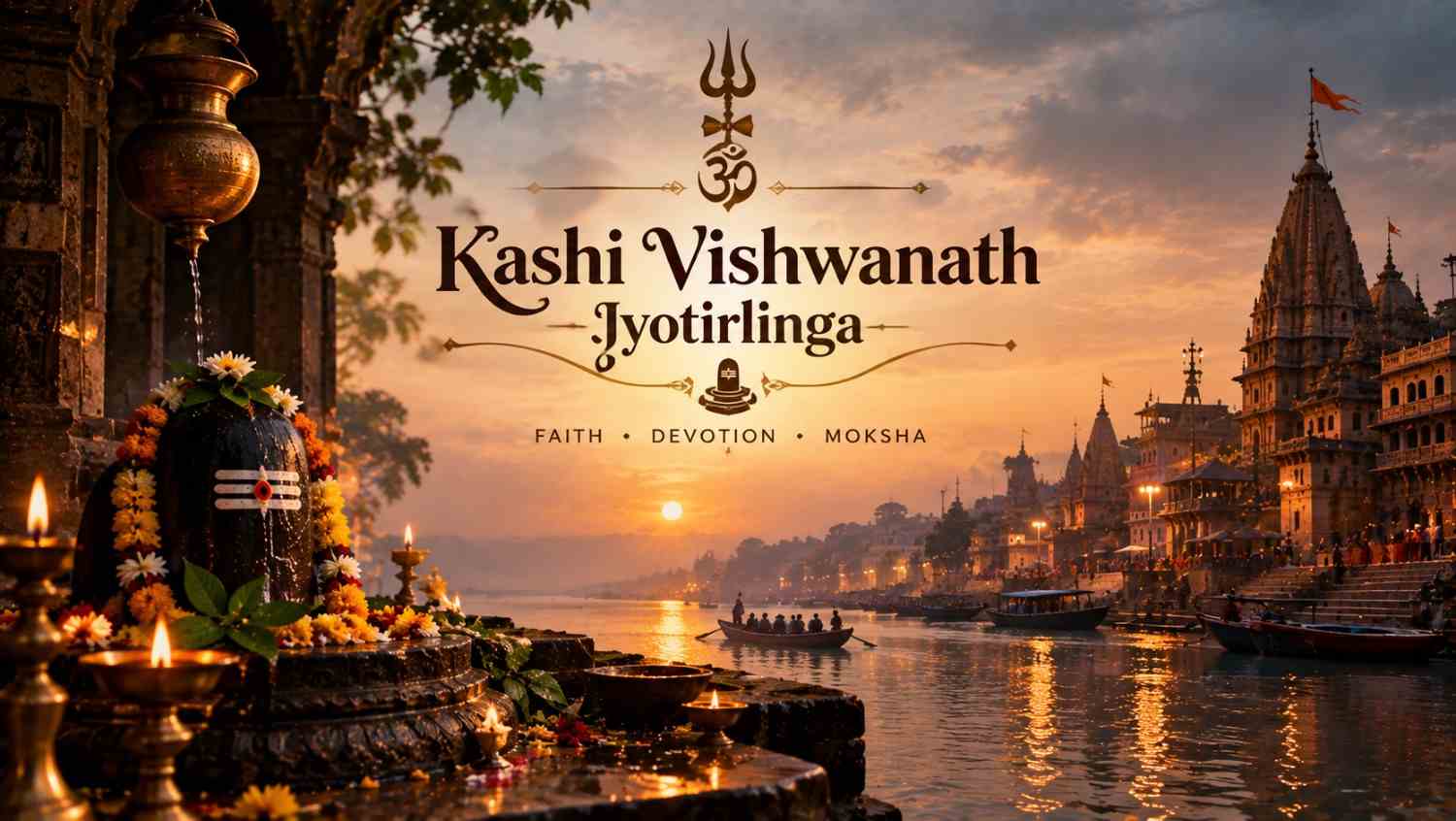
There are shrines that have a city built around them. The case of Kashi is slightly different in this regard, as the entire city seems to revolve around Shiva. Take a walk through the narrow streets of Varanasi, and you will realize how the presence of Vishwanath Temple comes alive in the temple bells, small shrines, Sanskrit prayers, the River Ganga flowing by the ghats, and people heading towards the inner parts of the city.
In the middle of all this lies Kashi Vishwanath Temple, one of the twelve Jyotirlingas of Lord Shiva. "Vishwanath" means "Lord of the Universe", whereas Kashi is the ancient name for Varanasi. This temple is situated near the river Ganga and has been one of the most significant centers of Shaiva pilgrimage in India.
But Kashi Vishwanath Temple is more than that; it is impossible to visit it without also visiting the ghats, rituals on the banks of the river Ganga, Annapurna Devi Temple, Vishalakshi Temple, Manikarnika, and Dashashwamedh. That is what makes the Kashi Vishwanath Yatra unique from the pilgrimage to many other Jyotirlingas.
| Feature | Details |
|---|---|
| Temple | Kashi Vishwanath Temple |
| Deity | Lord Shiva as Vishwanath / Vishweshwara |
| Jyotirlinga | One of the 12 Jyotirlingas |
| Location | Varanasi, Uttar Pradesh |
| River | Ganga |
| Present temple | Built in 1780 under Maharani Ahilyabai Holkar |
| Famous name | Golden Temple of Varanasi |
| Major redevelopment | Kashi Vishwanath Dham |
| Corridor inauguration | December 2021 |
| Key nearby sites | Dashashwamedh Ghat, Manikarnika Ghat, Annapurna Temple, Vishalakshi Temple |
Where is the Kashi Vishwanath Jyotirlinga located?
Kashi Vishwanath Temple is situated in the ancient city of Varanasi, Uttar Pradesh, adjacent to the western bank of the River Ganga. The locality of the temple is surrounded by narrow streets, markets, smaller temples, and other religious institutions that create an ambience which is quite contrary to the ambience of a standalone temple complex.
Being located near the banks of Ganga is a critical factor that defines the religious significance of the temple. The pilgrims generally visit the temple and then go to the ghats to take a dip in the water of Ganga and perform Ganga Aarti or other forms of prayer rituals. Official tourism material also highlights this connection between the temple, the Ganga, and Varanasi's other sacred sites.
The Kashi Vishwanath Dham has now developed a direct link between the temple and the Ganga. This is done through the ₹339-crore Ganga corridor project, inaugurated in December 2021 and covering around 5 lakh sq ft (approx. 11.5 acres) of land.
Why is the Kashi Vishwanath considered a Jyotirlinga?
The main deity of the temple is Shiva as Vishweshwara or Vishwanath, who is known as one of the twelve Jyotirlingas and worshipped as such.
According to Shaiva belief, the Jyotirlingas are manifestations of Shiva through light and can be found in various parts of India. The particular uniqueness of Kashi lies in the fact that Shiva's temple resides in the most ancient Indian holy city.
Thus, the significance of Kashi Vishwanath cannot be narrowed down only to the temple itself. Rather, for worshippers, Shiva, Kashi, and the Ganges constitute one sacred landscape, where the temple stands for Vishwanath, the city stands for Kashi, and the river adds another dimension.
What does the name Kashi Vishwanath mean?
The very name reveals the religious significance of the temple. "Kashi" is the ancient name of Varanasi, whereas Vishwanath refers to the Lord or Master of the Universe. So, the God worshipped at Vishwanath is none other than Lord Shiva, the Lord of the universe.
Kashi is an ancient center of knowledge and spirituality; it is associated with the search for spiritual knowledge and liberation. Hence, the temple portal of the official website talks about the deep association of Kashi with the quest for spiritual knowledge and liberation.
This is one of the reasons why "Kashi Vishwanath Temple" is more than just a temple. When a pilgrim travels to Vishwanath, he enters a complete sacred environment consisting of temples, ghats, rituals, Sanskrit traditions, etc.
How did Kashi Vishwanath Temple get its present form?
The history of the Kashi Vishwanath temple involves cycles of building, destruction, and reconstruction. The current temple complex was constructed in 1780 by Queen Ahilyabai Holkar of Indore, who was a great supporter of temple rebuilding in India.
The golden nature of the temple came about subsequently. In the nineteenth century, Maharaja Ranjit Singh provided gold for the domes of the temple, thus adding to the description of Kashi Vishwanath as the Golden Temple of Varanasi.
What happened to the temple complex in modern times?
The current Kashi Vishwanath Dham development has altered the physical access to the temple. Prior to the development, there was a great deal of congestion in the streets leading up to the shrine. This project has created a much bigger precinct and a direct link to the river Ganga.
In this context, the new Kashi is now a classic case in point of how pilgrimage infrastructure can impact an ancient sacred city. The issue is not just about creating a bigger space but doing so while maintaining the quality of the surrounding historical religious landscape.
What is special about Kashi Vishwanath Temple architecture?
The current Kashi Vishwanath Temple is not among the largest temple complexes in terms of physical structure in India. It is more valued due to its geographical location, history, and symbolic significance.
The temple is well known for its striking golden domes and spires that have become a recognizable feature of the skyline of Varanasi. The inner sanctum containing the Jyotirlinga continues to be the spiritual center of the temple.
Why is the Golden Temple name associated with Kashi Vishwanath?

The golden look is attributed to the gold coating on the domes and spire of the temple. According to the official tourism site, the temple's current architectural appearance results from the building undertaken by Ahilyabai Holkar in 1780, with gold later contributed by Maharaja Ranjit Singh.
In the context of the old city, the temple's architecture becomes even more intriguing. Unlike most temples that have an isolated appearance in an extensive open space, this temple lies amidst the historic milieu of Kashi, with other small temples and homes around the main pilgrimage path.
What is the connection between Kashi Vishwanath and the Ganga?
The River Ganga cannot be divorced from the spiritual geography of Kashi, since any pilgrim visiting Vishwanath also visits the Ganga because bathing, praying, and performing various rituals in the river are an integral part of the religious life of the Varanasi city.
This connection becomes particularly clear during sunrise and sunset hours, when, in the morning, pilgrims congregate at the ghats and boats pass on the river; and in the evening, the Dashashwamedh Ghat plays the main role in Ganga Aarti.
One of the best places to witness the evening Ganga Aarti is the Dashashwamedh Ghat, which is near the Kashi Vishwanath temple. Another important aspect associated with Manikarnika Ghat is that it is famous for its Hindu funeral rites and concept of liberation.
Another place that gives us a glimpse of Varanasi’s ghats and riverside is Assi Ghat, and a morning boat ride will enable tourists to understand the association between Ganga, ghats, and temples.
What are the main puja and aarti timings at Kashi Vishwanath?
The ritual schedule at Kashi Vishwanath Temple begins early in the morning hours and goes on into the night. At present, the ritual schedule of the temple is that of Mangala Aarti (3:00 AM-4:00 AM), Mid-Day Bhog Aarti (11:15 AM-12:20 PM), Saptarishi Aarti (7:00-8:15 PM), Shringar/Bhog Aarti (9:00-10:15 PM), and Shayan Aarti (10:30-11:00 PM).
General darshan can be had most of the time during the day, but for aarti you will need proper booking and entry arrangements.
Can pilgrims attend Mangala Aarti?
Yes; however, Mangala Aarti needs a proper ticket. According to the official information on booking, those who want to attend Mangala Aarti should arrive early, as entry starts at 2:30 in the morning for the ceremony, which is at 3:00-4:00 am.
| Aarti | Timing | Key significance |
|---|---|---|
| Mangala Aarti | 3:00 AM-4:00 AM | First aarti of the day; devotees can attend with a valid ticket |
| Bhog Aarti | 11:15 AM-12:20 PM | Mid-day offering of bhog to Baba Vishwanath |
| Saptarishi Aarti | 7:00 PM-8:15 PM | Evening aarti traditionally associated with the Saptarishis |
| Shringar / Bhog Aarti | 9:00 PM-10:15 PM | Evening worship and shringar of Baba Vishwanath |
| Shayan Aarti | 10:30 PM-11:00 PM | Final aarti before the temple closes |
Timings may vary depending on some festivals and eclipses.
What can you explore beyond the Kashi Vishwanath Temple?
This experience at the temple would become more enriched and meaningful by seeing the temple as the point of departure rather than arrival. The sacred space around the temple holds several other temples and ghats which reflect various aspects of the religious culture of Varanasi.
There is the temple of Annapurna, near Kashi Vishwanath, which is dedicated to Goddess Annapurna, and there is also the Vishalakshi Temple, which is another important Shakti temple in the old city. The Manikarnika Ghat takes it a step further because of the element of death involved.
For those who would want to see more beyond the temple itself, there is the option of Sarnath, Banaras Hindu University, Assi Ghat, and Ramnagar Fort, among others.
| Place | Significance |
|---|---|
| Kashi Vishwanath Temple | One of the 12 Jyotirlingas of Lord Shiva |
| Kashi Vishwanath Dham | Redeveloped temple precinct connecting the temple to the Ganga |
| Dashashwamedh Ghat | Major Ganga Aarti venue |
| Manikarnika Ghat | Important cremation ghat associated with liberation traditions |
| Annapurna Temple | Temple dedicated to Goddess Annapurna |
| Vishalakshi Temple | Important Shakti shrine in Kashi |
| Assi Ghat | Major southern Ganga ghat |
| Sarnath | Important Buddhist heritage site near Varanasi |
| New Vishwanath Temple | Shiva temple within Banaras Hindu University |
What changed around Kashi Vishwanath in 2026?
The Kashi Vishwanath Dham remains one of the top pilgrimage destinations in India. By December 2025, four years after the opening of the corridor, the total number of pilgrims visiting the site is estimated to be in excess of 26.23 crore since December 2021. (Source: Prasar Bharati/Akashvani News)
It is obvious that such huge numbers of pilgrims have brought about several challenges, which include crowd control, cleanliness, and access issues, among others. There have also been other initiatives for developing Varanasi in addition to other infrastructure and heritage development works.
How is Technology becoming part of the Kashi pilgrimage?
The temple management offers online services for Sugam Darshan, booking of aarti, Rudrabhishek, prasadam, and live darshan. The official portal even offers live footage from the sanctum for devotees who cannot visit physically.
The devotees who do not have the facilities to go to Varanasi can also ask for the prasad of the temple, which includes a Jyotirlinga picture, Mahamrityunjaya Yantra, and Rudraksha beads, to be sent to their address via the India Post Speed Post facility using e-money order.
All these innovations point towards the changing nature of pilgrimage in light of a much bigger and wider devotee community, with the ritualistic and religious experience of visiting the temple and spending time in Kashi and along the Ganges at its core.
Updated: September 2026. The visitor statistics and prasad delivery arrangements have been updated from time to time by the Shri Kashi Vishwanath Temple Trust; please verify the latest information before publication or travel.
How can you reach Kashi Vishwanath Temple?
Varanasi is well networked via flights, trains, and roads. Lal Bahadur Shastri International Airport serves the city, whereas various railway stations serve to link the city to other cities across India.
When you enter the ancient city, the last leg that will take you to Kashi Vishwanath is not similar to accessing any other temple that one reaches through a road route. The narrow lanes within the locality and the walkways will make up your journey, while the Kashi Vishwanath Dham will be responsible for linking the temple and the Ganga riverside.
Visitors tend to be more during festivals such as Shravan, Maha Shivratri, etc., so please plan for the same.
Why is Kashi Vishwanath different from other Jyotirlingas?
Kashi Vishwanath stands out because the Jyotirlinga is incorporated into a living city of pilgrimage instead of a distinct pilgrimage center. In Kedarnath, it is the Himalayas which provide the experience; in Bhimashankar, it is the jungle. In Kashi, it is the city, the Ganga and the ceaseless activity of religion.
The temple is also very closely tied up with the concept of moksha in the religious traditions of Kashi. Manikarnika, the Ganga, Vishwanath and the rituals of life and death in the city provide a spiritual environment which is unique among the Jyotirlingas.
That is why the visit to Kashi Vishwanath can never be limited to "temple tourism." The temple may be the focal point, but the pilgrimage extends beyond it to the streets, ghats, river, rituals, and legends of Varanasi.

Frequently Asked Questions about Kashi Vishwanath Jyotirlinga
Is Kashi Vishwanath one of the 12 Jyotirlingas?
Yes. Kashi Vishwanath is one of the twelve Jyotirlingas dedicated to Lord Shiva.
What does Vishwanath mean?
"Vishwanath" means "Lord of the Universe," and one of Lord Shiva's names is Vishweshwara, also known as Vishwanath.
By whom was the current Kashi Vishwanath temple built?
The current temple construction dates back to the year 1780, under Maharani Ahilyabai Holkar of Indore. The temple was later donated by Maharaja Ranjit Singh, with some gold for some portions of the temple.
What is Kashi Vishwanath Dham?
Kashi Vishwanath Dham refers to the redeveloped temple complex that links Kashi Vishwanath Temple with the Ganga River. The construction of this corridor was completed in December 2021 and spans about 5 sq feet (roughly 11.5 acres).
When is Mangala Aarti performed at Kashi Vishwanath?
According to the official timings for Kashi Vishwanath, the timings of Mangala Aarti are between 3:00 AM and 4:00 AM. An authorized ticket is needed to attend the event.
Is Ganga Aarti possible after Kashi Vishwanath darshan?
Yes, because Dashashwamedh Ghat, which is close to Kashi Vishwanath, is one of the important places where Ganga Aarti is held.
What other temples can one visit near Kashi Vishwanath Temple?
Annapurna Temple and Vishalakshi Temple are some of the prominent temples that can be found in the close vicinity. Varanasi’s entire pilgrimage itinerary may also include temples like Sankat Mochan Temple, Durga Temple, among others.
Is Kashi Vishwanath Temple open for the whole day?
Kashi Vishwanath Temple has extensive opening hours, with rituals held from early morning till late evening. The official website provides details about the timings of the rituals conducted in the temple till 11 p.m.
How can HRDYAM help you explore Kashi Vishwanath?
Apart from scheduling temple darshan, the Kashi pilgrimage has much more to do. The Kashi Vishwanath Darshan offering by HRDYAM revolves around priority entry, personalized planning, and multigenerational pilgrimage services, assisting travellers in coordinating the aspects of the Varanasi pilgrimage trip.
In the case of families with senior travellers, this is of particular importance as the Kashi pilgrim route includes temple visits, walking tours of the old town, Ganga experiences, and many more nearby holy sites. HRDYAM caters to seniors with accommodation services, assistance, and personalized itinerary planning to help the pilgrim organize the pace of the trip.
Additionally, HRDYAM provides the opportunity for a broader Varanasi-Prayagraj-Ayodhya-Mathura-Vrindavan pilgrimage tour to make Kashi Vishwanath one of the sites on the larger North India pilgrimage route rather than a separate one.
The goal here is to combine the practical and spiritual aspects of the journey-darshan, accommodation, transfers, itinerary planning, and sacred experiences.
Conclusion
The Kashi Vishwanath Temple itself does not give us an understanding of the temple's significance. A true pilgrimage starts only when the temple is seen in the context of the geography of Kashi-the river Ganges on one side of the city, ghats with many years of traditions, and the streets leading to Vishwanath.
The past of the temple has changed; it has been rebuilt, and the approach to it has undergone changes. But the core of the connection between Shiva, Kashi, and the Ganges has remained central to the pilgrimage.
This is what makes Kashi Vishwanath unique-when undertaking a journey, pilgrims do not come to visit just another Jyotirlinga, but the entire city built around Shiva.
Spiritual travel researcher, Vedic cultural writer, and contributing editor at HRDYAM.
You Might Also Like
Tags
More Articles
View all
Ramanathaswamy Jyotirlinga: where Rama worshipped Shiva
Rameswaram lies in the very south of India, where the land ends with an island surrounded by the sea. This place is the confluence of the stories of Lord Rama and Lord Shiva. It is one of the twelve h
Nageshwar Jyotirlinga: The Shiv temple that is known as the Protector from Poison
On the western coast of Gujarat, between Dwarka and Beyt Dwarka, there is an unusual Shiva temple. Unlike most other Jyotirlingas, the temple of Nageshwar is not surrounded by high mountains or hidden
Vaidyanath Jyotirlinga: Where Shiva became the Divine Healer
While there are several Shiva temples associated with mountains and rivers, others have a rich legend behind them. The legend of Vaidyanath Jyotirlinga, or Baba Baidyanath Dham, relates the temple to