Simhastha Kumbh: The sacred Kumbh Tradition across four pilgrimage cities

RIYA SHARMA
HRDYAM - DISCOVER SACRED JOURNEYS, WISDOM & WELLNESS
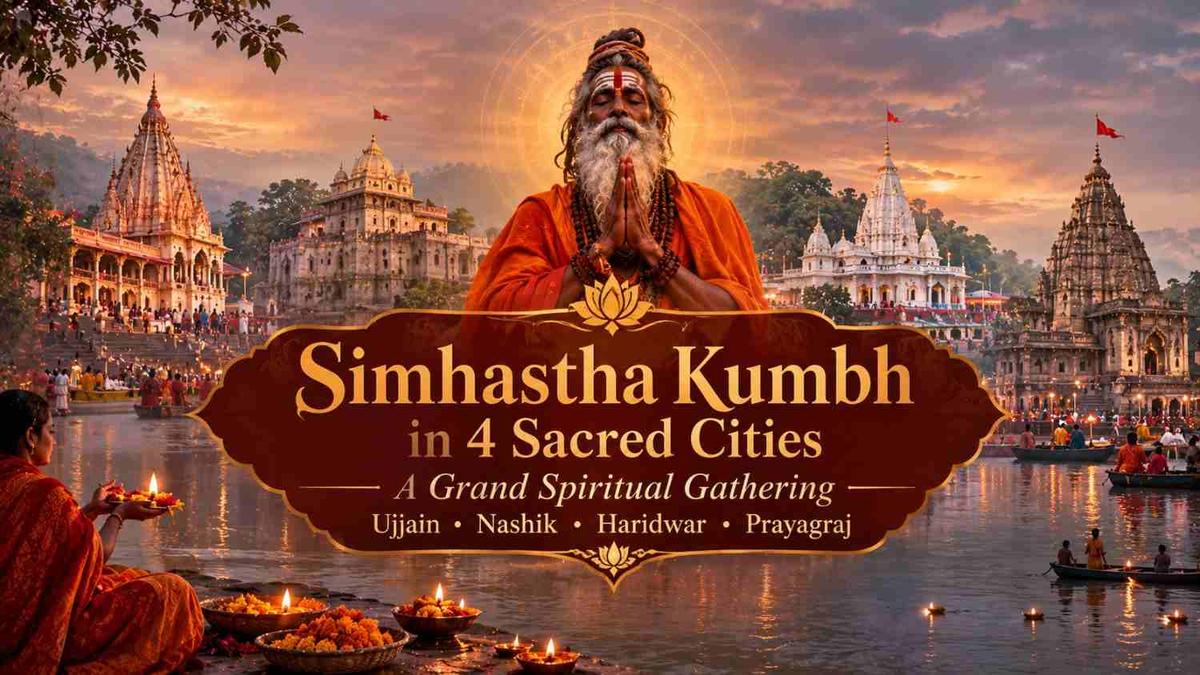
Every few years, millions of devotees embark on a spiritual journey to some of India's most holy rivers. Sadhus visit with their Akhadas, and Temple towns prepare to welcome pilgrims. The incredible gathering of people at the riverbanks is known as the Kumbh Mela.
Traditionally, the Kumbh Mela will take place in one of 4 locations. Prayagraj, Haridwar, Nashik-Trimbakeshwar, and Ujjain. Each location has a different river associated with it, along with its own religion and astrological dates. However, the term Simhasta is used specifically to refer to the Kumbh Melas in Nashik-Trimbakeshwar and Ujjain. This is because Jupiter is in Leo (Simha Rashi). Prayagraj and Haridwar have their own Kumbh Melas.
What is the story behind the Kumbh Mela?
The story of Kumbh Mela starts with the legendary Samudra Manthan (churning of the cosmic ocean) by Devas and Asuras. In Hindu mythology, the Devas and Asuras together tried to get hold of Amrit (nectar of immortality). Mandarachal mountain was used as a churning rod and the serpent Vasuki as the rope. During the process of churning, many divine treasures appeared, and finally the most valuable treasure came out, which was the Amrit Kalash.
Soon there was a fight over who should get hold of the Nectar. In one of the popular versions, Jayant (son of Devraj Indra) took the pot and ran away to save it. While running away with the pot, it was passed through various places. During this period, some of the Amrit fell in 4 different places, which are traditionally known as Haridwar, Prayagraj, Ujjain, and Nashik- Trimbakeshwar. These 4 places became the main Kumbh pilgrim sites.
This search for the elixir is traditionally believed to have happened over a period of 12 divine days (with 1 divine day = 1 human year). This is why the Kumbh takes place every 12 years. Another spiritual meaning of this tale of immortality is that humans have to overcome their internal struggles, self-control, and ignorance to find true wisdom. Just as Amrit needed to be churned from the ocean.

Why is the Kumbh Mela held at four different locations?
While there is a connection between each of the four Kumbh Mela sites due to the myth of Samudra Manthan, the actual dates are not set in unison. They are traditionally based on a particular alignment between the planets Jupiter and the Sun, and sometimes the Moon. As Jupiter takes approximately 12 years to make one full orbit around the Zodiac, the main cycle of Kumbh at each location will also be around 12 years.
Each site is unique, with its own river and religion associated with it. Haridwar is associated with the Ganga, Prayagraj with the Triveni Sangam, Ujjain with the Kshipra, and Nashik-Trimbakeshwar with the Godavari. This is not just a festival celebrated in 4 different locations, but it includes a variety of pilgrimage traditions.
It is also important to understand some terminology. Kumbh Mela is the general term used for all 4 sites. Simhastha specifically relates to the Kumbh Mela celebrated at both Nashik-Trimbakeshwar and Ujjain. This is because Jupiter is situated in Leo (Simha Rashi) during this time. The Sun will determine whether it is during a seasonal difference.
Four sacred locations of the Kumbh Mela:
| Kumbh Location | State | Sacred River | Traditional Astrological Association | Mela Tradition |
|---|---|---|---|---|
| Haridwar | Uttarakhand | Ganga | Jupiter in Aquarius and Sun in Aries | Kumbh / Ardh Kumbh |
| Prayagraj | Uttar Pradesh | Ganga, Yamuna and traditionally the invisible Saraswati | Jupiter in Aries or Taurus, with Sun and Moon in Capricorn | Kumbh / Ardh Kumbh / Maha Kumbh |
| Nashik–Trimbakeshwar | Maharashtra | Godavari | Jupiter and Sun in Leo | Simhastha Kumbh |
| Ujjain | Madhya Pradesh | Kshipra | Jupiter in Leo and Sun in Aries | Simhastha / Kumbh |
What makes each of the four Kumbh locations special?
Haridwar: Kumbh on the Banks of the Ganga
Among the most important pilgrimage sites for Hindus, Haridwar is a very popular destination. The name translates to the ‘door to Hari ’, meaning Lord Vishnu. As it is also known as ‘Gangadwara’, it is the gateway of the Ganga River. This iconic river flows down from the Himalayan region into the northern plains. Har Ki Pauri, most notably Brahmakund, is the most well-known bathing site that connects to the Kumbh tradition.
The Kumbh festival here is determined using traditional astrological methods. It occurs when Jupiter is located in the Aquarius constellation (Kumbha Rashi) and the Sun has moved into the Aries constellation (Mesha Rashi). The Ganga gives this festival a unique character, with bathing rituals, evening Ganga Aarti, prayer, and religious teachings. The Kumbh also attracts various Akhadas and spiritual masters from different traditions.
You can also visit the Mansa Devi Temple, Chandi Devi Temple, Bharat Mata Mandir, and various ashrams by the riverside. Rishikesh is close by and a key spot for anyone interested in yoga, meditation, and spirituality. The Kumbh is an incredible experience as you get to enjoy both river worship and the spiritual atmosphere of the Himalayan foothills.
Prayagraj: Kumbh at the sacred Triveni Sangam
Prayagraj (Allahabad) is known for its Triveni Sangam, the holy confluence of three rivers: Ganga, Yamuna, and the invisible river Saraswati, as per Hindu traditions. This makes it an important pilgrimage site for Hindus. It is also famous for the annual Magh Mela, which takes place at the Sangam, where devotees take a dip, perform rituals, and Kalpavas.
The Kumbh at Prayagraj is traditionally performed when Jupiter is in Aries or Taurus, and the Sun and Moon are in Capricorn. There are many bathing days throughout the year, such as Paush Purnima, Makar Sankranti, Mauni Amavasya, Basant Panchami, and Maghi Purnima. However, the dates are different each time because it is an official bathing day. In 2025, the Maha Kumbh gained international attention as millions of pilgrims travelled to the Sangam.
Kumbh at Prayagraj is very much associated with Kalpavas, which is a traditional way of living a disciplined life along the river banks. Kalpavasis live a simple life which includes bathing, praying, meditating, giving alms, and self-restraint. The Bade Hanuman Temple, Akshayavat, Patalpuri Temple, and Allahabad Fort are all places that can be visited, depending on how they are set up. For many pilgrims, the Sangam is seen as a holy place to come together.
Nashik-Trimbakeshwar: Simhastha Kumbh on the Godavari
Nashik-Trimbakeshwar in Maharashtra is another place where Simhastha Kumbh is celebrated. The event is related to Jupiter and the Sun in Leo, or Simha Rashi. The pilgrimage is done on the Godavari River, which is also called the Ganga of the South. The river has its origin near Brahmagiri according to local religious belief, following the penance of Sage Gautama and the blessings of Lord Shiva.
The most unique thing about the Simhastha at Nashik-Trimbakeshwar is that there are two places where the holy bath is performed. At Nashik, the devotees take a dip in the Ramtirth situated near Panchavati, and in Trimbakeshwar they take a dip in the Kushavarta Tirth. Traditionally, the Vaishnava Akhadas bathe in Ramtirth, and the Shaiva Akhadas bathe in Kushavarta Tirth. These two places are approx. 30 km apart from each other.
The region is also significant from a traditional Hindu perspective. The area of Panchavati is very significant as it is associated with the Ramayana. Lord Ram, Goddess Sita, and Lakshman are believed to have lived here during their exile. Trimbakeshwar is also a place of great importance as it is one of the twelve Jyotirlingas of Lord Shiva. Pilgrims visiting the area can also visit Trimbakeshwar Jyotirlinga, Panchavati, Ramkund, and other temples in Nashik after the Simhastha event.
When is the Nashik-Trimbakeshwar Simhastha?
Officially, it commenced on 31 October 2026 with the Dhwajarohan ceremony and will take place in full swing between 15 June and 30 September 2027. There will be 3 major Amrut Snans on 2 August, 31 August, and 11 September 2027 in Nashik. The last of these 3 Amrut Snans will take place at Kushavarta Tirth, Trimbakeshwar, on 12 September 2027. The official closing ceremony with Dhwajavatarana is on 24 July 2028. Check the official calendar for updates to the bathing schedule.
Ujjain: Simhastha Kumbh on the Banks of the Kshipra
Another prominent Simhastha pilgrimage site is the city of Ujjain in Madhya Pradesh. A city well known for its religious significance and association with Lord Shiva, the Kshipra River runs through the city, and it contains some of the most important holy bathing sites. One of these is the Ram Ghat. During Simhastha, the riverbank becomes a central location for ritual bathing ceremonies.
During Simhastha at Ujjain, the event takes place when Jupiter is in Leo, and the Sun enters Aries. While both Ujjain and Nashik-Trimbakeshwar have Jupiter in Leo, the different positions of the Sun create different seasons for the gathering. Ujjain has its Simhastha during the spring, whereas Nashik has theirs during the Monsoon.
The spiritual importance of Ujjain is not limited to the Kumbh. It holds the Mahakaleshwar Jyotirlinga (one of twelve) and has the popular Bhasma Aarti. Other religious sites include Harsiddhi Temple, Kal Bhairav Temple, Mangalnath Temple, Sandipani Ashram, and Jantar Mantar Observatory. Pilgrims can enjoy a taste of the holy riverbanks of the Kshipra and also enjoy the long history of Shaiva traditions in the city when visiting during Simhastha.
When is the next Ujjain Simhastha?
The next Ujjain Simhastha will be celebrated in 2028. The tentative dates have been set between 27th March to 27th May 2028. However, these dates are still uncertain. The actual bathing dates and the detailed schedule of the mela will officially be announced by the Madhya Pradesh Government. Pilgrims should not make any non-refundable travel arrangements based on tentative dates.
What is the significance of Amrit Snan during Kumbh?

The act of taking a ritual bath is at the core of the Kumbh Mela. It is believed by devotees that taking a bath in the sacred waters during astrological times will purify them and allow them to pray to the gods for their blessings. This tradition comes from the legend of the Amrit Kalash. It is believed that drops of nectar fell on the four sites, making them holy.
The main bathing days are highly important, as different akhadas and their associated saints take part in the act in an organised way. They take part in processions wearing traditional symbols, flags, and often playing religious music. This is one of the most iconic parts of the Kumbh. Many pilgrims look forward to seeing the akhadas arrive.
Historically, they have been known as Shahi Snan (royal baths). However, in recent years, the term Amrit Snan has become more common in official sources, such as the Nashik-Trimbakeshwar Simhastha.
What are Akhadas, and why are they important during Kumbh?
Akhadas are structured religious groups. These are often associated with Shaiva, Vaishnava, and other Monastic Hindu faiths. These organisations provide a centre for religious education and can be quite old, with their own system of hierarchy, initiation, and training.
During the Kumbh, these groups set up encampments and take part in religious parades and rituals. One of the most recognisable things about the event is the appearance of Naga Sadhus. These people have very distinctive appearances with ash-covered skin, wild hair, and traditional symbols. This demonstrates the variety of ascetic traditions within Hinduism.
Overall, they are a key part of the ritual organisation of the Mela. They are involved in the organisation of the main baths. They are also a way to bring together a variety of different religious streams from around the country.
How can you plan a visit to the Kumbh Mela?
When undertaking your Kumbh pilgrimage, you must plan carefully. First, identify which city you’d like to visit and which bathing spot you want. Check the official Mela website for the most recent dates and information about how to enter, transport, and any travel advice.
Book accommodation and transport in advance for the main days of bathing. There will be large crowds which can cause road closures, detours, temporary restrictions and long walks. Therefore, ensure you follow official guidelines, utilise the official bathing areas, and do not go any further than you are allowed in the river. Older individuals, those with young children and those with mobility or health issues may find less busy days easier.
Ensure you have all essentials such as medication, water and a little cash with you, have emergency contact details and an agreed meeting place if you become separated. Avoid unofficial accommodation providers and fake registration links. Visit the official Maharashtra Simhastha website for the latest information on the current calendar and travel advice for Nashik-Trimbakeshwar 2027.
Major sacred sites to visit near the Four Kumbh locations:
| Kumbh Location | Important Temples and Pilgrimage Sites | River / Bathing Site |
|---|---|---|
| Haridwar | Mansa Devi Temple, Chandi Devi Temple, Bharat Mata Mandir | Har Ki Pauri, Brahmakund |
| Prayagraj | Bade Hanuman Temple, Akshayavat, Patalpuri Temple | Triveni Sangam |
| Nashik–Trimbakeshwar | Trimbakeshwar Jyotirlinga, Kalaram Temple, Panchavati | Ramtirth, Ramkund, Kushavarta Tirth |
| Ujjain | Mahakaleshwar Jyotirlinga, Harsiddhi Temple, Kal Bhairav Temple, Mangalnath Temple | Ram Ghat, Kshipra River |
Frequently Asked Questions
Where in India does the Kumbh Mela occur?
There are four traditional sites for the Kumbh Mela: Haridwar, Prayagraj, Ujjain and Nashik-Trimbakeshwar. Each site has its own sacred river and astrological calculation.
Why is the Kumbh Mela in Nashik and Ujjain known as Simhastha?
Simhastha means that Jupiter will be in Leo (Simha Rashi), and this applies to Nashik-Trimbakeshwar and Ujjain.
Does the Simhastha Kumbh happen at all four sites?
No, Kumbh Mela is the general term for all four sites. Simhastha is specific to Ujjain and Nashik-Trimbakeshwar. Haridwar and Prayagraj have their own Kumbh traditions and astrological times.
When will the next Simhastha Kumbh happen in Nashik-Trimbakeshwar?
The main Mela will take place from 15 June 2027 until 30 September 2027. The official time of Simhastha started on 31 October 2026 with Dhwajarohan and will finish on 24 July 2028.
When will the next Simhastha Kumbh happen in Ujjain?
The next Simhastha will take place in Ujjain in 2028. It is planned to take place from 27 March 2028 to 27 May 2028. But official times should be checked with the Government.
What is the difference between Shahi Snan and Amrit Snan?
These are both the main times for ceremonial bathing. Shahi Snan is the traditional name, while Amrit Snan is becoming more popular in official announcements.
Can you visit all four Kumbh sites in one trip?
Yes! You can plan a pilgrimage to visit all four cities. The Kumbh Melas will not be held at the same time, so you can also visit the main temples, riverside, and pilgrimage sites in each city outside of the main Mela times.
How can HRDYAM help you plan a Kumbh Pilgrimage?
A Kumbh is a wonderful opportunity to explore and connect with our Indian culture and spirituality. You can see the sacred rivers, ancient temples, religious places, and teachings of our Saints. Each location will offer you something different. Depending on which river you decide to visit, you can choose between the Ganga (Haridwar), Sangam (Prayagraj), Godavari (Nashik- Trimbakeshwar), and the Kshipra (Ujjain).
HRDYAM offers planning and pilgrimage opportunities around spiritual journeys to help you discover important places and understand their culture and religion.
Plan your temple visits or discover our assisted pilgrimage services here: HRDYAM Services / Assisted Pilgrimage
Conclusion
The Kumbh Mela brings together four sacred destinations, each with its own river, traditions, and spiritual identity. While Haridwar and Prayagraj are known for their distinct Kumbh gatherings, Nashik-Trimbakeshwar and Ujjain hold a special place in the Simhastha tradition. Rooted in the story of the Amrit Kalash and shaped by centuries of religious practice, these gatherings continue to connect devotees through faith, discipline, and the shared experience of pilgrimage.
A journey through all four Kumbh cities is therefore not just a visit to four riverbanks. It is an exploration of India's living spiritual traditions and the many ways in which faith finds expression across the country.
Spiritual travel researcher, Vedic cultural writer, and contributing editor at HRDYAM.
You Might Also Like
Tags
More Articles
View all
Char Sham Yatra for senior citizens: 2027 dates, registration, cost & safety guide
Many people wish to complete the ‘Char Dham’ pilgrimage in the Garhwal region of the Indian Himalayas. The pilgrimage includes visiting 4 holy sites: Yamunotri, Gangotri, Kedarnath, and Badrinath. How
Dash Mahavidyas of Maa Shakti at Kamakhya
The Divine Mother has ten different forms of manifestation on the holy Nilachal Hill in Guwahati. These are known as the Dasha Mahavidya, and each represents a different aspect of Shakti. Some aspects

Winter in Tawang: Best time to visit & experience snowfall
Winters are a treat in Tawang. With snow-capped mountains, frozen lakes, and serene, meditative monasteries, the whole place comes alive with the magic that is associated with the Eastern Himalayas. A