Mahakaleshwar Jyotirlinga: Why is Ujjain known as the city of Mahakal?

RIYA SHARMA
HRDYAM - DISCOVER SACRED JOURNEYS, WISDOM & WELLNESS
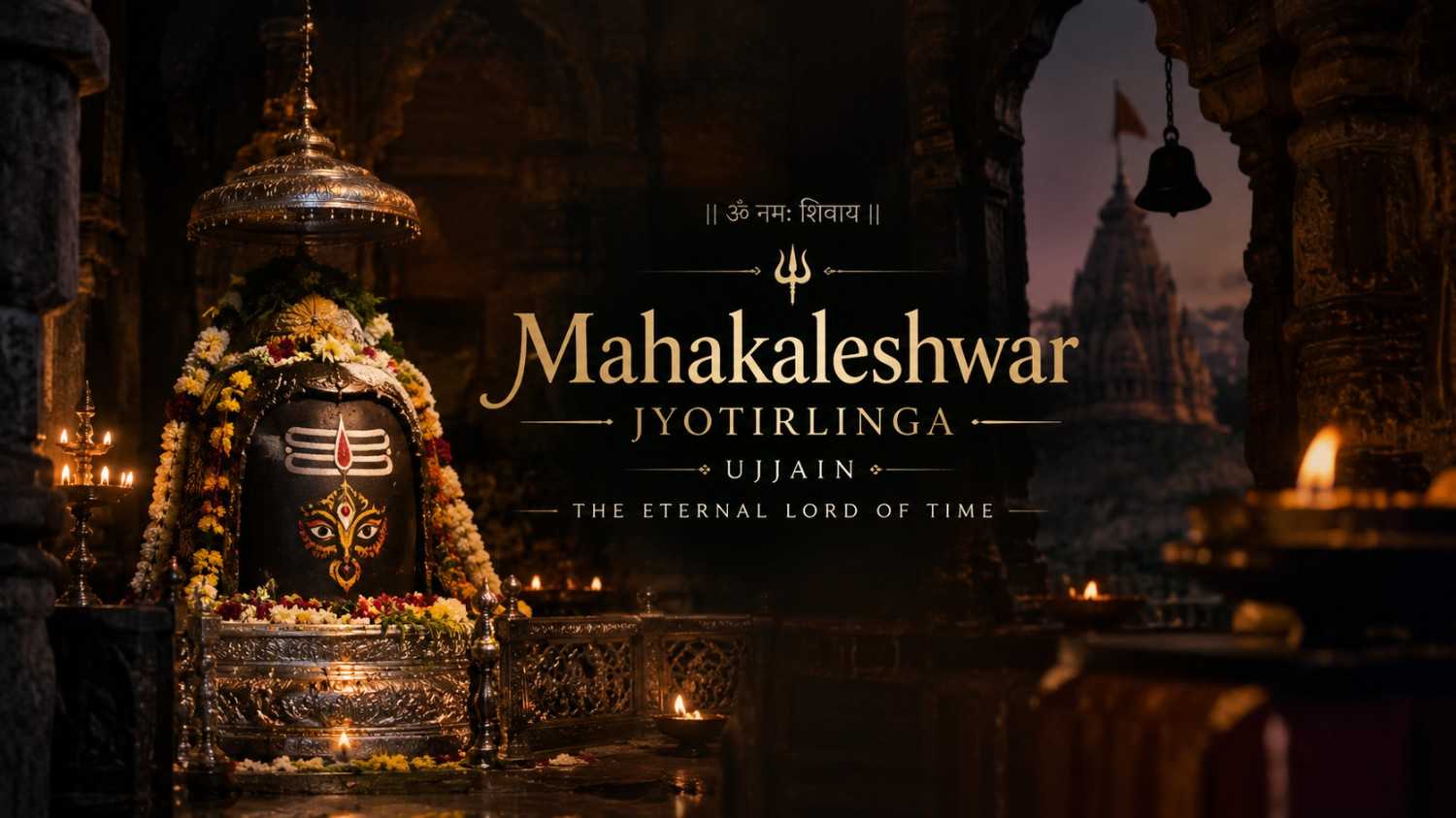
Early morning, before dawn, while Ujjain sleeps, something strange happens inside the Mahakaleshwar Temple.
The sacred lingam is roused, ceremonies begin, and the celebrated Bhasma Aarti gives the temple's atmosphere a new dimension. Outside, the city gradually wakes up on the banks of the Shipra River.
Mahakaleshwar Jyotirlinga is the name of the third of the sacred 12 Jyotirlingas of Lord Shiva and one of the most unique Shiva temples in India.
Shiva is here worshipped in the form of Mahakal-the God of Time. This temple is different because its Jyotirlinga is believed to be a swayambhu, or self-manifested, Jyotirlinga, and it faces the southern direction. It is surrounded by Ujjain, the ancient pilgrimage city.
The name “city of Mahakal” for Ujjain comes from the fact that this city houses the shrine of Mahakaleshwar Jyotirlinga, wherein Lord Shiva is venerated as Mahakal-the absolute master of time and death.
Where is Mahakaleshwar Jyotirlinga located?
Mahakaleshwar Temple is located in Ujjain, Madhya Pradesh, by the holy river Shipra.
Ujjain is not merely the city wherein the temple is located; the two have developed symbiotically throughout ages past. Mahakal is an intrinsic part of the very fabric of the city, as is the entire sacred geography of Ujjain, including its ghats, temples, and religious customs surrounding the Jyotirlinga.
The Government of Madhya Pradesh refers to Ujjain as a historic religious and cultural center, whereas Mahakaleshwar Temple stands out as a prominent landmark in the city.
Why is Mahakaleshwar called Mahakal, the Lord of Time?
While Maha means “great” and Kaal is related to time and death, Mahakal stands for Shiva, who is incarnated through the power that controls all life and death, change, and destruction.
This is also why Mahakaleshwar is unique among other Shiva temples, where the essence of the God is presented differently than in this temple. What the people of Ujjain worship here is not only Shiva as destroyer but more generally the power of time.
Time and astronomy are traditionally very important concepts in the history of Ujjain. According to the district administration, the city used to be considered a point for measuring Indian time, and the presence of Mahakal gave kaal even more significance here.
What makes Mahakaleshwar Jyotirlinga different from the other eleven?
What catches the eyes of the worshippers first is the place where the Jyotirlinga resides. The lingam of Mahakaleshwar is placed inside an underground sanctuary and is considered to be a swayambhu. Also, the lingam is considered to be Dakshinamukhi as it faces the south direction. As it is on the official site of Ujjain district, Mahakaleshwar is the only south-facing Jyotirlinga among the twelve.
The temple consists of several floors, and different forms of Shiva and other deities have their abode inside the temple complex. However, the Nagchandreshwar temple, which is situated on the top floor, has its own unique tradition when it is opened for darshan on Nag Panchami.
Thus, even though all twelve Jyotirlingas are based on the Shaiva tradition, the Mahakaleshwar has created its own unique identity.
How did Mahakaleshwar Temple survive centuries of change?
The current temple has had a longer history than the one visible now. The temple's official website gives an ancient history of the sacred Mahakaleshwar temple tradition, and the historical literature also connects the temple with the early politics and religion of Ujjain. There have been instances of demolition and rebuilding in various periods.
One significant instance was in 1235 CE, when Sultan Iltutmish attacked Ujjain and the temple was demolished. However, the sacred tradition remained the same even after the destruction of the structure.
The temple of today was built during the Maratha period in the 18th century. When the Marathas started rising in Malwa, the temple underwent reconstruction under the rule of Ranoji Shinde's Diwan Ramchandra Baba Shenvi.
In that way, Mahakaleshwar is yet another example of an Indian living pilgrim center where the sacred tradition of the site goes beyond the existence of one structure.
Why is Bhasma Aarti at Mahakaleshwar so famous?

This is followed by the ceremony that is synonymous with Ujjain. Even as the darkness of night is at its deepest, devotees come to offer the Bhasma Aarti to Mahakal.
The ceremony has traditionally involved the sacred ash and is one of the most notable examples of how Mahakal has been identified with mortality and time. The Bhasma Aarti is an age-old tradition of the temple, whereas the temple management has listed it as a daily ritual between 4:00 AM and 6:00 AM at present.
The ceremony is thus not a regular morning aarti. Instead, it brings to life the symbolism of Mahakal in the ritual, where the beginning shall have its end, and Shiva exists beyond that cycle.
For those who wish to attend the ceremony, however, prior arrangements are necessary. The official website of Mahakaleshwar Temple offers the following services:
Bhasma Aarti booking,
Sheeghra Darshan,
Sandhya Aarti,
Shayan Aarti,
Pujan/Abhishek.
What can you explore around the Mahakaleshwar Temple?
An extended Mahakaleshwar pilgrimage cannot be complete without visiting other places in Ujjain.
The Mahakal Lok passage has revolutionized the way people enter the temple complex. This passage covers over 900 meters of space and includes sculptural works, wall paintings, pillars, and landscaped spaces in the vicinity of the Rudrasagar. There are more than 108 pillars and 200 sculpted figures that turn entering the temple into a journey through Shaiva tales.
Besides Mahakal Lok, there are other pilgrim spots in Ujjain such as Ram Ghat, Harsiddhi Temple, Kal Bhairav Temple, Mangalnath Temple, and Sandipani Ashram.
This is why Ujjain differs from pilgrimages where the temple is everything.
When are the major Mahakaleshwar festivals celebrated?
Among the most significant events here is Mahashivratri, which witnesses worship throughout the night and the arrival of many pilgrims to Ujjain.
There is one more significant period, the month of Shravan. This month features the renowned Mahakal Sawari event, where the procession of Lord Mahakal passes through the streets of Ujjain till his arrival at the Shipra River at Ram Ghat.
Another unique festival is Nag Panchami, when the Nagchandreshwar temple on the third floor becomes accessible to the devotees.
For the visitors, all the festivals provide an opportunity to see everything from another perspective but also demand careful planning because of the crowds.
What is changing around Mahakaleshwar in 2026?

Mahakaleshwar's tale in 2026 will not be just about rituals but the way a historical pilgrimage town copes with modern-day tourist influx.
A key move in this direction will be a ropeway linking the Ujjain Junction railway station with the Mahakaleshwar Temple. The ropeway, according to its developers, should make the travel between the railway station and the temple area last only seven minutes and be able to transport large crowds.
Ujjain is also getting ready for Simhastha 2028-the next big Kumbh in the city. The CM said arrangements are being made for nearly 40 crore devotees, including 22 new bridges over the Kshipra and a digital command centre.
What makes all these events important? Ujjain is becoming a case study for how an ancient pilgrimage town tries to manage its heritage, religion, crowds, mobility, and digital technology.
How can you plan a Mahakaleshwar Jyotirlinga visit?
Ujjain is easily accessible due to the presence of its own rail station and connectivity by road. The nearest airport is Devi Ahilyabai Holkar Airport, which is located in Indore, at a distance of about 53 kilometers from Ujjain.
The timings for Bhasma Aarti on the official website of the temple are 4:00-6:00 AM. As there could be a change in the schedule during festivals, it would be advisable to check out the official temple website before planning a visit.
A good Ujjain pilgrimage tour will include visits to Mahakaleshwar, Mahakal Lok, Kal Bhairav, Harsiddhi, Mangalnath, and Shipra ghats, apart from Mahakaleshwar darshan.
How can HRDYAM help with a Mahakaleshwar pilgrimage?
A visit to Mahakaleshwar is not limited to the act of arriving at Ujjain and joining a queue.
The HRDYAM Madhya Pradesh Pilgrimage Platform lists the two famous Jyotirlinga shrines as Mahakaleshwar Jyotirlinga and Omkareshwar Jyotirlinga, and its Temple platform also offers information on the Ujjain Mahakal Yatra. It thus becomes possible for a pilgrim to make plans to visit both these Jyotirlingas through a single spiritual journey experience.
It certainly helps families and senior citizens plan their trip with such convenience.
Conclusion
The theme of Shiva as Mahakal becomes the essence of the entire pilgrimage in the temple Mahakaleshwar.
It manifests in the form of the underground sanctum, in the south-facing Jyotirlinga, in the pre-dawn Bhasma Aarti, in tales of protection and death, and even in the connection of Ujjain with time and astronomy.
Then comes the contribution of the city-Shipra, ancient temples, Mahakal Lok, the Simhastha practice, and a quickly growing pilgrimage infrastructure.
Perhaps this is what makes Mahakaleshwar the most fascinating site. One comes here to visit the Jyotirlinga and ends up discovering the entire city arranged on the theme of Mahakal.
Spiritual travel researcher, Vedic cultural writer, and contributing editor at HRDYAM.
You Might Also Like
Tags
More Articles
View all
Kedarnath Jyotirlinga: Why is this Himalayan Shiva Temple so sacred?
There is one particular place on the way to Kedarnath where it seems like the scenery itself changes the pace of pilgrimage. Indeed, at Gaurikund, the road ends and the trek starts; the Mandakini Rive

Omkareshwar Jyotirlinga: Why is the Shiva Temple shaped by the Narmada?
Narmada meanders past an island which, according to tradition, takes the form of Om, the mystical sound. In the midst of this island lies Omkareshwar Jyotirlinga, and on the opposite bank is located t

Mallikarjuna Jyotirlinga: Why is Srisailam so sacred to Shiva and Shakti
As you travel through the lush Nallamala Hills and through the twists and turns of the roads that lead you deeper and deeper into one of the most ancient sacred sites in southern India, Srisailam come