HRDYAM: reimagining India's sacred journeys

RIYA SHARMA
HRDYAM - DISCOVER SACRED JOURNEYS, WISDOM & WELLNESS
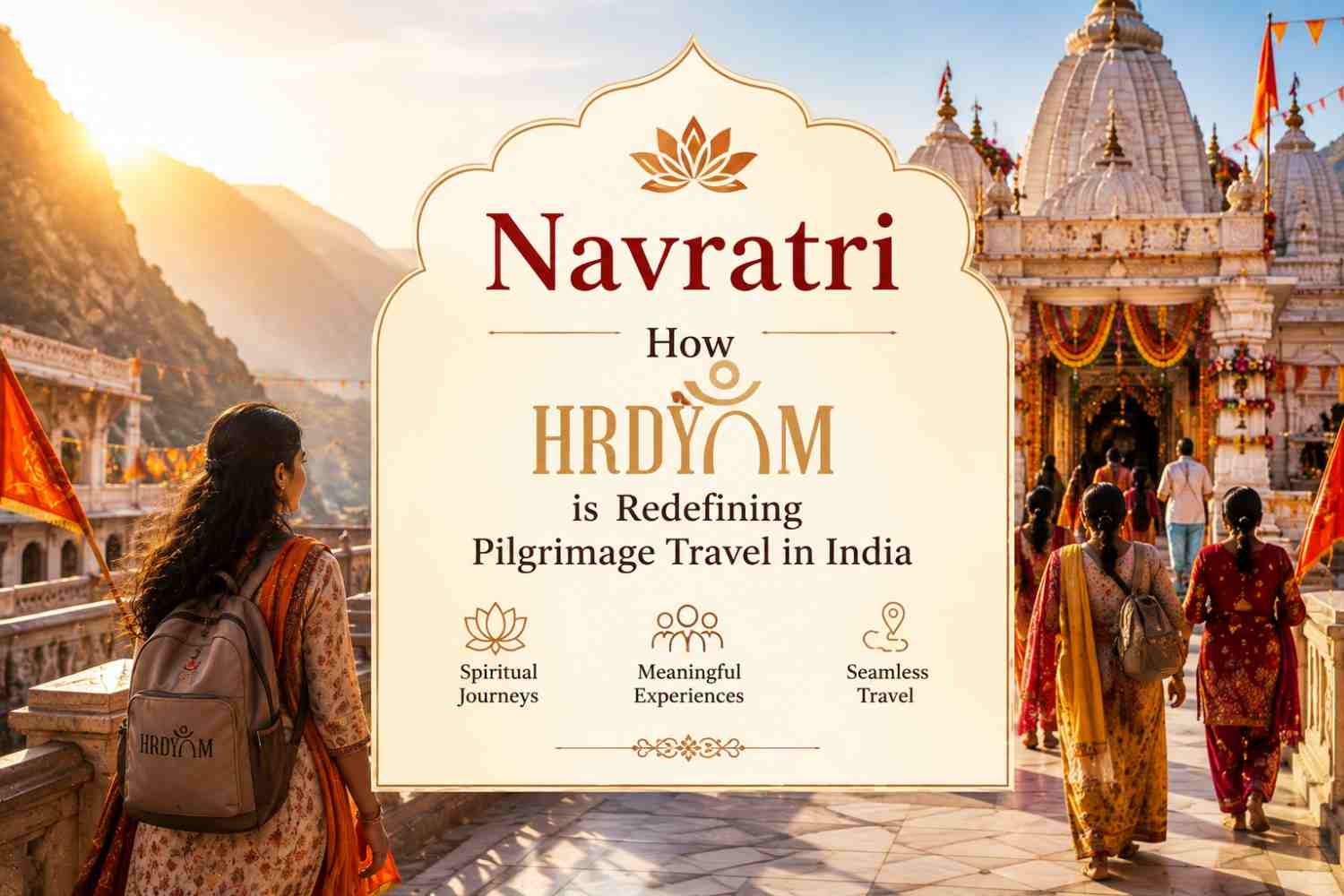
There was a time when the journey to any destination was as simple as that: we were off to Kashi, or we were heading to Ayodhya or Kedarnath. What followed next would be left to faith and whatever route could be taken.
For many decades, this uncertainty was just one of the elements of the pilgrimage journey. Queueing up, getting on an unknown path, finding a place to stay, making travel arrangements, and coping with the chaos of temple towns was just part of getting there.
But the India of pilgrimage tourism is changing now.
The pilgrim might be travelling with his or her aged parents, with limited mobility or a working schedule, living thousands of kilometers away from the destination. The thirst for darshan is eternal, but the way it gets attained changes.
And here is where HRDYAM comes into play. Not to transform the pilgrimage journey into regular tourism, but to ask another question:
How can the journey to the sacred become as carefully organized as the destination itself?
What happens when India's sacred map starts moving with the times?
India has never been bereft of sacred places. From the ghats of Varanasi, the temples of Tamil Nadu, to the Shakti Peeths of the northeast and the Himalayan dhamas, pilgrimage has always been an essential part of its geography.
The change lies in the infrastructure and the scale of these trips.
The PRASHAD program of the Government of India has become increasingly focused on the development of pilgrimage destinations in terms of enhanced accessibility, hygiene, safety, pedestrian walkways, lighting, CCTV surveillance, water facilities, and other visitor amenities. As per the Ministry of Tourism report published in February 2026, seven projects have been sanctioned under PRASHAD during 2025, taking into account carrying capacity and crowd flow in project planning.
The point is evident: pilgrimage is no longer just seen as a religious trip. The experience of the pilgrim is becoming an integral part of destination planning.
And here lies an opportunity for a different kind of travel platform.
What if the journey began with the pilgrim, not the destination?
Consider two pilgrims reaching the city of Varanasi.
Both would like to receive darshan, and both would wish to see the Ganga, but one of them has come alone, while the other is coming with his or her aged parents, who need comfortable transportation and planned timings.
Their destination is the same. Their journey must not be the same.
It is one of the basic principles that HRDYAM follows, wherein a personalized approach can be taken in organizing a pilgrim’s trip.
| Traditional pilgrimage approach | HRDYAM-style approach |
|---|---|
| Destination-first | Traveller-first |
| One itinerary for many | Curated experiences |
| Travel and darshan arranged separately | Journey planned as one experience |
| Limited assistance | Assisted and guided options |
| Sightseeing-focused | Spiritual and cultural context |
| Pilgrimage as a trip | Pilgrimage as an experience |
Current products of HRDYAM reflect this philosophy through journey curation, senior travel assistance, VIP darshan, spiritual guides, and pilgrimage packages of various levels.
Can technology find its place on a sacred path?
Technology has transformed the way Indians plan air tickets, hotel bookings, and vacations. Nevertheless, the practice of pilgrimage continues to remain piecemeal-one website for transport, another for accommodation, another for temple, and maybe a local contact for everything else.
HRDYAM endeavours to integrate all these disparate elements by means of an AI-enabled platform for spiritual travels and wellness, offering pilgrim tours along with wellness, Vedic astrology, puja services, and spiritual products.
While the application of technology in this context does not involve digitization of devotion per se, what it tries to achieve is to reduce some of the friction surrounding it.
It enables the pilgrim to ask the right questions from his/her soul instead of being preoccupied with mundane queries like: Where do I stay? How do I get to the temple? And what is going to happen next?
What if privileged darshan meant more than skipping a queue?
VIP Darshan often seems to be a case of privilege for the sake of privilege. There is, however, another aspect to assisted entry.
A senior traveler, someone who finds it difficult to move around, or even a family on a strict schedule would struggle to navigate the crowded space of a pilgrim destination. It could save their energy for what really matters-darshan.
HRDYAM provides for assisted pilgrimages within its travel system.
When did comfort become part of the pilgrimage itself?
Comfort used to be seen as a distinct issue from pilgrimage, as if discomfort was intrinsically a part of making a pilgrimage.
However, think about an old couple making their way to a shrine in the Himalayas. Comfortable lodging, safe transportation, sufficient rest, and help do not mean that the devotees lack sincerity.
In some cases, they enable them to make a pilgrimage that would have otherwise been out of the question.
This issue is getting increasingly relevant. Senior citizens from Uttarakhand approached the state government in August 2026 and asked them to take better care of transportation, healthcare, safety, and elderly-friendly facilities for pilgrimages (according to The Times of India's article).
So, we can see the topic changing from "how many pilgrims can we attract?" to "how will we take care of the pilgrims who came?"
This is an important development that pilgrimage platforms cannot afford to overlook.
What if every yatra had a story worth carrying home?

A temple could be explored in 20 minutes. However, understanding the significance of that temple could be a much longer process.
What makes Kashi the city of Shiva? What makes Kamakhya unique within Shakti worship? What calls to mind the presence of Rama in Ayodhya? What makes the Mahakaleshwar of Ujjain unique compared to yet another Jyotirlinga? Such questions turn sightseeing into cultural learning.
HRDYAM focuses on providing spiritual tours instead of merely transporting tourists from one place to another. The company offers trips like Ram Rajya & Bhakti Yatra in Ayodhya, Divine Ujjain Spiritual Tour, Kamakhya, and Varanasi's Ganga and Jyotirlinga.
It means that the travel schedule itself can tell a story. You do not just get to that sacred site; you learn the history behind it.
Can India's sacred roads shape its next travel economy?
There is something more happening along the way.
Investments in accommodations and infrastructure at India's pilgrim locations have begun to increase. The Economic Times in September 2026 mentioned the huge potential of the hospitality sector at the major pilgrim destinations of Ayodhya, Varanasi, Tirupati and Shirdi, mentioning the lack of good-quality branded hotels despite a huge demand among pilgrims.
On the other hand, according to The Indian Express, states are trying out spiritual circuits. A "Spiritual Triangle" involving Ayodhya, Prayagraj and Varanasi has been launched by the state of Uttar Pradesh, and has been partially inspired by the experience gained from the Maha Kumbh.
This indicates that pilgrimage tourism is moving up the ladder as a facet of tourism in India.
HRDYAM thus has an important niche here: linking the logistics of tourism with the spirituality of pilgrimage.
What brings a family of generations onto the same sacred road?
But perhaps the most significant change is not technological but generational.
In fact, a pilgrimage can unite the grandmother who has long wanted to visit a temple, her children who will plan the whole trip, and the grandchildren having their first visit to the sacred location. The pilgrimage process itself becomes the link between generations.
As HRDYAM concentrates on assisted senior travel and experience planning, it can easily find its place in the changing concept of pilgrimage because yatra becomes not just an individual experience but also a family one.
When a child listens to a story told by a grandparent and learns the meaning of a certain temple being in that exact spot, heritage turns into a real-life experience.
What changes when meaning becomes the heart of the journey?
This is maybe where the wider philosophy of HRDYAM starts taking shape.
There are many aspects to a pilgrimage: transportation, accommodation, darshan, food, local culture, mythology, wellness, contemplation, and community. None of them need to overshadow the spiritual intention. On the contrary, they can be used to support it.
The pilgrim does not have to spend the whole trip trying to solve logistical issues.
They need to have room for observing, listening, praying, contemplating, and experiencing.
This is what pilgrimage being logistics versus pilgrimage being experience comes down to.
When India's sacred journeys meet their new companion-HRDYAM
At the crossroads of spirituality, technology, and conscious travel, HRDYAM is carving out its niche for itself.
The HRDYAM platform combines pilgrimages, well-being retreats, Vedic astrology, pujas, and spiritual goods with its travel packages, including Kashi, Ayodhya, Ujjain, Kamakhya, and Char Dham, among others.
However, the overall concept does not just revolve around creating yet another travel portal.
What it aims to create is an ecosystem where a pilgrim can discover the destination, learn about its significance, plan the pilgrimage, get help with all that, and take back much more than photos of the journey from there.

Conclusion
Future India will be one where the roads are smarter, airports will be upgraded, bookings will be done online, pilgrimage facilities are improved, and travel technology will become more sophisticated.
But the reason why people will continue visiting these destinations will remain delightfully old-school.
There will always be someone who wants to see the dawn at Ganga. There will always be someone who wants to visit Mahakal. There will always be someone who wants to take their parents to Ayodhya.
There will always be someone who wants to climb the holy hills and hear the sound of bells at temples.
HRDYAM's potential is to help that old desire become easier to experience in modern India without stripping the pilgrimage of its sanctity in the process.
And maybe that's the true definition of pilgrimage travel: not the destination, but the journey itself.
Spiritual travel researcher, Vedic cultural writer, and contributing editor at HRDYAM.
You Might Also Like
Tags
More Articles
View all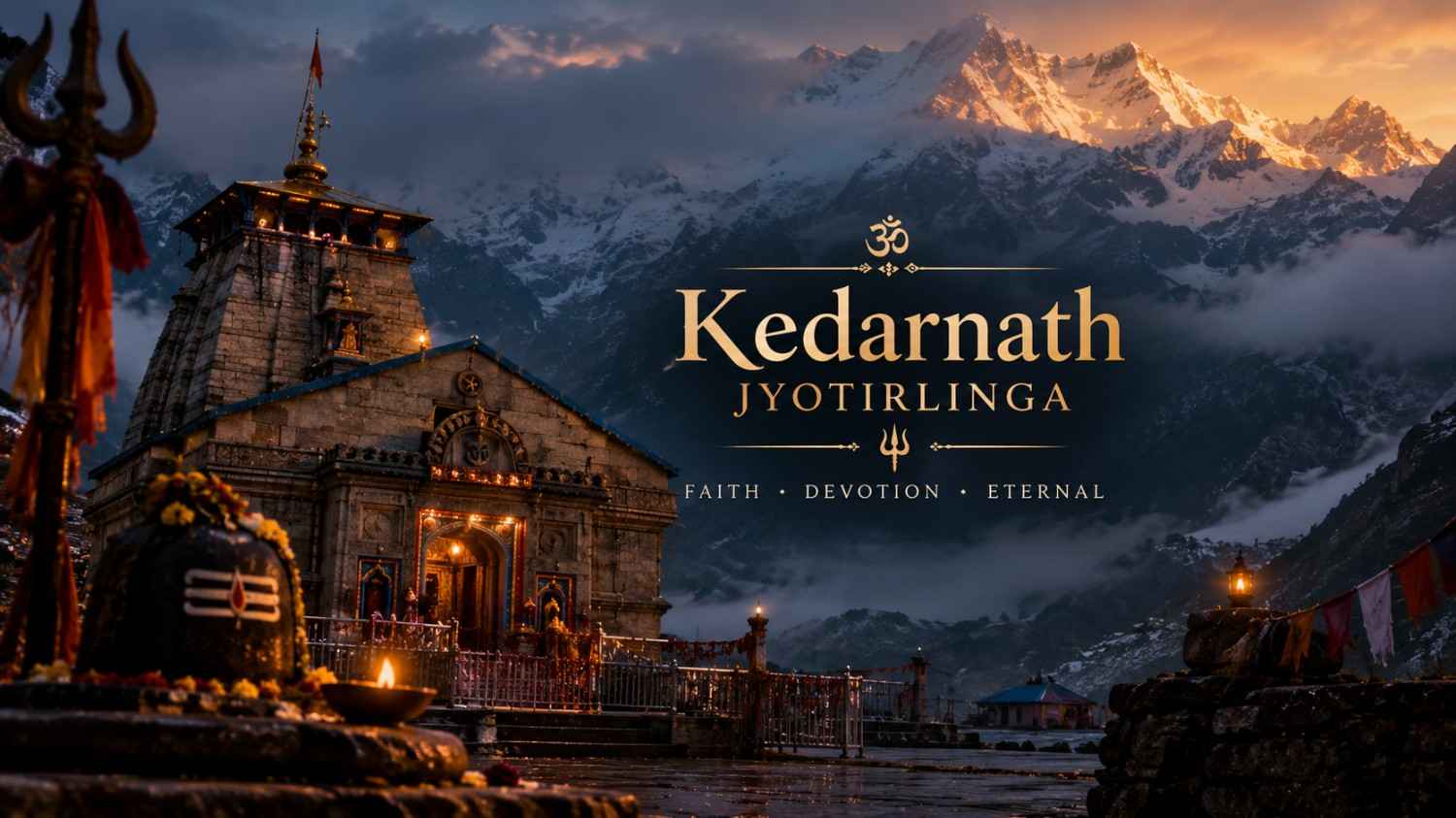
Kedarnath Jyotirlinga: Why is this Himalayan Shiva Temple so sacred?
There is one particular place on the way to Kedarnath where it seems like the scenery itself changes the pace of pilgrimage. Indeed, at Gaurikund, the road ends and the trek starts; the Mandakini Rive
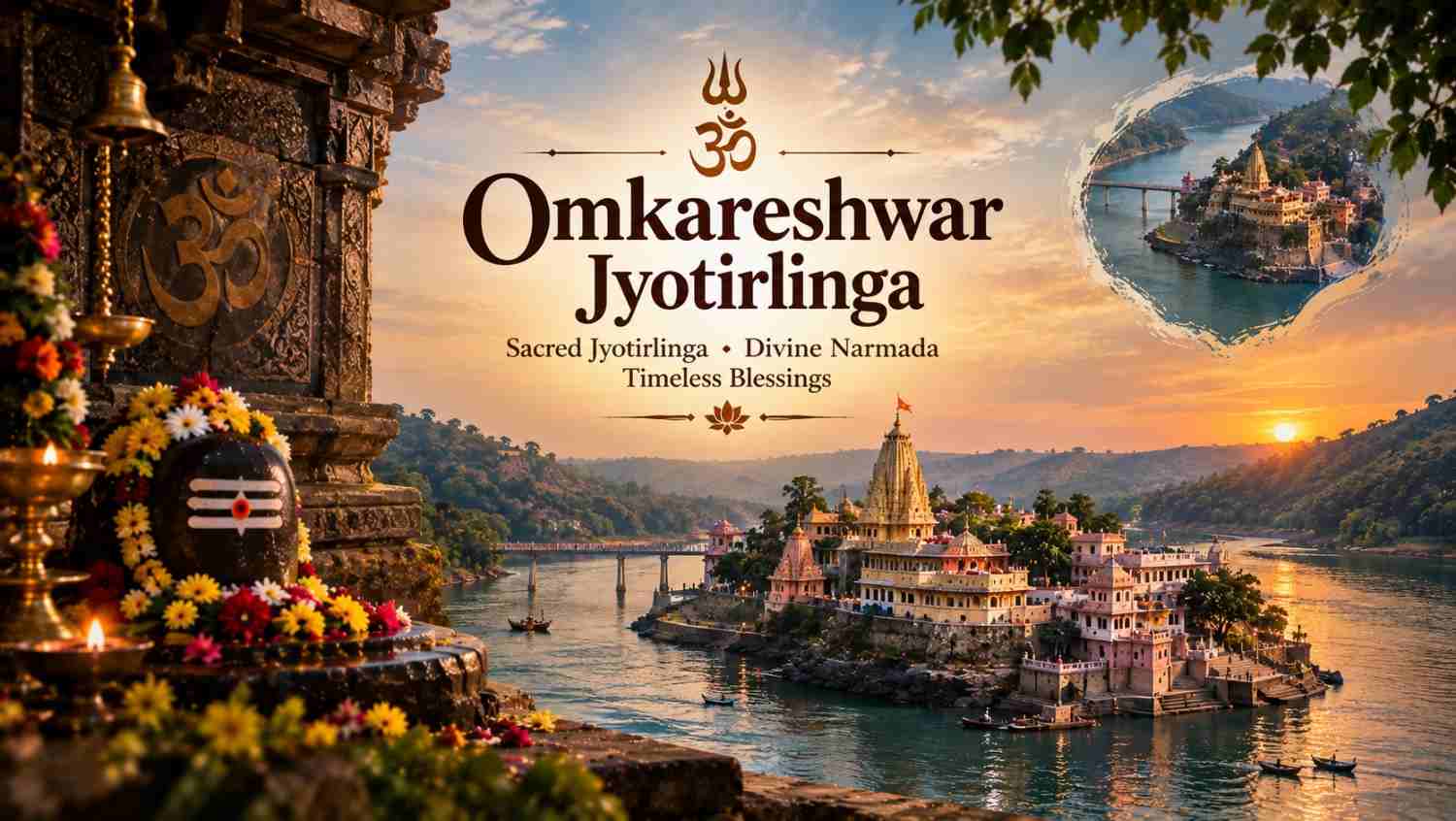
Omkareshwar Jyotirlinga: Why is the Shiva Temple shaped by the Narmada?
Narmada meanders past an island which, according to tradition, takes the form of Om, the mystical sound. In the midst of this island lies Omkareshwar Jyotirlinga, and on the opposite bank is located t
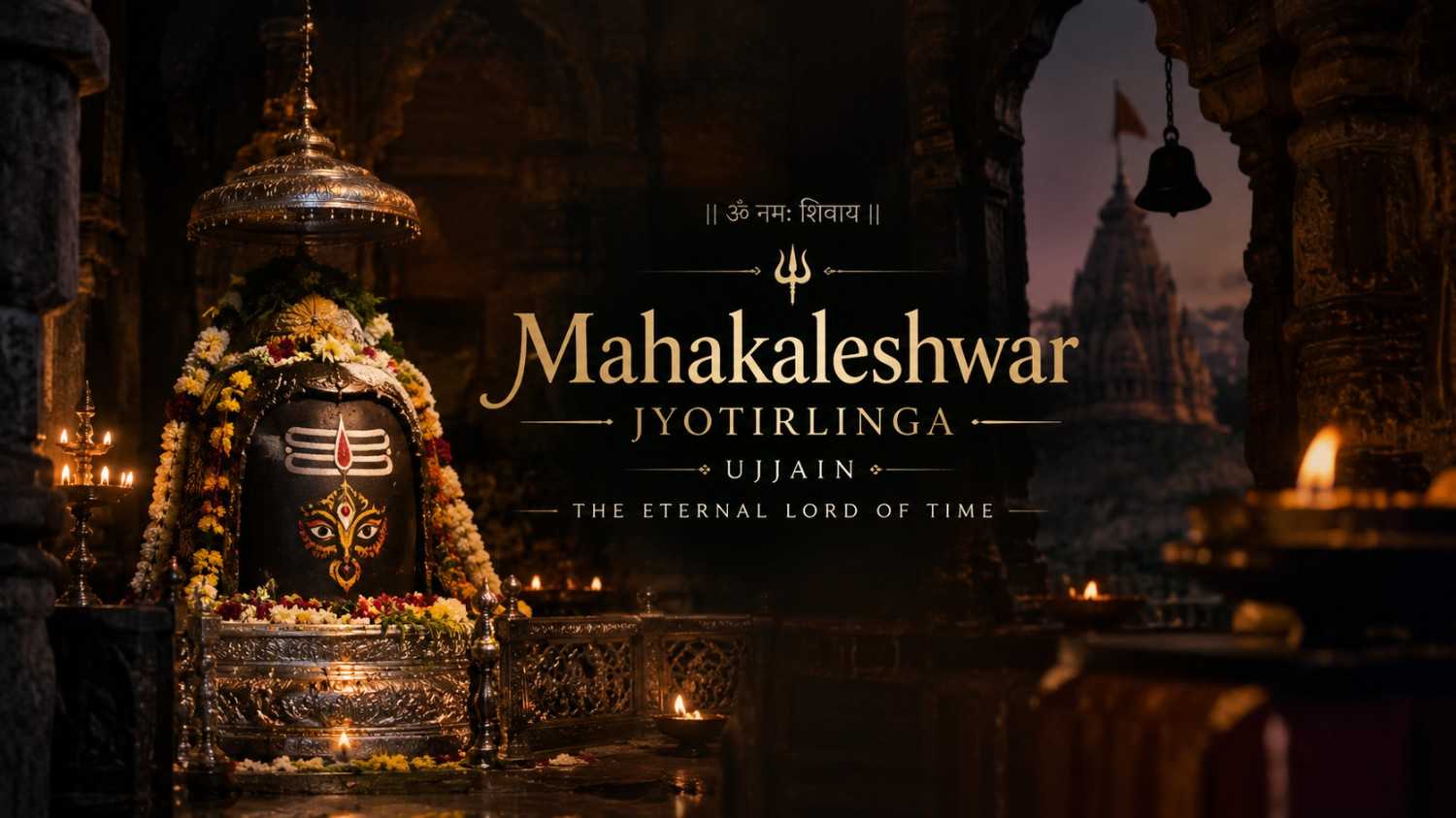
Mahakaleshwar Jyotirlinga: Why is Ujjain known as the city of Mahakal?
Early morning, before dawn, while Ujjain sleeps, something strange happens inside the Mahakaleshwar Temple. The sacred lingam is roused, ceremonies begin, and the celebrated Bhasma Aarti gives the tem