Kamakhya Temple: The complete guide to India's most powerful Shakti Peetha

RIYA SHARMA
HRDYAM - DISCOVER SACRED JOURNEYS, WISDOM & WELLNESS
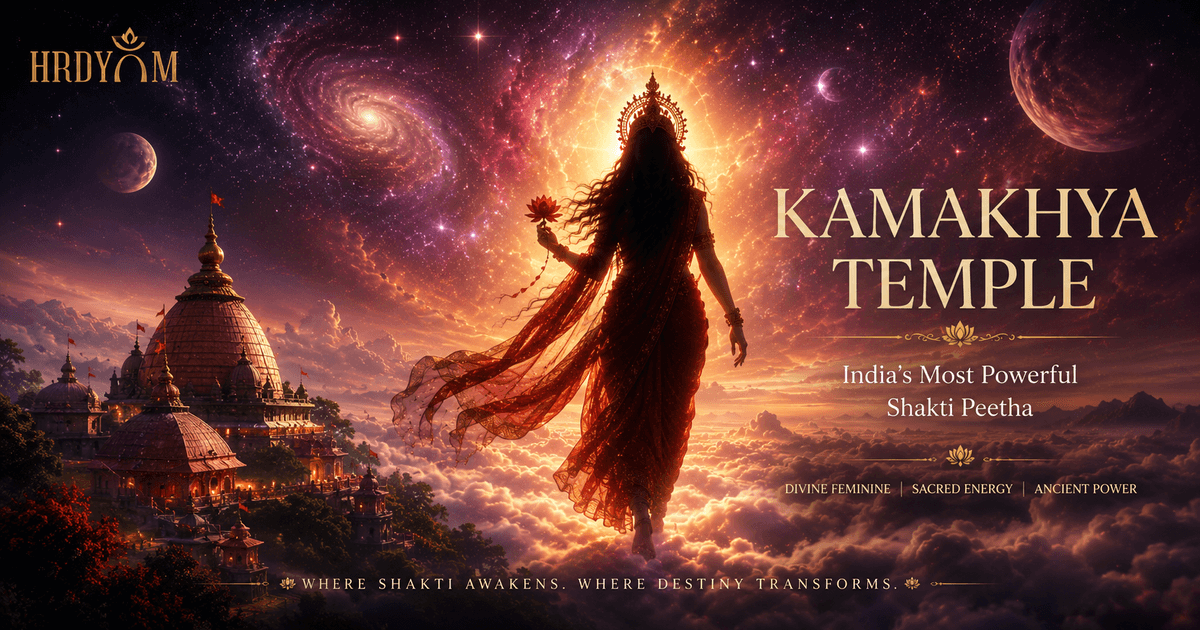
When I first visited Kamakhya Temple in Guwahati, Assam, the first thing that caught my attention was the people. Many were dressed in deep shades of red, black, and violet. Some sadhus had aces and striking, dark eyes that seemed almost hypnotic. Goats wandered freely inside the temple complex. The place was crowded, noisy, and unlike any temple I had visited before.
It had a different vibe.
Before visiting, I had heard countless stories about Kamakhya. People spoke of its extraordinary spiritual energy, calling it one of the most powerful Shakti Peethas on Earth. Some even believe that this is the sacred place where the Divine Mother undergoes Her annual menstruation, making it the heart of Shakta Tantra. Millions of devotees travel here every year seeking blessings, transformation, and spiritual awakening.
With all these stories in my mind, I arrived expecting to feel an overwhelming sense of peace and divinity.
As I walked through the temple, devotees were chanting softly, priests were performing rituals, and the air was filled with incense and the sound of bells. It felt ancient, mysterious, and deeply spiritual.
As I spent more time inside the temple, I gradually came to understand that some of the goats I had seen earlier were there for ritual animal sacrifice, an ancient practice that continues as part of certain Shakta traditions. Reading about such traditions and witnessing their presence in person are two very different experiences.
This isn't a criticism of the temple or of those who believe in these rituals. For millions of devotees, these practices are sacred and have been followed for centuries. I respect that.
But spirituality is deeply personal.
For some, Kamakhya is the most spiritually powerful place they have ever visited. For others, it is an intense and confronting experience that challenges their own understanding of faith.
For me, it was both.

Long before the sun makes its first appearance on the Brahmaputra River, the paths leading to the Nilachal Hill start awakening with pilgrims who carry flowers and scarlet cloth, elderly couples who invoke the Holy Mother, priests getting ready for the rituals, and people from all over India waiting at the entrance of the temple.
To many people, visiting the Kamakhya Temple is the realization of their life-long dream. For some, it is the search for solutions to their problems and doubts accumulated over many years. And yet, many others just travel there out of curiosity because Kamakhya Temple is known to be one of the strongest spiritual centers in India. What happens afterwards usually becomes clear to everybody who visits the temple.
Unlike most other temples of Hinduism, Kamakhya Temple does not have an idol of Goddess Kamakhya inside the sanctum. Devotees have to walk down the steps of a natural rock staircase in order to enter a cave wherein there is a perpetual flow of water from an underground source over a rock which is worshipped as the Yoni of Goddess Shakti. Creation, procreation, female energy and cyclic life are symbolized through this rock and Kamakhya Temple is one of those rarest places of worship in the entire world where Divine Mother is worshipped in such a deep philosophical form.
The feeling at the place is completely different from a regular pilgrimage. The dim lighting, sound of running water, aroma of agarbatti and continuous chanting of mantra create such an aura that devotees can be found thinking about their experience even after darshan.
Through the ages, Kamakhya has been a pilgrimage site for kings, sages, tantrics, philosophers, and even regular pilgrims. There are some who travel here to seek the blessing of getting married, while there are those who travel here to ask for children; and then there are some who simply wish to find spiritual solace or seek the divine presence of the Divine Mother.
A quick introduction to one of the India's most revered Shakti Peethas
| S. No. | Shakti Peetha | Location | Associated Body Part / Ornament (Traditional) |
|---|---|---|---|
| 1 | Kamakhya | Guwahati, Assam | Yoni (Womb) |
| 2 | Kalighat | Kolkata, West Bengal | Right Toes |
| 3 | Jwalamukhi | Kangra, Himachal Pradesh | Tongue |
| 4 | Chintpurni (Chhinnamastika) | Una, Himachal Pradesh | Feet |
| 5 | Naina Devi | Bilaspur, Himachal Pradesh | Eyes |
| 6 | Ambaji | Banaskantha, Gujarat | Heart |
| 7 | Tripura Sundari | Udaipur, Tripura | Right Foot |
| 8 | Hinglaj Mata | Balochistan, Pakistan | Brahmarandhra (Top of Head) |
| 9 | Vishalakshi | Varanasi, Uttar Pradesh | Earring / Ear Ornament |
| 10 | Kanyakumari | Tamil Nadu | Back / Spine |
| 11 | Bahula | Ketugram, West Bengal | Left Arm |
| 12 | Attahas | Birbhum, West Bengal | Lips |
| 13 | Bakreshwar | Birbhum, West Bengal | Between Eyebrows |
| 14 | Nalhati | Birbhum, West Bengal | Windpipe |
| 15 | Kankalitala | Birbhum, West Bengal | Waist |
| 16 | Nandikeshwari | Sainthia, West Bengal | Necklace |
| 17 | Kiriteswari | Murshidabad, West Bengal | Crown |
| 18 | Ratnavali | Hooghly, West Bengal | Right Shoulder |
| 19 | Yogadya | Khirgram, West Bengal | Right Toe |
| 20 | Vibhash | Tamluk, West Bengal | Left Ankle |
| 21 | Ujani | Bardhaman, West Bengal | Left Wrist |
| 22 | Bhairav Parvat | Ujjain, Madhya Pradesh | Elbow |
| 23 | Mahakali (Ujjain) | Madhya Pradesh | Upper Lip (tradition varies) |
| 24 | Maihar (Sharada) | Madhya Pradesh | Necklace (tradition varies) |
| 25 | Biraja | Jajpur, Odisha | Navel |
| 26 | Tara Tarini | Ganjam, Odisha | Breasts |
| 27 | Vimala | Puri, Odisha | Feet |
| 28 | Mangala Gauri | Gaya, Bihar | Breast |
| 29 | Patan Devi | Patna, Bihar | Right Thigh |
| 30 | Mithila | Janakpur, Nepal | Left Shoulder |
| 31 | Guhyeshwari | Kathmandu, Nepal | Knees / Secret Part (traditions differ) |
| 32 | Muktinath | Nepal | Right Cheek |
| 33 | Sugandha | Barisal, Bangladesh | Nose |
| 34 | Jessoreshwari | Satkhira, Bangladesh | Left Palm |
| 35 | Bhabanipur | Bogra, Bangladesh | Left Anklet |
| 36 | Chandranath | Chattogram, Bangladesh | Right Arm |
| 37 | Srihatta | Sylhet, Bangladesh | Neck |
| 38 | Kiritkona | Bangladesh (traditional) | Crown Ornament |
| 39 | Kamarupa (traditional) | Bangladesh tradition | Navel (varies) |
| 40 | Manasa | Tibet tradition | Right Hand |
| 41 | Lanka Shankari | Trincomalee, Sri Lanka | Groin |
| 42 | Prayag | Prayagraj, Uttar Pradesh | Fingers |
| 43 | Kurukshetra | Haryana | Right Ankle |
| 44 | Manibandh | Pushkar, Rajasthan | Wrists |
| 45 | Virat | Rajasthan | Toes |
| 46 | Srisailam (Bhramaramba) | Andhra Pradesh | Neck (tradition varies) |
| 47 | Kanchi Kamakshi | Kanchipuram, Tamil Nadu | Skeleton / Bones (tradition varies) |
| 48 | Shrishaila (traditional listing) | Andhra Pradesh | Neck Portion |
| 49 | Prabhas | Somnath, Gujarat | Abdomen |
| 50 | Amarnath / Sharada tradition | Jammu & Kashmir | Throat |
| 51 | Sharada Peetha | Neelum Valley (PoK) | Right Hand (tradition varies) |
The sacred legend of Kamakhya temple
All sacred sites have some stories related to them, and that of Kamakhya Temple is a special case, because it is associated with the history of the Shakti cult.
According to Hindu mythology, King Daksha conducted a great yajna ceremony and invited gods, rishis, and celestial beings from everywhere. However, he did not invite his own daughter Sati, the goddess and the wife of Shiva, for whom he felt great disrespect because of his asceticism.
Although Shiva advised against visiting her father, Sati still went to the yajna where she was humiliated by seeing the insults to her husband in front of everyone. Not being able to put up with the disrespect to Lord Shiva, she used her yogic powers to immolate herself in the sacred fire.
When Lord Shiva heard about the death of his wife, sorrow turned into rage. Carrying his dead wife on his shoulders, he performed Tandava, threatening the existence of the whole universe with destruction.
To prevent any disaster, Lord Vishnu let Sudarshana Chakra separate Sati's body into pieces, and wherever a piece fell, that site became a Shakti Peetha.
It is said that the Yoni (creative womb) of Goddess Sati fell at Kamakhya.
This is why the temple of Kamakhya is not just a temple but the holiest manifestation of feminine creation in Hindu theology. In this temple, the Goddess is not revered in the form of an idol but by a natural formation of rocks which are fed by a water spring underground, symbolizing the essence of life and creation.
In this way, Kamakhya is distinguished from all the other Shakti Peethas since Kamakhya reveres creation in its absolute sense.
Why Kamakhya is India's greatest Tantra Peetha
When the name Tantra is uttered, many tend to think of mystical practices or esoteric processes. However, the fact of the matter is that classical Tantra is much deeper and philosophically sound.
The term Tantra originates from Sanskrit root tan, which means "to expand." Thus, it is a spiritual path aimed at expanding human consciousness. Unlike many other spiritual paths, it does not reject the materialistic world but teaches how to attain enlightenment through all spheres of human existence with the help of discipline, knowledge, and devotion.
Kamakhya Temple has an especially unique place within the tradition of Tantra. For many centuries, it has been considered as one of the top temples of Shakta Tantra, which attracted pilgrims and seekers of wisdom from all over India. According to ancient texts like Kalika Purana and Yogini Tantra, the temple was one of the most powerful seats of the Divine Mother, where spiritual practices were taught by accomplished gurus in her honor.
Moreover, the temple is connected with Dasha Mahavidyas, ten goddesses of wisdom of the Tantric tradition. Shrines of these forms of the Goddess can be found on Nilachal Hill.
While the uniqueness of Kamakhya lies in its connection with Tantra, what sets it apart from other sites is its balanced approach towards the practice of mysticism and devotion in public spaces. Thousands of common pilgrims make their way to the temple on a daily basis to pay their obeisance and perform rituals to the Divine Mother.
The divine mother is worshipped in her most elemental form
Another unusual feature of the Kamakhya Temple is the absence of an idol worshipped here by devotees. Instead, a crevice formed out of rock is filled with the waters flowing from the underground spring.
In order to reach the site, pilgrims need to go down the narrow stone steps to a small cave-like chamber where they are led to the rock by the priests. The crevice is decorated with red flowers of hibiscus, vermilion and holy cloth while the constant flow of water reminds of the life-giving force of the Goddess.
The lack of the idol symbolizes an interesting concept as opposed to the depiction of the Divine Mother in human form, the Kamakhya Temple allows worshippers to pray to the source of all the creation itself. It can be considered a rare combination of symbolism, spirituality and nature into one.
This unique feature often becomes the highlight of the pilgrimages for many people visiting this place.
Ambubachi Mela: The festival that differentiates Kamakhya temple from all others
If there is one festival that is responsible for giving the spiritual identity of Kamakhya Temple, it has to be the Ambubachi Mela.
Every year, around June, there comes an occurrence that makes Kamakhya unique in the true sense.
While other temples keep their gates open all through the year, Kamakhya Temple closes its sanctum for three days, during which no rituals are conducted, no devotee is permitted to enter, and the Goddess is said to be sleeping.
Based on ancient traditions, these three days are celebrated as the menstrual period of the Goddess Kamakhya.
For an outsider, this tradition may come as something quite surprising; however, within the framework of Hindu Shakta philosophy, it can be considered as one of the most sacred worships of the feminine principle.
On the opening of the temple on the fourth day, there will be thousands of devotees who come to collect blessings. The holy water (Angodak) and the red cloth (Angabastra), believed to have acquired the divine power of the Goddess, will be distributed among devotees as Prasad. Many devotees preserve these sacred gifts in their homes as it brings them good fortune and protection.
Nilachal Hill comes alive during Ambubachi Mela, where various sadhus, Tantrics, scholars, devotees, photographers, and tourists from all over the world meet in Guwahati to take part in this festival. The environment created here is very unique to any other festival in India, with chanting and devotion.
Many people attend the Ambubachi festival not just to watch but also to feel the living tradition that prevails in the place.
Temple Architecture: Where History meets spirituality
While Kamakhya Temple is well known for its spiritual importance, there is a great deal more to it in terms of architecture.
The current building mostly originates from the 16th century when it was rebuilt on the instructions of King Naranarayana from the Koch dynasty after several destructions of previous structures during different eras of wars.
With time, a lot of additions and reconstructions were made, giving the temple a unique mixture of architectural styles.
Unlike the massive Dravidian temples in the south of India and Nagara temples in the north, Kamakhya has its own Nilachal architectural style which can be seen in the giant beehive dome, carved stones, and sculptures reflecting influences of Hindu, local Assamese, and medieval architecture.
The temple complex is much bigger than the expectations of a first-time visitor to the place, consisting of many little shrines devoted to different incarnations of the Goddess, Lord Shiva, Lord Ganesha, and other gods. The devotees can see many stone passages, sculptures, sacred trees, and courtyards used for worshipping during centuries.
But the most amazing thing about the temple lies under its structure.
Rather than stepping into a splendid chamber that houses images of gods and goddesses, pilgrims enter through a naturally created cave. This sanctuary is dark, cool, and constantly replenished with water from the underground stream. In this cavern, an opening formed by nature called the Yoni of the goddess Kamakhya is worshiped with flowers, vermilion powder, and sacred fabric.
It is a highly personal affair. There are no majestic statues for the pilgrims to gaze at. Instead, pilgrims bow in reverence before the creation of nature, symbolizing the constant creative energy of the Divine Mother.
The ten Mahavidyas: A special kind of spiritual experience
The second reason why Kamakhya is regarded as the greatest Tantra Peetha in all of India is because it is associated with the Dasha Mahavidyas, which are the ten divine wisdom goddesses of the Shakta tradition.
Each of the ten manifestations of Shakti represents different things about creation, transformation, wisdom, protection, compassion, and spirituality. Whereas the individual Mahavidya has their own mythology and symbols, as a whole, they convey the infinite power of Shakti.
It comes as quite a surprise to many worshippers when they discover that there are several temples of the Mahavidyas on or around Nilachal Hill.
| Mahavidya | Represents |
|---|---|
| Kali | Time, transformation, liberation |
| Tara | Compassion, guidance, protection |
| Tripura Sundari | Divine beauty and supreme consciousness |
| Bhuvaneshwari | Cosmic creation and nurturing energy |
| Bhairavi | Courage, discipline, inner strength |
| Chhinnamasta | Self-sacrifice and transcendence |
| Dhumavati | Detachment, wisdom through experience |
| Bagalamukhi | Victory over negativity and obstacles |
| Matangi | Knowledge, speech, creativity |
| Kamala | Prosperity, abundance, spiritual wealth |
For true devotees seeking spirituality, a visit to these shrines in addition to the Kamakhya Temple will be rewarding because they will help understand the different manifestations of the Divine Mother.
Discover the mysteries that many pilgrims never notice
Every year thousands of devotees come to Kamakhya but fail to know some interesting features of it.
What makes it really amazing is the fact that there is no idol in the garbhagriha. The followers worship a natural rock formation always surrounded with water of the underground spring. Thus Kamakhya becomes one of the rare Hindu temples that is based on natural rock formation and not a sculpted idol.
Another unusual fact is the connection of the temple with feminine spirituality. Despite the fact that in many cultures menstruation was considered suspicious phenomenon, in Kamakhya it is considered a sacred symbol of fertility and creation thanks to Ambubachi Mela.
In addition, the temple plays a significant role in the development of Assamese culture for a long period of time. Being a holy place, it also represents an important part of the local culture.
There is also another unusual feature connected with Kamakhya Temple. The place outside the Nilachal Hill is usually quiet in spite of the large number of devotees who come here during other periods except the festival of Ambubachi.
Beyond kamakhya lies a landscape filled with forgotten shrines and sacred energy
While most visitors visit only the primary temple, there are numerous less-known spiritual locations on Nilachal Hill that can be visited.
One such location is the Bhubaneswari Temple, which is situated on one of the highest peaks on Nilachal Hill. From here, visitors can have wonderful views of the Brahmaputra river and Guwahati city. It is an excellent spot for meditation after visiting Kamakhya.
There are numerous small temples on the hill that are dedicated to different Mahavidyas, such as Bagalamukhi, Tara, Chhinnamasta, etc. They are much smaller compared to the primary temple but still offer the possibility to explore the spirituality of Kamakhya.
While walking along the path to these temples, one may come across another face of Nilachal Hill – it will be filled with sounds of birds instead of crowd noise.
Stories of faith, transformation, and unforgettable spiritual moments

Though all pilgrimages are deeply personal affairs, there seems to be one recurring theme amongst many who have visited Kamakhya.
There are those who have felt inexplicably at peace after their darshan amid the chaos; and there are those who have felt deep gratitude or catharsis while within the confines of the sanctum. There are even some who visit Kamakhya each year, considering her to be an indispensable part of their spiritual evolution as opposed to just another place of worship.
Some view the temple as their beacon of hope during tough phases of life; while others see it as a constant reminder that having faith is not about getting answers; but about the courage to ask pertinent questions.
That, perhaps, is what makes Kamakhya continue to draw millions of followers year after year. It is not just her mythological lore, her architectural marvels, or her unique rituals; it is much more than that.
Every meaningful pilgrimage begins with thoughtful preparation
There are many reasons why visiting Kamakhya Temple should be well planned. Your visit may turn out differently based on your timing, season, festivals, weather conditions, and even the time of the day when you opt for darshan. Though the temple welcomes pilgrims round the year, knowing these details will enable you to have a better visit experience.
Whether you are on your own, accompanied by elderly parents, or undertaking a family trip, it will make your pilgrimage much easier if you plan beforehand.
Understand the available darshan and entry options before you travel
The Kamakhya Temple receives numerous devotees daily via the free general darshan and also has an option of Special (VIP) Darshan for pilgrims wishing to minimize their waiting period. Nevertheless, the availability of tickets is dependent on the temple administration and may not be available at times when there are huge crowds due to special events such as the Ambubachi Mela.
| Darshan Type | Availability | Booking Mode | Remarks |
|---|---|---|---|
| General Darshan | ✅ Available Daily | No advance booking required | Free for all devotees |
| Special (VIP) Darshan | ✅ Available (subject to availability) | Online & Official Temple Counter | Helps reduce waiting time |
| Defence Special Entry | ✅ Available (Eligible Personnel) | Dedicated official portal | Subject to eligibility |
| Festival Days (e.g., Ambubachi) | Limited / Suspended | As per Temple Administration | Special darshan may not operate during heavy rush. (Maa Kamakhya Devalaya) |
Choose the perfect season for a peaceful and fulfilling pilgrimage
Even though Kamakhya Temple opens all-year round (with the exception of Ambubachi Mela), there is an appropriate time to visit the temple based on what you want.
For visitors who like good weather conditions and short queues and enjoy sightseeing in comfort, the best time to visit the temple would be between October and March. The winter in Guwahati is quite cool, enabling visitors to visit not only Kamakhya Temple but also the other sites in Guwahati.
However, if a pilgrim wants to witness one of the strangest spiritual festivals in India, he would plan his visit to Guwahati during the month of June when the Ambubachi Mela takes place. This is a time of huge crowds and traffic congestion in Guwahati; also, accommodation prices rise steeply.
The shoulder seasons may turn out to be the most interesting time of visiting the site since it gives pilgrims an opportunity to attend the festival activities and avoid the crowds.
Weather guide
| Season | Months | Weather | Recommended |
|---|---|---|---|
| Winter | October – February | Cool and pleasant | ⭐⭐⭐⭐⭐ Excellent |
| Summer | March – May | Warm and humid | ⭐⭐⭐ Good |
| Monsoon | June – September | Heavy rainfall | ⭐⭐ Only if attending Ambubachi |
Travel seamlessly to the sacred Nilachal hills
Reaching Kamakhya Temple from Delhi
The journey from Delhi to Kamakhya Temple is easily accessible via frequent flights, railways, and road connectivity options. The best choice is to travel by air to Lokpriya Gopinath Bordoloi International Airport (Guwahati Airport). This airport is about 20 kilometres away from the temple, and it takes 2.5 to 3 hours via direct and connecting flights along with a 40-60 minutes drive from Guwahati to Nilachal Hill.
Another good option for pilgrims is trains. Various long-distance trains link New Delhi Railway Station to Guwahati and Kamakhya Railway Station.
Travel via road is another choice for reaching Kamakhya Temple, but this mode of transportation is usually preferred only by people who are going on a road trip in Northeastern India.
Travelling to Kamakhya Temple from Mumbai
Travellers visiting Kamakhya Temple from Mumbai can travel by air or rail to visit the temple. Flights between Chhatrapati Shivaji Maharaj International Airport and Guwahati take about 3 to 5 hours. Flying is more comfortable when compared to other means of travel. Travellers can take trains to explore different parts of India en route to Kamakhya Temple.
The journey by train from Mumbai to Guwahati takes 40 to 48 hours but travellers can take taxis or app-based cabs to the temple after reaching Kamakhya Railway Junction or Guwahati Railway Station. Travellers who prefer road trips may travel by road from Mumbai to Guwahati covering around 2,800 kilometres.
Kamakhya Temple Travel Guide from Bengaluru
Visitors traveling from Bengaluru should consider flying as the most convenient and speedy method of transportation. Direct and connecting flights from Kempegowda International Airport to Guwahati take approximately 3 to 5 hours, followed by the final leg of the journey via taxi, which takes less than an hour.
Travelling by train is another option for those preferring a leisurely journey. The travel time between Bengaluru and Guwahati through trains ranges between 48 to 60 hours depending upon the specific train and routes taken.
Traveling by road is also an option, however, the distance of over 3,000 kilometres makes it more suited for extensive travel than pilgrimage visits.
Quick Travel comparison
| City | Fastest Mode | Approximate Travel Time | Nearest Arrival Point |
|---|---|---|---|
| Delhi | Flight | 2.5–3 hours | Lokpriya Gopinath Bordoloi International Airport |
| Mumbai | Flight | 3–5 hours | Lokpriya Gopinath Bordoloi International Airport |
| Bengaluru | Flight | 3–5 hours | Lokpriya Gopinath Bordoloi International Airport |
Everything you should know before beginning your journey
| Information | Details |
|---|---|
| Nearest Airport | Lokpriya Gopinath Bordoloi International Airport (GAU) |
| Distance | Approximately 20–22 km |
| Nearest Railway Station | Kamakhya Junction |
| Distance | Approximately 6 km |
| Major City | Guwahati |
| Local Transport | Taxi, Auto-rickshaw, App Cabs |
Plan your visit around the temple's daily schedule
While timings might change during festival times, Kamakhya Temple generally adheres to the following schedule.
| Activity | Timing |
|---|---|
| Temple Opens | Around 5:30 AM |
| Morning Darshan | 7:30 - 8:00 AM onwards (after rituals) |
| Afternoon Break | Around 1:00 PM – 2:30 PM |
| Evening Darshan | 2:30 PM – 5:30 PM |
| Temple Closes | Around Sunset |
Visitors are advised to check the timing before traveling, especially during the Ambubachi Mela festival.
Avoid peak crowds for a calmer spiritual experience
The amount of pilgrims coming to the Kamakhya Temple varies throughout the year.
In case you want to have an experience that would not be marred by crowds, early morning hours on a weekday is the most convenient time to visit.
Visiting the temple on days when Navratri or Ambubachi Mela festivals are held will require patience due to a large influx of people.
Crowd calender
| Month | Crowd Level |
|---|---|
| January | Moderate |
| February | Moderate |
| March | Moderate |
| April | High |
| May | Moderate |
| June (Ambubachi) | Extremely High |
| July | High |
| August | Moderate |
| September | Moderate |
| October | High |
| November | Moderate |
| December | High |
Know the available priority darshan options and official guidelines
At Kamakhya Temple, there are VIP darshan services provided during some particular times based on the instructions by the temple administration.
VIP darshan might assist pilgrims in saving time during the peak season; however, these services depend on the administration's rules and regulations.
It is recommended for pilgrims to get acquainted with the details regarding VIP darshan from the temple administration.
| Facility | Availability |
|---|---|
| VIP Darshan | Available (subject to temple regulations) |
| Online Booking | Limited availability |
| Offline Booking | Available at temple administration |
| Festival Availability | Subject to crowd management |
Witness the temple's sacred rituals at the right time

The daily routines performed in Kamakhya Temple form an integral part of the religious aura around the temple. Though the temple does not follow the extensive aarti timings observed in certain other temples, the devotees have an opportunity to observe the worship ceremonies and devotion performed by the priests at different times of the day, based on the temple timings. The most spiritually significant time for the temple is early morning, with chanting of Vedic mantras, bells and prayers.
| Ritual | Approximate Time |
|---|---|
| Temple Opening | 5:30 AM |
| Mangala Rituals & Nitya Puja | 5:30 AM – 8:00 AM |
| Morning Darshan Begins | Around 8:00 AM |
| Anna Bhog Offering | Around 1:00 PM |
| Evening Worship & Devotional Chanting | Around 5:30 PM |
| Temple Closes | After completion of evening rituals |
Understand the rituals, offerings, and booking process
The Kamakhya Temple performs different religious rituals or pujas that can be performed based on your spiritual inclinations. These pujas are performed only by the Shebait priests of the temple. As there may be different pujas available depending on the schedule of festivals and other activities of the temple, pilgrims are advised to contact the temple authorities for booking in advance.
Extend your spiritual journey beyond Kamakhya Temple
A trip to the Kamakhya Temple can be easily linked to many of the tourist sites available in Guwahati.
| Place | Distance |
|---|---|
| Umananda Temple | 8 km |
| Assam State Museum | 10 km |
| Brahmaputra River Cruise | 9 km |
| Pobitora Wildlife Sanctuary | 55 km |
| Assam State Zoo | 12 km |
| Fancy Bazaar | 9 km |
| Srimanta Sankardev Kalakshetra | 15 km |
Explore Assam's rich spiritual heritage one temple at a time
Many pilgrims opt to explore more temples during their pilgrimage.
| Temple | Importance |
|---|---|
| Umananda Temple | Ancient Shiva Temple on Peacock Island |
| Navagraha Temple | Dedicated to the nine planetary deities |
| Basistha Ashram | Associated with Sage Vashistha |
| Bhubaneswari Temple | Offers panoramic views of Guwahati |
| Sukreswar Temple | One of Assam's oldest Shiva temples |
| Doul Govinda Temple | Dedicated to Lord Krishna |
Popular prasad, bhog & Assamese food in the city (Guwahati)

Any tour to the Kamakhya temple is never complete until you get to try some Assamese food tradition.
The temple provides you with simple but holy prasad, while the market around gives you access to various local foods.
Common foods include:
Prasad
Khichdi Bhog
Pitha
Payas (Kheer)
Assamese Thali
Khar
Aloo Pitika
Til Pitha
Narikol Laru
Jolpan
Food lovers can also visit some traditional Assamese restaurants that provide genuine Assamese food after your darshan.
Recommended reading for seekers of history, tantra, and devotion
To get a better knowledge of the history and spirituality of Kamakhya, you can refer to the following books:
| Book | Focus |
|---|---|
| Kalika Purana | Mythology of Kamakhya and Shakta traditions |
| Yogini Tantra | Tantric philosophy associated with Assam |
| The Wonder That Is Kamakhya | Temple history and legends |
| Shakti and Shakta – Sir John Woodroffe | Classical study of Shakta philosophy |
| The Serpent Power – Arthur Avalon | Introduction to Kundalini and Tantra |
Plan your pilgrimage without unexpected expenses
One of the best things about Kamakhya Temple is that it caters to every sort of tourist. Be it an independent budget traveler, who seeks a budget pilgrimage; a family on vacation; or a luxury pilgrim, there are a variety of options available in Guwahati for accommodations and transport, at various budget levels.
The total cost of your trip depends on many factors such as the time of travel, hotel choice, means of transport, and your plans to visit the surrounding sites. During Ambubachi Mela, the price of hotels and transport becomes higher due to the high demand.
Estimated budget
| Travel Style | Approximate Budget (Per Person) | Includes |
|---|---|---|
| Budget | ₹3,000–₹7,000 | Budget hotel, local transport, meals, general darshan |
| Mid-range | ₹8,000–₹18,000 | Comfortable hotel, private cab, sightseeing, quality dining |
| Luxury | ₹20,000–₹50,000+ | Premium hotel, chauffeur-driven transport, personalized itinerary, premium experiences |
Every stone on the hill whispers an untold spiritual story
As the famous Kamakhya Temple attracts tourists and pilgrims in plenty, there are some other secret places to visit within Nilachal Hill.
Bhubaneswari Temple is situated at the top of Nilachal Hill, providing breathtaking panoramas of Guwahati city and Brahmaputra river. The environment here is much calmer than at the famous temple, thus it is a perfect spot for meditation and reflection.
Those who are interested in the philosophy of Shakta can explore temples devoted to the Dasha Mahavidyas, which represent various incarnations of the Divine Mother. They help to learn the depth of Kamakhya philosophy, which is not so evident for many people.
Another interesting activity is visiting some other temples and places in the quiet paths around Nilachal Hill. There are ancient temples, sacred trees and places to meditate and have some contemplation.
Also, you should try enjoying the magnificent view on the Brahmaputra river during sunrise or sunset time.
Two day suggested Kamakhya Yatra
Day 1
Morning arrival at Guwahati
Hotel check-in
Darshan at Kamakhya Temple
Temple Complex visit
Visit to Bhubaneswari Temple
Evening cruise on river Brahmaputra
Night halt at Guwahati
Day 2
Umananda Temple
Navagraha Temple
Assam State Museum
Lunch of local cuisine in Assam
Shopping in Fancy Bazaar
Departure
Proposed 3-day spiritual tour schedule
Day 1
Kamakhya Temple
Bhubaneswari Temple
Nilachal Lookout Points
Day 2
Umananda Temple
Basistha Ashram
Navagraha Temple
River Brahmaputra Cruise
Day 3
Pobitora Wildlife Sanctuary
Local crafts shopping
Assamese food
Departure
Respecting temple traditions ensures a meaningful pilgrimage for everyone
In order to maintain the sanctity of one of the most revered Shakti Peethas of India, some guidelines need to be followed by the visitors to Kamakhya Temple.
Photography and videography are strictly forbidden in the Garbhagriha and other worship chambers in the temple. Pictures claiming to be images of the holy Yoni Peetha do not exist since there cannot be any photos taken inside the chamber.
Shoes cannot be worn inside the temple after the specified footwear areas near the temple gate.
Use of any kind of tobacco products in the Nilachal Hill temple premises, which have been made tobacco-free zones by the temple authorities.
Dress appropriately.
Avoid shoving, loud discussions, littering, and disturbing the line for darshan. Do not trust people promising "special rituals" or blessings since the temple authorities have announced that only the authorized hereditary Shebait priests can perform such rituals officially.
Moreover, the official temple authorities have asked the devotees not to arrange puja online through unauthorized websites.
Discover why this sacred shrine holds a singular place in Hindu spirituality
The Kamakhya Temple is unique among all Indian temples. Located at the peak of Nilachal Hills in Guwahati, Assam, the Kamakhya Temple is believed to be one of the 51 Shakti Peethas, where the Yoni (creative womb) of the Goddess Sati fell after Lord Vishnu cut her body into pieces using the Sudarshana Chakra when Lord Shiva was engulfed in His great cosmic sorrow.
Different from ordinary temples, no idol of the Goddess exists within the sanctuary of the temple. The devotees worship a natural formation of rock crevices that constantly get water supply through an underground spring. Such a natural phenomenon represents the symbol of the Divine Feminine and creative power, making Kamakhya one of the unique centers for worshipping the Goddess Shakti.
Furthermore, Kamakhya is considered to be the primary Tantra Peetha of India and attracts people devoted to studying the Shakta religion and its philosophies.
The Ambubachi Mela, during which the temple shuts down for three days in order to mark the menstruation period of Goddess Kamakhya, is another distinct element of the temple. It is a celebration of fertility, creation, and feminine powers; it is also considered one of the most unique spiritual celebrations within Hinduism.
Apart from the myths connected to Kamakhya, there is no doubt that the experience of visiting this temple is a truly unique spiritual experience for many pilgrims. The cave sanctuary, the spring water that constantly flows, the chants of the devotees, and the magnificent views of the Brahmaputra river combine to form a unique spiritual atmosphere.
Enhance your pilgrimage with HRDYAM
Pilgrimage is not only about reaching your destination; it is all about enjoying the trip with peace of mind and comfort. Arranging accommodation, organizing transport, knowing timings for temples, and other details can often become obstacles for the pilgrims and take away their focus from the spiritual journey they are undertaking.
HRDYAM strives to make the whole process as smooth as possible for each person by planning personalized pilgrimages based on his requirements. No matter if you travel alone, with your elderly parents, or with multi-generational families, HRDYAM takes care of all these situations and ensures that your spiritual journey is easy and enriching.
Instead of merely making plans related to hotel stays or transport arrangements, HRDYAM assists travellers in making a detailed itinerary for the spiritual journey along with all the other things.
With regard to the families, it is possible to design a custom itinerary in such a way that it manages to strike a balance between devotion and sightseeing. For senior citizens, an important aspect would be a carefully designed schedule, reducing the physical efforts involved but at the same time providing enough time to engage in temple rituals. Solo travelers would get the necessary information, enabling them to see everything in a confident manner.
In some cases, depending on the location of interest and its local temple regulations, it might be useful for HRDYAM to provide additional assistance regarding the information on official darshans, ritual organization, and spiritual activities conducted by the temples' official representatives.
Those interested in exploring other spiritual and cultural places in addition to the Kamakhya Temple in Northeast India can receive assistance in integrating all of the mentioned elements into a single itinerary.
Personalized spiritual travel designed around your needs
| Service | Available |
|---|---|
| Personalized Pilgrimage Planning | ✅ Yes |
| Luxury Spiritual Tours | ✅ Yes |
| Family Pilgrimage Packages | ✅ Yes |
| Senior Citizen Friendly Tours | ✅ Yes |
| Hotel Booking Assistance | ✅ Yes |
| Local Transportation | ✅ Yes |
| Multi-day Spiritual Circuits | ✅ Yes |
| Ritual Guidance (where permitted) | ✅ Yes |
| Northeast Spiritual Tours | ✅ Yes |
| Group Tours | ✅ Yes |
A journey that stays with you

Then there are temples whose awe-inspiring architecture leaves a long-lasting impression; temples whose rich history inspires us; and then there are temples that become famous because of their festive celebrations. But Kamakhya temple is not just a temple but an amalgamation of deep faith in the Divine Mother, creation mystique, and the unique bond between religion and nature.
When you visit Nilachal Hill and find yourself amidst the hallowed surroundings of Kamakhya Temple, you are reminded time and again of one very important lesson, that spirituality need not be about dramatic revelations, but could be about the gentle flowing waters in an ancient cave, patience during darshan or a humble prayer said before leaving this place.
When you wish to experience the divine aura at Kamakhya Temple or want to get into touch with the eternal spirituality of India, we at HRDYAM can help make your spiritual journey comfortable and fulfilling.
Spiritual travel researcher, Vedic cultural writer, and contributing editor at HRDYAM.
You Might Also Like
Tags
More Articles
View all
Hinglaj Mata: Where faith crosses every border
The journey to some temples starts with the sound of temple bells. However, when it comes to the pilgrimage to Hinglaj Mata Temple, the starting point of this journey is not sound but silence - the si
Tripura Sundari: Where beauty becomes divine
One of the few temples in India that has been named based on a profound philosophical thought, rather than a location, is called "Tripura Sundari," which means "The Beautiful One of the Three Worlds."
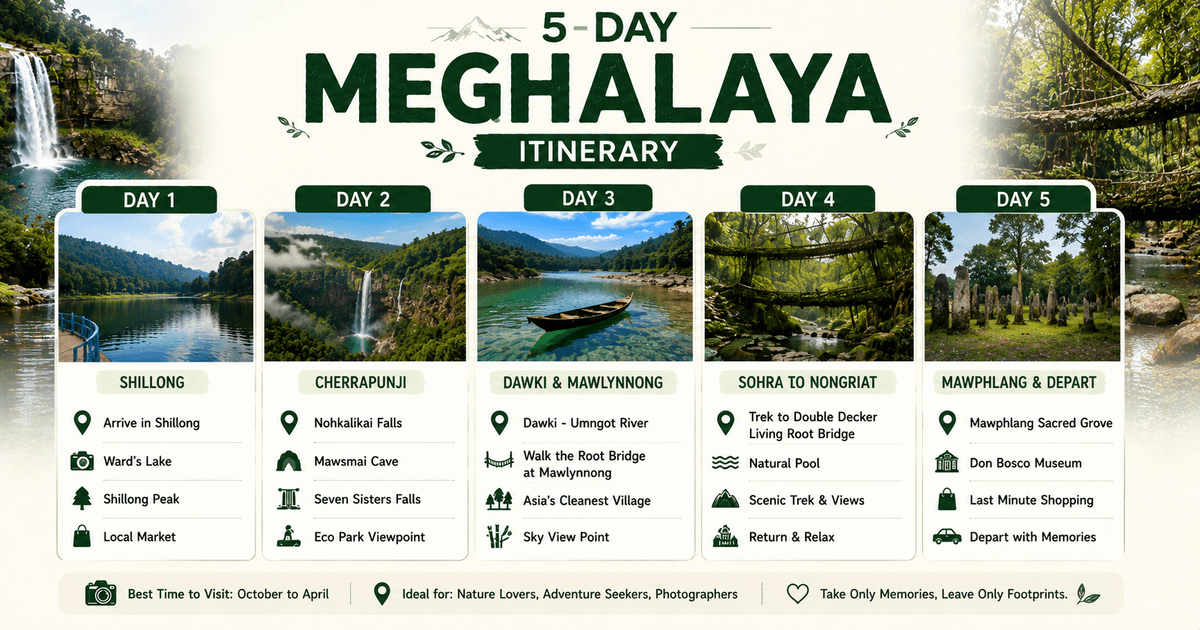
5-Day Meghalaya Itinerary
There's a version of this itinerary floating around every travel blog that promises you can do Shillong, Cherrapunji, Dawki, and Mawlynnong in five days without breaking a sweat. Technically true. Pra