9 Shakti Peeth Temples to Visit During Navratri

RIYA SHARMA
HRDYAM - DISCOVER SACRED JOURNEYS, WISDOM & WELLNESS
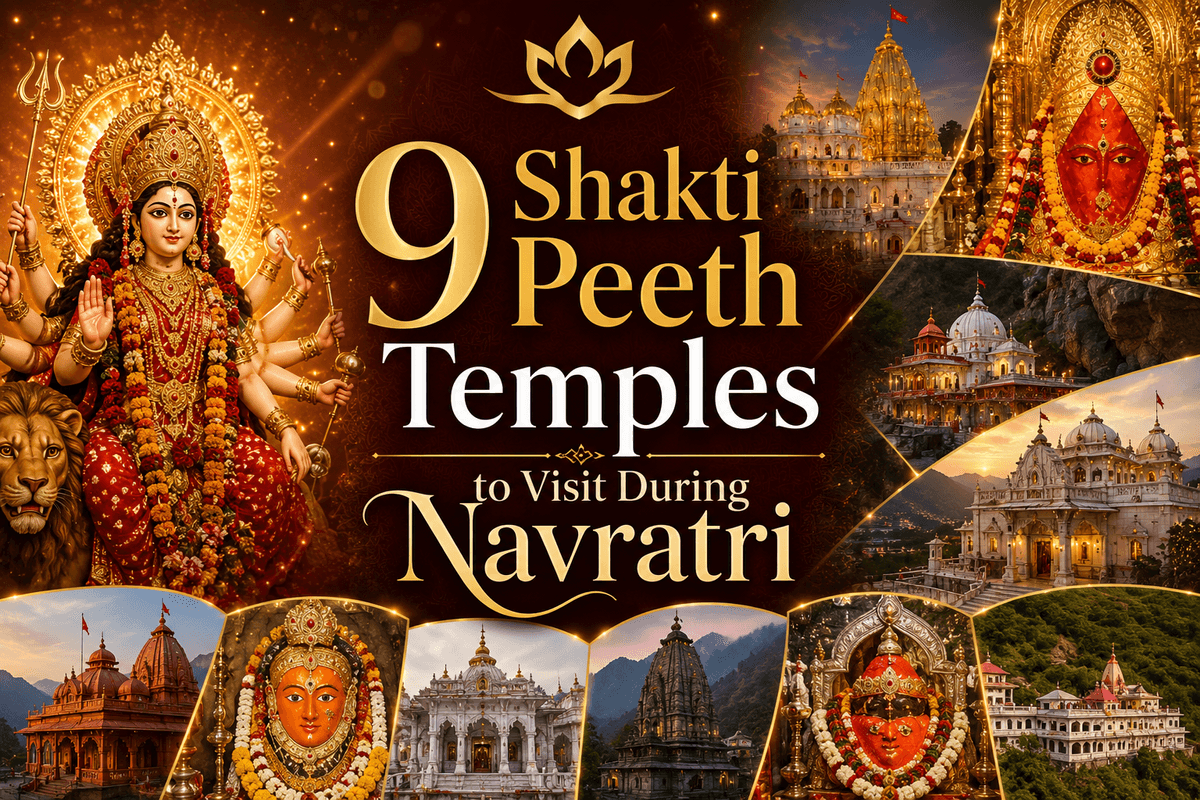
Visiting a Shakti Peeth during Navratri is unique because each shrine's usual energy intensifies: nine nights of continuous chanting, special aartis, and fasting align with the belief that these sites emanate extra spiritual power at this time. Throughout India, the temple bells resound even before dawn, lamp lights brighten the ancient sanctuaries, and people in millions get together to worship the Mother Divine in her varied avatars. Be it the eternal fire at Jwala Devi temple, the mountainous peace at Naina Devi temple, or the magic of Yantra worship at Ambaji, all temples have something unique to offer with a shared holy source.
According to the Hindu scriptures, 51 Shakti Peeth temples are those that came into being where the body parts of Goddess Sati fell after Lord Vishnu cut out his Sudarshan Chakra to stop the grief of Lord Shiva. Collectively, they make up one of the most respected pilgrimage circuits of Hinduism that attracts devotees throughout the year. In Navratri, however, they acquire particular importance when the celebrations symbolizing the victory of the Divine Feminine take place.
From the nine temples that follow, six belong to the category of traditional Shakti Peeths. The remaining three temples-namely Vaishno Devi, Mahalakshmi Kolhapur, and Chamundeshwari- do not figure among the fifty-one, but are highly esteemed Shakti temples.
Why do these temples draw pilgrims during Navratri?

Navratri is a festival associated with worshipping Maa Durga and her nine incarnations. It is considered extremely auspicious to pray and meditate at Shakti Peeths during these nine holy days, as they are known to emanate extra spiritual powers.
Every temple has its own distinctive way of celebrating Navratri. Some of them conduct beautiful processions and cultural programs, whereas some of them are centers of worship through continuous chanting of mantras, yajnas, and other rituals. Some people also observe fasts, perform puja, and take pilgrimages during this period.
For those who are searching for spiritual as well as cultural enlightenment, Navratri is considered to be the most auspicious time for visiting Shakti Temples of India.
9 Shakti temples to visit during Navratri
| No. | Shakti Temple | Location | Goddess / Form of Shakti | What Makes It Special |
|---|---|---|---|---|
| 1 | Kamakhya Temple | Guwahati, Assam | Maa Kamakhya | One of India’s most revered Shakti shrines, known for its Tantric traditions and the annual Ambubachi Mela. |
| 2 | Vaishno Devi Temple | Katra, Jammu & Kashmir | Mata Vaishno Devi | Located in the Trikuta Hills, the shrine is reached through a pilgrimage to the sacred cave of the Goddess. |
| 3 | Jwala Devi Temple | Kangra, Himachal Pradesh | Maa Jwala | Famous for its naturally occurring flames, traditionally worshipped as manifestations of the Goddess. |
| 4 | Kalighat Kali Temple | Kolkata, West Bengal | Maa Kali | One of the most prominent Kali temples in India and a major centre of Shakti worship. |
| 5 | Mahalakshmi Temple | Kolhapur, Maharashtra | Maa Mahalakshmi / Ambabai | A historic Shakti shrine dedicated to Goddess Mahalakshmi and an important pilgrimage centre. |
| 6 | Ambaji Temple | Banaskantha, Gujarat | Maa Amba | A major Shakti pilgrimage site where the Goddess is worshipped through a sacred yantra rather than a conventional idol. |
| 7 | Naina Devi Temple | Bilaspur, Himachal Pradesh | Maa Naina Devi | Located on a hill overlooking Gobind Sagar Lake and traditionally associated with the eyes of Goddess Sati. |
| 8 | Chamundeshwari Temple | Mysuru, Karnataka | Maa Chamundeshwari | Located atop Chamundi Hill and dedicated to Goddess Chamundeshwari, traditionally identified with the fierce form of Durga. |
| 9 | Tara Tarini Temple | Ganjam, Odisha | Maa Tara Tarini | A major Shakti shrine on K |
Kamakhya Devi Temple, Assam
Where the womb of Sati is thought to have fallen-a shrine dedicated to creation, fertility, and the Divine Feminine.
Located on the Nilachal Hills, overlooking the city of Guwahati, Kamakhya Devi Temple is unlike any other in India. There is no idol of the Goddess in the shrine itself. What happens instead is that the devotees go down into the cave through a set of stairs, where an underground stream flows over the stone fissure, which is considered the actual living representation of Maa Kamakhya. It is this living symbol of Shakti, and not any idol, that has been drawing pilgrims, saints, and seekers for generations.
Kamakhya is known as being one of the most significant of the 51 Shakti Peeth temples and has a very special place in the religion of Hinduism due to its close connections to the traditions of Tantra. The most famous festival of Kamakhya Devi Temple is Ambubachi Mela, celebrated as the annual period of menstruation of the Goddess. The temple doors are closed for three days while the Mother Goddess completes her natural cycle, after which it opens again for thousands of pilgrims.
Navratri creates a completely different but equally mesmerizing environment. There is chanting of devotional hymns, performance of fire rites, as well as chanting of the Durga Saptashati continuously at the temple. People come here to pray for blessings of marriage, fertility, prosperity, protection, and enlightenment. However, even with the influx of devotees during the nine days, the temple keeps its mystical aura intact.
October to March is when the weather becomes most suitable for visiting the Kamakhya Temple. The temple is conveniently located near the city of Guwahati. However, Kamakhya is not just another destination to be visited; it is an experience to be had. Familiarity with its culture and traditions in advance will help you understand the reason why this holy hill has been so revered for over a millennium as one of India’s foremost centers of Goddess worship.
Vaishno Devi Temple, Jammu & Kashmir
This is a holy cave which houses three avatars of the Divine Mother at once-considered one of the most popular pilgrimages in India, especially during Navratri.
While the Vaishno Devi temple is not among the 51 Shakti Peeths of India, it is no less revered by the millions of devotees who visit it. The holy shrine is situated in the Trikuta Hills around Katra, and it is dedicated to the Goddess Mata Vaishno Devi, who is considered to be the embodiment of Maa Mahakali, Maa Mahalakshmi, and Maa Mahasaraswati. However, the Goddess is not worshipped in the form of an idol but in the form of three rock forms in a holy cave-the Pindis.
To reach the shrine is itself a pilgrimage experience. Devotees take a 13-kilometre hike from Katra to the shrine, chanting "Jai Mata Di," passing the mountain peaks. While some devotees decide to go to the shrine on foot, there are also other options for reaching the shrine, such as by ponies, palkis, battery vehicles, and helicopter service. However, many devotees feel that the Goddess herself calls them.
There is no dearth of devotion as pilgrims are greeted with religious songs, decorated trails, and constant prayers in Navratri. A variety of aarti, bhajan, and religious programs create a vibe of faith in the temple cave of Vaishno Devi. In these nine holy nights, there are many thousands of pilgrims who make this pilgrimage hoping for blessings that will keep them protected and strong, successful, and that will make their wishes come true.
It is always good to plan your visit between March and October, although the temple stays open all through the year. Winter makes the nearby hills into a picturesque snowy area, while in spring and autumn, the weather is favorable for trekking. If you come as a devout or a tourist, Vaishno Devi will give you not only a pleasant experience of mountain climbing but also a belief in yourself and in the Divine.
Jwala Devi Temple, Himachal Pradesh
At the place where an eternal flame has been burning for ages, marking the spot where the tongue of Goddess Sati had fallen.
In contrast to other temples that worship the Divine Mother, the Jwala Devi Temple does not have any idol or statue. Rather, the devotees prostrate themselves in front of several blue natural flames that are coming out of the rock through cracks and have been continuously burning for centuries without any visible source of fire. These flames are considered to be the living incarnation of the Divine Mother, making the Jwala Devi Temple one of the most amazing among the Shakti Peeth Temples.
Traditionally, the temple is said to be the place where the tongue of Goddess Sati fell after her dismemberment by Lord Vishnu's Sudarshan Chakra in order to soothe the grief of Lord Shiva. The flames at this temple are believed to be the eternal flame of the Goddess and are called the Jwalas. Several flames are burning inside the sanctum sanctorum, symbolizing the manifestations of Shakti.
There are some other interesting legends associated with the temple as well. The most famous among them tells that the Mughal Emperor Akbar attempted to blow out the sacred flame many times, but his efforts failed. It is believed that he recognized the power of the Goddess and presented a golden umbrella at the shrine. Whatever it may be, the legend has become one of the symbols of the temple.
Jwala Devi becomes one of the most popular pilgrimage sites in Himachal Pradesh during Navratri. The number of worshippers who come here during this time reaches thousands, as there are special aartis, havans, and chanting performed. Thousands of lamps light up the temple during Navratri celebrations.
It is recommended to visit the temple from October to March as the climate is pleasant enough to visit the Kangra Valley. Pilgrims visiting Jwala Devi Temple also visit Chintpurni, Naina Devi, Chamunda Devi, and Brajeshwari Devi during the pilgrimage.
Kalighat Kali Temple, West Bengal
At the very spot where the right toe of Goddess Sati is said to have fallen-a timeless temple whose spiritual pulse never stops beating for the city of Kolkata.
At the heart of the busy life of Kolkata, the hubbub of its trams, markets, and metro trains lies the Kalighat Kali Temple, one of the greatest temples dedicated to the Divine Mother in Kolkata. Different from the majority of Shakti Peeths that are situated in mountains and woods, the temple of Kalighat has grown together with the city, so the act of devotion became an integral element of the identity of Kolkata. According to the legends, it is the place where the right toe of the Goddess Sati has fallen, and thus, this temple occupies the position of one of the 51 Shakti Peeth temples.
Dakshina Kali, the presiding deity of the temple, is a form of the Goddess who is believed to give strength and protection to her devotees, removing all their fears and destroying their negative qualities. Unique among other Indian representations of Kali with the black stone idol and golden tongue, the temple is completed by the nearby shrine of Nakuleshwar Mahadev.
Navratri is a time for special pujas and bhajans in the Kalighat temple and is visited by hundreds of people who come seeking the blessings of Maa Kali. Though the biggest festival in the temple is the Kali Puja, which is held during the time of Diwali, Navratri is also of great religious importance and provides devotees a chance to pray to the Divine Mother. The festive environment in Kolkata, along with the spiritual environment of the temple, will give you a unique experience of being spiritual while remaining Bengali.
The best time to visit this place would be between October and February since the climate is pleasant and the whole city is filled with festivities. You can also check out other places of interest like the Victoria Memorial, Dakshineswar Kali Temple, and Belur Math in your visit to make it a perfect mix of spirituality, history, and culture.
Mahalakshmi Temple, Kolhapur, Maharashtra
This is where the Goddess of wealth, power, and compassion has been worshipped for more than a millennium.
The famous Mahalakshmi Temple in Kolhapur, situated on the banks of the River Panchganga in Maharashtra, is considered to be one of India's holiest shrines devoted to Goddess Mahalakshmi. This temple is known locally as Karveer Nivasini Mahalakshmi, and the story says that the Goddess took the Kolhapur area under her protective care and made it her permanent residence after defeating the evil forces and making this place prosperous. Though it cannot be considered one of the Shakti Peeth temples, it is still an extremely sacred Shakti shrine in India and is of great importance during Navratri.
The temple was built during the 7th-8th centuries CE by the Chalukya kings, later extended by the Yadavas and Maratha rulers, and represents the Hemadpanti architectural style. Its carved pillars, splendid ceiling, and impressive entrance depict thousands of years of people's devotion to this deity. The black stone statue of the Goddess is ornamented with expensive jewelry and a crown, and has a majestic and compassionate expression at the same time.
Another festival where Navratri is celebrated in full splendor is at the temple. It is decorated in the best possible way with the help of flowers and lighting, while there are various aartis, cultural performances, and bhajans happening every night during the sacred nine days of Navratri. Devotees from all across the world gather to seek the blessings of the Goddess to prosper in life and get success and happiness. Kirnotsav is another festival worth mentioning. This festival is marked by the rare and incredible phenomenon when the rays of the setting sun shine directly on the idol of the Goddess.
The perfect time to visit is from October to February, when the weather is beautiful, and there are plenty of festivals happening in the temple. Pilgrims usually make a combination with visits to other nearby religious sites, including Jyotiba Temple, Panhala Fort, and Rankala Lake. Thus, this place combines religion, history, and culture and makes Kolhapur an interesting destination to explore. Irrespective of whether you come here to seek the blessings of God or just because of its stunning architecture, after visiting this place, you will feel the abundance in your life.
Ambaji Temple, Gujarat
The worship of the Divine Mother is done not with the help of any idol, but with the Yantra, which is said to represent her permanent existence.
One of the highly worshipped pilgrimage places of western India, the Shri Arasuri Ambaji Temple, is situated amidst the Aravalli Hills of northern Gujarat. The place is regarded as one of the fifty-one Shakti Peethas in India, and according to local legend, it is the spot where the heart of the Goddess Sati had fallen. But what makes this temple unique is the absence of any sculpture of the Goddess here. Instead, her worship is done with the help of the sacred geometry of the Shree Visa Yantra.
For ages, people have been worshipping this temple, including saints, kings, and pilgrims who have visited here from all parts of Gujarat, Rajasthan, and even other states. Gabbar Hill, located just a few kilometers away from the temple, is known as the original seat of Maa Amba. The pilgrims either climb this hill or reach here through a ropeway to visit the sacred place where the eternal lamp of the Goddess is lit.
As Navratri descends, Ambaji becomes one of the most exciting destinations for devotees of Goddess Shakti in the whole country. The temple gets decked up in beautiful lights, devotional songs fill the air of the city, and thousands of people participate in various aartis and prayers. In the evening, people from Gujarat join the famous celebrations of Garba and Dandiya Raas to make their devotion festive. Thus, Navratri is the perfect time to come to this spiritual place.
The most appropriate period for visiting the temple is from October to March, when the weather is warm and suitable for visits to this temple, Gabbar Hill, and the Aravalli landscape. Numerous visitors also add visits to the other places of interest near Ambaji, like the Kumbhariya Jain Temples, Koteshwar Mahadev, and Mount Abu, to their spiritual journey. Coming to Ambaji means praying in an exceptionally calm environment.
Naina Devi Temple, Himachal Pradesh
It is believed that the eyes of Goddess Sati have fallen-a hilltop shrine that has been guarding the Himalayas for ages.
Situated on the heights overlooking the sparkling waters of Gobind Sagar Lake, Naina Devi Temple is one of the holiest Shakti shrines in northern India. According to Hindu mythology, this is the site where the eyes (naina) of Goddess Sati fell, hence its name. One of the Shakti Peeth temples, it has attracted pilgrims, sadhus, and travelers through generations with its religious significance and its panoramic views of the surrounding Shivalik Hills.
The very ascent to the temple is itself a part of the pilgrimage. Pilgrims can either undertake the climb on foot through the age-old steps with chants of “Jai Mata Di,” or can take the convenient route of the ropeway and enjoy spectacular views of the valley below. With the ascent, the hustle of the plains slowly disappears in favor of fresh mountain air.
Navratri sees the temple bustling with devotional fervor. Pilgrims by the thousands come in from Punjab, Haryana, Delhi, and Himachal Pradesh to take part in the special aartis, bhajans, and non-stop recitations of Durga Saptashati. Flowers decorate the temple along with lights, while sounds of the shankh and the bells resound in the valleys, thus making the atmosphere festive and very calm. Many devotees believe that the prayer offered in Naina Devi during Navratri will give them strength and clarity of thought.
March to June and September to November are considered the best periods for visiting the temple due to the pleasant weather conditions and beautiful views of the mountains. A lot of pilgrims tend to include Jwala Devi Temple, Chintpurni Temple and Brajeshwari Devi Temple in the same tour route as Naina Devi and make it one of the stops of the famous Himachal Shakti Peeth pilgrimage route. Whatever reason it may be-the legend or views, or just the calm of the mountains-Naina Devi will leave you in peace long after the pilgrimage is done.
Chamundeshwari Temple, Karnataka
Here reigns forever the Goddess whose victory over the buffalo demon Mahishasura is celebrated by Mysore's royal family.
Standing grandly at the top of the Chamundi Hills, the Chamundeshwari Temple of Mysore is one of the most venerated shrines dedicated to the Divine Mother in South India. Despite not being included in the list of 51 Shakti Peeths, the temple has been the center of worship of Shakti for a very long time. Devoted to Goddess Chamundeshwari, one of the ferocious incarnations of Durga, the temple honors her great triumph over the demon Mahishasura, who has lent his name to Mysore (or Mysuru).
A trip to the temple is just as exciting as the temple itself. Devotees can get there in a car or ascend about 1,000 stone steps, which used to be the pilgrim road. The temple's outstanding seven-tiered gopuram, built in Dravidian style and decorated with sculptures of gods and goddesses, is a wonderful architectural attraction visited by believers for many years. Near the summit, one can find another famous attraction, which is the huge monolith statue of Nandi.
Certainly, one can visit the shrine during the auspicious occasion of Navratri, during which it holds a central position in the festivities of the Mysuru Dasara Festival, famous across the world. The shrine is adorned with thousands of lights and flowers; many puja rites take place over nine days, and devotees assemble in large numbers to seek blessings from Maa Chamundeshwari. Various cultural shows, processions, music, and dances take place throughout the city to celebrate victory over evil and create an ambiance unlike any other in the country.
The perfect time to visit would be between October and February when the weather is pleasant in Mysore, and the city is filled with festivities. Most pilgrims also plan to visit the historic Mysore Palace, the beautiful St. Philomena's Cathedral, the lush green Brindavan Gardens, and the ancient Srirangapatna. The Chamundeshwari Temple in Mysore is surely worth visiting for its religious legends or even for the grandeur of the Dasara festival.
Tara Tarini Temple, Odisha
Two forms of the Divine Mother, worshipped as sisters, looking down from their heights at the Rushikulya River-a holy centre of Shakti worship since ancient times.
Located atop the Kumari Hills in the district of Ganjam in Odisha, Tara Tarini Temple is a place of spiritual connection with nature like no other. As per the legends associated with this sacred hill, the place is believed to be the location where the breasts of Goddess Sati fell, signifying the nurturing powers of motherhood. Known to be one of the ancient Shakti Peeth temples, Tara Tarini has been a holy pilgrimage site for centuries, much before most of India's grand temple complexes were built.
While most of the Goddess shrines worship a particular deity, the Tara Tarini Temple worships two sisters of the Divine Mother-Goddess Tara and Goddess Tarini-whose stunningly carved stone idols are placed alongside each other, depicting the qualities of protection, compassion, and divine strength.
However, what really puts this temple on the map is the annual Chaitra Yatra, whereas Navratri makes it the centre of devotion. There are recitations of the Vedas, songs praising the God, and specific puja rituals that are done during nine nights. Tourists climb up to the hill in order to ask for family prosperity and blessings, whereas some tourists just enjoy the beautiful view from there. Such a peaceful atmosphere makes this place one of the most peaceful pilgrimages on this list.
The best time to come here is from October to February because during this period of time, the climate in Odisha is cool and pleasant. A lot of people combine the pilgrimage to this site with visiting some places around, like Gopalpur Beach, ancient temples in Bhubaneswar, and the Konark Sun Temple. Thus, for tourists who are looking for some interesting places in this Shakti Peeth list, there is no better option than this one.
Planning a Shakti Peeth Pilgrimage
It will not be possible for all pilgrims to visit the entire 51 Shakti Peeths in just one trip, and that is perfectly fine. This is because these places of worship are located in India, Nepal, Bangladesh, Pakistan, and even Sri Lanka, all having their own significance and unique story. Rather than traveling from one place to another as quickly as possible, most people decide to make the journey over several years, each trip having its own meaning.
When making a Navratri pilgrimage trip, it may be more feasible to group the temples by region.
One of the most popular regions is the Himachal Shakti Circuit, which includes temples like Jwala Devi Temple, Naina Devi Temple, Chintpurni, Brajeshwari Devi, and Chamunda Devi. Being easily accessible by road, it is the best way to take a five- to seven-day trip in the Himalayas.
Eastern circuit of India would include Kamakhya Devi Temple in Assam, Tara Tarini Temple in Orissa, and Kalighat Kali Temple in Kolkata. All three temples provide totally different interpretations of Shakti, be it mysticism at Kamakhya, urban spirituality at Kalighat, or the serene beauty of the mountain-top Tara Tarini.
Devotees in search of the holy Shakti sites in western India can visit the twin temples of Ambaji Temple in Gujarat and Mahalakshmi Temple, Kolhapur. While Ambaji is one of the Shakti Peethas, the Mahalakshmi Temple is one of the holiest Shakti temples in India.
Devotees visiting the southern states can visit the grand Chamundeshwari Temple of Mysore, where the Navratri festival coincides with the famous Mysuru Dasara festivities. Though the Chamundeshwari temple is not included in the Shakti Peeths, due to its long tradition and worship of the Divine Mother, this temple is worth visiting by Shakti followers.
Since Navratri is amongst the busiest pilgrim seasons in a year, it is advisable to book your accommodation and transport services beforehand. Early morning arrival helps in getting rid of the crowd and having a darshan in peace. Wearing comfortable clothes, being modest, and bringing necessary items will definitely make the trip pleasant, especially when traveling to hill temples which entail climbing stairs and walking for a long distance.
More importantly, do not forget that undertaking a Shakti pilgrimage is not a task of visiting temples. Whether it is a single temple or finally covering all Shakti Peethas, all temples have something special to offer to their devotees in the form of divine blessings.
Frequently asked questions
What are Shakti Peethas?
Shakti Peethas are the holy shrines connected with the Goddess Shakti. There is a legend about how the body parts or the ornaments of Goddess Sati fell down in different places, thus establishing the sacred shrines of Goddess Shakti.
Which Shakti Peeth is especially well known for Navratri?
There are several Shakti shrines which turn into the main places of pilgrimage during the time of Navratri celebration. Jwala Ji, Naina Devi, Chintpurni, Kamakhya and Ambaji are some of the prominent ones where special prayers, fairs and pilgrim activities are held during this festival period. According to Himachal Tourism, Navratri fairs are conducted in Jwala Ji and Naina Devi shrines.
Which Shakti Peeth is dedicated to Goddess Kamakhya?
The Kamakhya Temple, situated in Guwahati in Assam state of India, is a holy place which is known as a place of worship for the reproductive power of the Goddess.
Conclusion
The Shakti Peeth pilgrimage is much more than just a pilgrimage; it is an experience of the soul of India. Starting with the eternal fire of Jwala Devi Temple to the yantra of Ambaji Temple, from the fervent devotion of Kalighat Kali Temple to the peacefulness of Naina Devi Temple and the mysticism of Kamakhya Devi Temple, each Shakti Peeth has its own history, its own story about the Divine Mother. Some temples impress their pilgrims with miracles and legends, some with majestic nature and ancient traditions, but all of them have one thing in common: devotion to the power of Shakti.
Though for some people visiting all 51 Shakti Peeth shrines is something they wish to do in their lifetime, you don't have to go all over India during this trip to have a profound experience. One temple visited in faith and reverence may change your life entirely. And there is no better time for such a spiritual quest than Navratri.
No matter what reason you have for visiting these nine temples-to receive blessings from above, to understand Indian spiritual traditions, or just for your own spiritual journey-the experience offered by these temples can be much more than beautiful architecture or historical facts. It can provide an opportunity to stop, think, and connect with something higher than oneself. This is probably why people keep returning to these holy shrines year after year, not because the path is easy but because each visit makes them feel lighter, stronger, and closer to the Divine Mother.
Plan your Shakti Peeth Pilgrimage with HRDYAM

No two pilgrimages are the same; that's why at HRDYAM, we believe that each one requires the same attention and reverence with which you are undertaking your journey. Whether you intend to visit only one temple during the Navratri festival period or you want to undertake the pilgrimage of the Shakti Peeth Circuit comprising 51 temples over the years, we assist you in planning a journey that is smooth, meaningful, and highly personal.
HRDYAM takes care of all the details of the pilgrimage journey, such as personalized itinerary and stay arrangements, travel for senior citizens, local guidance, and well-planned temple circuits. We also have a team of Vedic Astrology experts, headed by Dr. Aaadietya Pandey, who can assist you in choosing a good day for your pilgrimage as per your birth chart.
Whether it's the Kamakhya Devi Temple pilgrimage, Ambaji Temple pilgrimage, Jwala Devi Temple pilgrimage, Naina Devi Temple pilgrimage, Kalighat Kali Temple pilgrimage, Tara Tarini Temple pilgrimage, Chamundeshwari Temple Mysore pilgrimage, or Mahalakshmi Temple Kolhapur pilgrimage, HRDYAM can make all these journeys highly authentic and comfortable for you.
For us, it's not just about getting to the holy temples; it's also about getting back home with a transformed heart.
Spiritual travel researcher, Vedic cultural writer, and contributing editor at HRDYAM.
You Might Also Like
Tags
More Articles
View all
Hinglaj Mata: Where faith crosses every border
The journey to some temples starts with the sound of temple bells. However, when it comes to the pilgrimage to Hinglaj Mata Temple, the starting point of this journey is not sound but silence - the si
Tripura Sundari: Where beauty becomes divine
One of the few temples in India that has been named based on a profound philosophical thought, rather than a location, is called "Tripura Sundari," which means "The Beautiful One of the Three Worlds."

5-Day Meghalaya Itinerary
There's a version of this itinerary floating around every travel blog that promises you can do Shillong, Cherrapunji, Dawki, and Mawlynnong in five days without breaking a sweat. Technically true. Pra