51 Shakti Peethas: a complete guide to India's sacred goddess temples

RIYA SHARMA
HRDYAM - DISCOVER SACRED JOURNEYS, WISDOM & WELLNESS
There are places you visit because they are beautiful. There are places you visit because they are historic. And then, there are some places that people have been visiting for thousands of years just because they feel something divine exists in them.
The Shakti Peethas belong to the third category.
From India to Nepal, Bangladesh, Pakistan, and Sri Lanka, there are shrines of Goddess Shakti which share a common story: the story of love, devotion, sacrifice, separation, cosmic sorrow, and the infinite power of the Divine Mother. Every year, millions of pilgrims visit them not only to receive divine blessings from them but also to experience that spiritual connection which spans beyond generations.
For some pilgrims, visiting a Shakti Peeth may be their lifelong dream. Some pilgrims begin their spiritual journey by praying at these holy temples; some pray for good health, prosperity, marriage, children, and inner peace at these temples. But the truth is that most of the pilgrims do not know the reason behind the sanctity of Shakti Peethas and why they are also called Tantra Peethas.
What are Shakti Peethas?
The word "Shakti" represents divine energy or power of the feminine form, whereas "Peetha" stands for seat or abode.
When put together, Shakti Peetha is a term used for a sacred spot which is believed to be blessed by the Divine Mother.
Different from other places of worship that are devoted to one particular god, Shakti Peethas have an integral spiritual story. It is said that the temples are built at the spots where various body parts, jewelry, or powers of the Goddess Sati fell down as Lord Vishnu used his weapon Sudarshan Chakra to restore order.
Therefore, each Peetha is considered not just a temple but a living entity filled with divine feminine consciousness.
According to the belief of the devotees, even nowadays, each Shakti Peetha possesses its spiritual energy, blessing, and rituals.
Why do people refer to them as Tantra Peethas?
One query most pilgrims visiting for the first time make is: Why are they referred to as Tantra Peethas? This can be understood by knowing the meaning of Tantra.
Over the decades, there have been wrong perceptions of the word "Tantra" owing to movies and folk tales. Many consider tantra to be some sort of mystic art practice. In actuality, Classical Tantra refers to the spiritual tradition of Hinduism with an emphasis on the worship of Shakti, the Divine Mother, via disciplined spiritual practice, meditations, mantras, yantras, and the guidance of a guru.
Several Shakti Peethas have acted as a vital center of the Shakta Tantra, wherein the disciples used to learn spiritual teachings to attain self-realization, and not worldly powers.
That is why a few Shakti Peethas are known as Tantra Peethas.
It needs to be remembered that Tantra is not about fear and magic in its purest form. It refers to the philosophical and spiritual approach, considering the Divine Mother as the creator of everything.
Comparing Shakti Peetha to Jyotirlinga and Siddha Peetha
The holy shrines are highly revered in Hindu culture, but they differ in terms of their form of worship.
| Sacred Site | Primary Deity | Spiritual Significance |
|---|---|---|
| Shakti Peetha | Goddess Shakti | Sacred seats associated with Goddess Sati and Divine Feminine energy. |
| Tantra Peetha | Divine Mother (Shakti) | Centres traditionally associated with Shakta Tantra, mantra, and spiritual practices. |
| Jyotirlinga | Lord Shiva | Twelve sacred shrines where Shiva is worshipped as an infinite pillar of divine light. |
| Siddha Peetha | Varies | Places believed to grant spiritual accomplishment (Siddhi) through devotion and meditation. |
Whereas some temples can coincide in spirituality, each one holds a unique significance in Hindu philosophy.
The mythology behind these sacred sites
One cannot explain the existence of Shakti Peethas without knowing the immortal myth of Sati and Shiva.
As mentioned in the Shiva Purana, Devi Bhagavata Purana, and Kalika Purana, Sati was the daughter of King Daksha. Even though her father was against the marriage, Sati married Lord Shiva, knowing that he was divine.
King Daksha never accepted the marriage.
With the intention of insulting Shiva, he arranged a great yajna and invited all the kings, rishis, and celestial beings except Shiva and Sati.
Taking into consideration that a daughter is always welcomed by her father, Sati attended the ritual. But instead of getting some love from her father, she saw that Lord Shiva was being ridiculed.
Unable to tolerate this insult to her husband, Sati burnt herself in the sacrificial fire.
On hearing about the death of his wife, Lord Shiva went mad in grief and carried Sati's body across the entire universe, performing a cosmic dance called Tandava.
Lord Vishnu came to rescue by throwing his weapon, the Sudarshan Chakra, thereby separating Sati's body. The falling of body parts, ornaments, and spiritual energy in the various parts of the universe made them Shakti Peethas.
These places continue to hold great reverence as centers of the Divine Mother to date.
51 Shakti Peethas
The widely accepted traditional list of Devi Sati's Shakti Peethas is
| S. No. | Shakti Peetha | Location | Associated Body Part / Ornament (Traditional) of Devi Sati |
|---|---|---|---|
| 1 | Kamakhya | Guwahati, Assam | Yoni (Womb) |
| 2 | Kalighat | Kolkata, West Bengal | Right Toes |
| 3 | Jwalamukhi | Kangra, Himachal Pradesh | Tongue |
| 4 | Chintpurni (Chhinnamastika) | Una, Himachal Pradesh | Feet |
| 5 | Naina Devi | Bilaspur, Himachal Pradesh | Eyes |
| 6 | Ambaji | Banaskantha, Gujarat | Heart |
| 7 | Tripura Sundari | Udaipur, Tripura | Right Foot |
| 8 | Hinglaj Mata | Balochistan, Pakistan | Brahmarandhra (Top of Head) |
| 9 | Vishalakshi | Varanasi, Uttar Pradesh | Earring / Ear Ornament |
| 10 | Kanyakumari | Tamil Nadu | Back / Spine |
| 11 | Bahula | Ketugram, West Bengal | Left Arm |
| 12 | Attahas | Birbhum, West Bengal | Lips |
| 13 | Bakreshwar | Birbhum, West Bengal | Between Eyebrows |
| 14 | Nalhati | Birbhum, West Bengal | Windpipe |
| 15 | Kankalitala | Birbhum, West Bengal | Waist |
| 16 | Nandikeshwari | Sainthia, West Bengal | Necklace |
| 17 | Kiriteswari | Murshidabad, West Bengal | Crown |
| 18 | Ratnavali | Hooghly, West Bengal | Right Shoulder |
| 19 | Yogadya | Khirgram, West Bengal | Right Toe |
| 20 | Vibhash | Tamluk, West Bengal | Left Ankle |
| 21 | Ujani | Bardhaman, West Bengal | Left Wrist |
| 22 | Bhairav Parvat | Ujjain, Madhya Pradesh | Elbow |
| 23 | Mahakali (Ujjain) | Madhya Pradesh | Upper Lip (tradition varies) |
| 24 | Maihar (Sharada) | Madhya Pradesh | Necklace (tradition varies) |
| 25 | Biraja | Jajpur, Odisha | Navel |
| 26 | Tara Tarini | Ganjam, Odisha | Breasts |
| 27 | Vimala | Puri, Odisha | Feet |
| 28 | Mangala Gauri | Gaya, Bihar | Breast |
| 29 | Patan Devi | Patna, Bihar | Right Thigh |
| 30 | Mithila | Janakpur, Nepal | Left Shoulder |
| 31 | Guhyeshwari | Kathmandu, Nepal | Knees / Secret Part (traditions differ) |
| 32 | Muktinath | Nepal | Right Cheek |
| 33 | Sugandha | Barisal, Bangladesh | Nose |
| 34 | Jessoreshwari | Satkhira, Bangladesh | Left Palm |
| 35 | Bhabanipur | Bogra, Bangladesh | Left Anklet |
| 36 | Chandranath | Chattogram, Bangladesh | Right Arm |
| 37 | Srihatta | Sylhet, Bangladesh | Neck |
| 38 | Kiritkona | Bangladesh (traditional) | Crown Ornament |
| 39 | Kamarupa (traditional) | Bangladesh tradition | Navel (varies) |
| 40 | Manasa | Tibet tradition | Right Hand |
| 41 | Lanka Shankari | Trincomalee, Sri Lanka | Groin |
| 42 | Prayag | Prayagraj, Uttar Pradesh | Fingers |
| 43 | Kurukshetra | Haryana | Right Ankle |
| 44 | Manibandh | Pushkar, Rajasthan | Wrists |
| 45 | Virat | Rajasthan | Toes |
| 46 | Srisailam (Bhramaramba) | Andhra Pradesh | Neck (tradition varies) |
| 47 | Kanchi Kamakshi | Kanchipuram, Tamil Nadu | Skeleton / Bones (tradition varies) |
| 48 | Shrishaila (traditional listing) | Andhra Pradesh | Neck Portion |
| 49 | Prabhas | Somnath, Gujarat | Abdomen |
| 50 | Amarnath / Sharada tradition | Jammu & Kashmir | Throat |
| 51 | Sharada Peetha | Neelum Valley (PoK) | Right Hand (tradition varies) |
Travellers wanting to begin their pilgrimage tour to the Shakti Peethas can start with the 18 Maha Shakti Peethas. These holy shrines of immense religious and architectural importance have been situated in different parts of India and have been associated with numerous celebrations and traditional practices for several centuries now. The majority of pilgrims tend to make these 18 places a priority before visiting all the other 51 Shakti Peethas
18 Maha Shakti Peethas

As per tradition, the 18 Maha Shakti Peethas are connected with the Ashtadasha Shakti Peetha Stotram composed by Adi Shankaracharya. However, different sources differ to some extent regarding the names and locations of a few Peethas; the list below is one of the commonly accepted ones.
| S. No. | Maha Shakti Peetha | Location | State/Country | Presiding Goddess |
|---|---|---|---|---|
| 1 | Shankari Devi | Trincomalee | Sri Lanka | Shankari Devi |
| 2 | Kamakshi | Kanchipuram | Tamil Nadu | Kamakshi Devi |
| 3 | Shrinkhala Devi | Pradyumna (traditionally identified in West Bengal) | West Bengal | Shrinkhala Devi |
| 4 | Chamundeshwari | Mysuru | Karnataka | Chamunda Devi |
| 5 | Jogulamba | Alampur | Telangana | Jogulamba Devi |
| 6 | Bhramaramba | Srisailam | Andhra Pradesh | Bhramarambika |
| 7 | Mahalakshmi | Kolhapur | Maharashtra | Mahalakshmi Devi |
| 8 | Ekaveerika (Renuka) | Mahur | Maharashtra | Ekaveerika Devi |
| 9 | Mahakali (Harsiddhi) | Ujjain | Madhya Pradesh | Mahakali Devi |
| 10 | Puruhutika | Pithapuram | Andhra Pradesh | Puruhutika Devi |
| 11 | Girija (Biraja) | Jajpur | Odisha | Girija / Biraja Devi |
| 12 | Manikyamba | Draksharamam | Andhra Pradesh | Manikyamba Devi |
| 13 | Kamarupa (Kamakhya) | Guwahati | Assam | Kamakhya Devi |
| 14 | Madhaveshwari | Prayagraj | Uttar Pradesh | Madhaveshwari Devi |
| 15 | Vaishnavi (Jwalamukhi) | Kangra | Himachal Pradesh | Jwalamukhi Devi |
| 16 | Mangala Gauri | Gaya | Bihar | Mangala Gauri Devi |
| 17 | Vishalakshi | Varanasi | Uttar Pradesh | Vishalakshi Devi |
| 18 | Saraswati (Sharada) | Kashmir (traditional Sharada Peeth) | Pakistan-administered Kashmir (traditional location) | Saraswati Devi |
Tantric importance of Shakti Peethas
Primarily revered as a sacred Shakti Peetha for traditional worship and pilgrimage. While respected within the broader Shakta tradition, it is not widely recognized as a major centre of Tantric practice.
| Shakti Peetha | Use in Tantra / Tantric Importance |
|---|---|
| Kamakhya Temple (Assam) | Considered the foremost centre of Shakta Tantra and Sri Vidya traditions. Associated with the worship of the Divine Feminine, the Ambubachi Mela, and esoteric spiritual practices under the guidance of qualified gurus. |
| Tarapith (West Bengal) | One of India's most important Tantric centres, dedicated to Goddess Tara. Renowned for advanced Shakta sadhana, cremation-ground symbolism, mantra practice, and the legacy of saint Bamakhepa. |
| Kalighat (West Bengal) | Revered within the Kali tradition. Tantric worship exists, but the temple is primarily known today for public devotional worship of Goddess Kali. |
| Jwalamukhi (Himachal Pradesh) | The eternal flames are regarded as manifestations of Shakti. Some Tantric traditions revere the temple, though it is predominantly a pilgrimage destination. |
| Hinglaj Mata (Pakistan) | An important pilgrimage site in several Shakta and Tantric traditions, historically associated with spiritual austerity and goddess worship. |
| Tripura Sundari (Tripura) | Closely connected with Sri Vidya and the worship of Goddess Tripura Sundari (Shodashi), one of the Mahavidyas in Tantric traditions. |
| Kamakshi Temple (Kanchipuram) | Revered in the Sri Vidya tradition. Associated with the worship of Shri Chakra and Lalita Tripura Sundari. |
| Bhramaramba (Srisailam) | An important Shakta shrine where Tantric and devotional worship coexist alongside the famous Mallikarjuna Jyotirlinga. |
| Tara Tarini (Odisha) | Historically associated with ancient Shakta traditions. Some Tantric practices are connected with the temple, though it is mainly known for public devotion today. |
| Vimala Temple (Puri) | Important in Shakta Tantra and one of the few temples where the Jagannath tradition and Shakta worship intersect. Certain rituals are linked with Tantric traditions. |
| Mangala Gauri (Gaya) | Primarily a devotional Shakti Peetha. Tantric references exist in some traditions but are not the temple's primary identity. |
| Vishalakshi (Varanasi) | Closely associated with Kashi's Shakta tradition. Tantric worship exists within the broader sacred landscape of Varanasi. |

Visiting the Shakti Peetha
One of the best things about paying visits to Shakti Peethas is the lack of an ideal time for all. Some people feel that the festive period, such as Navratri or Ambubachi Mela, is better for them, while some people want to enjoy their peaceful pilgrimages in pleasant climatic conditions. All the factors, such as the location of the temple and the type of experience that the pilgrim wishes to get, affect the timing of his visit.
When visiting more than one temple, the timing of the visit is very important for many people. For instance, visiting temples located in the Himalayas is easier during the warm season, while the temples of South India remain open all year round. Moreover, the temples located in this region are more pleasant to visit during the winter months. As for temples located in the eastern part of India, they are known for being crowded during festivals and receiving a great amount of rainfall during the monsoons.
| Shakti Peetha | Best Time to Visit | Major Festival | Why Visit During This Time? |
|---|---|---|---|
| Kamakhya Temple (Assam) | October–March | Ambubachi Mela (June) | Pleasant weather; June offers the unique Ambubachi festival but attracts very large crowds. |
| Kalighat Temple (West Bengal) | October–February | Kali Puja, Navratri | Comfortable climate and vibrant festive celebrations. |
| Jwala Ji Temple (Himachal Pradesh) | March–June, September–November | Navratri | Ideal weather for hill travel and temple visits. |
| Chintpurni Temple (Himachal Pradesh) | March–June, September–November | Navratri | Pleasant temperatures and easier pilgrimage routes. |
| Naina Devi Temple (Himachal Pradesh) | March–June, September–October | Shravan Ashtami Fair | Clear skies and enjoyable hill weather. |
| Ambaji Temple (Gujarat) | October–March | Bhadarvi Poonam | Comfortable weather with one of Gujarat's largest pilgrimages. |
| Tripura Sundari (Tripura) | October–February | Diwali | Cool weather and beautifully illuminated temple celebrations. |
| Hinglaj Mata (Pakistan) | April | Hinglaj Yatra | Annual pilgrimage season with organised yatras. |
| Vishalakshi Temple (Varanasi) | October–March | Dev Deepawali, Navratri | Pleasant weather and spiritually vibrant atmosphere in Kashi. |
| Kanyakumari Temple (Tamil Nadu) | October–March | Chaitra Festival | Cooler coastal climate ideal for sightseeing and worship. |
| Tara Tarini (Odisha) | October–February | Chaitra Mela | Comfortable temperatures and important annual festivities. |
| Vimala Temple (Puri) | October–February | Durga Puja, Navratri | Ideal weather combined with Jagannath Temple festivities. |
| Mangala Gauri (Bihar) | October–March | Shravan Mangalwar | Pleasant weather and special Tuesday worship during Shravan. |
| Biraja Temple (Odisha) | October–February | Durga Puja | Comfortable climate and festive celebrations. |
| Bhramaramba Temple (Andhra Pradesh) | October–February | Maha Shivaratri, Navratri | Suitable weather for visiting the Srisailam temple complex. |
Premium Darshan services at Shakti Peethas
A pilgrimage is a deeply personal experience, but during major festivals and auspicious days, some of India's most revered Shakti Peethas witness lakhs of devotees. Waiting times can range from a few hours to an entire day depending on the season. To help manage crowds, a few temples offer special or VIP darshan facilities, while many continue to follow the traditional queue system for all devotees.
It is important to note that VIP darshan policies, ticket prices, and booking methods may change periodically. Pilgrims are therefore advised to verify the latest information through the temple's official website or administration before planning their visit. At some temples, special darshan tickets can be booked online, whereas others provide passes only at the temple counter or through the official temple trust.
Vip Darshan availability at major Shakti Peethas
| Shakti Peetha | VIP Darshan Available | Booking Method |
|---|---|---|
| Kamakhya Temple, Assam | ✅ Yes | Online and Offline (subject to availability) |
| Kalighat Temple, West Bengal | Limited | Temple Counter / Temple Authorities |
| Jwala Ji Temple, Himachal Pradesh | Occasionally during festivals | Temple Administration |
| Chintpurni Temple, Himachal Pradesh | Yes | Temple Trust |
| Naina Devi Temple, Himachal Pradesh | Yes | Temple Trust |
| Ambaji Temple, Gujarat | Yes | Official Temple Portal |
| Tripura Sundari Temple, Tripura | Limited | Temple Administration |
| Tara Tarini Temple, Odisha | Limited | Temple Management |
| Vimala Temple, Puri | Through Jagannath Temple system | Temple Authorities |
| Mangala Gauri Temple, Bihar | No dedicated VIP system | General Darshan |
Note: VIP darshan availability may vary during Navratri, Ambubachi Mela, Durga Puja, and other festivals due to crowd management protocols.
How HRDYAM supports your Shakti Peetha Journey
Each pilgrimage is unique. While some pilgrims have a desire to meet God through darshan only, other pilgrims need personalized arrangements for senior citizens, family tours, or luxury spiritual tourism. HRDYAM wants to make such trips easy for you, providing customized pilgrimage tours of pilgrimages whenever the facilities are accessible.
Based on your destination, HRDYAM can help you with itinerary planning, accommodation, visiting temples, transportation, wellness activities, and darshan arrangements. HRDYAM does not arrange VIP darshan when it is not provided officially by the temple management.
| Temple | HRDYAM Service Available | Services Offered |
|---|---|---|
| Kamakhya Temple | ✅ Yes | Luxury pilgrimage planning, accommodation, local transport, ritual coordination, and personalized spiritual guidance. |
| Kalighat Temple | ✅ Yes | Pilgrimage planning, premium accommodation, local transfers, temple visit assistance, and spiritual itinerary planning. |
| Jwala Ji Temple | ✅ Yes | End-to-end pilgrimage planning, transportation, accommodation, and personalized travel assistance. |
| Ambaji Temple | ✅ Yes | Curated spiritual itineraries, accommodation, local transport, and guided pilgrimage experiences. |
| Tripura Sundari Temple | ✅ Yes | Pilgrimage consultation, travel planning, accommodation, and temple visit coordination. |
| Tara Tarini Temple | ✅ Yes | Customized pilgrimage packages, transportation, accommodation, and local travel assistance. |
| Other Shakti Peethas | ✅ Yes | Personalized pilgrimage planning, luxury travel arrangements, accommodation, local transportation, ritual coordination (where applicable), senior citizen assistance, and family pilgrimage support. |
Planning your Shakti Peetha pilgrimage?
Whether you want to visit one sacred spot or conduct a pilgrimage to multiple Shakti Peethas, HRDYAM assists in making your pilgrimage journey a well-organized one for your spiritual purpose through customized plans, authentic guidance, and pilgrimage comfort.
Spiritual travel researcher, Vedic cultural writer, and contributing editor at HRDYAM.
You Might Also Like
Tags
More Articles
View all
What is HRDYAM? The AI-Powered Spiritual Ecosystem
The spiritual essence of India has not merely consisted of temples alone. It is found in pilgrimage circuits, old rituals, Vedic astrology, Yoga, Ayurveda, sacred rivers, traditions of the region, art

How HRDYAM blends spirituality with sustainability
How would pilgrimage change if it were no longer viewed as a trip to a shrine but as an engagement with the entire sacred geography? The river next to the shrine, the communities that live by the shri
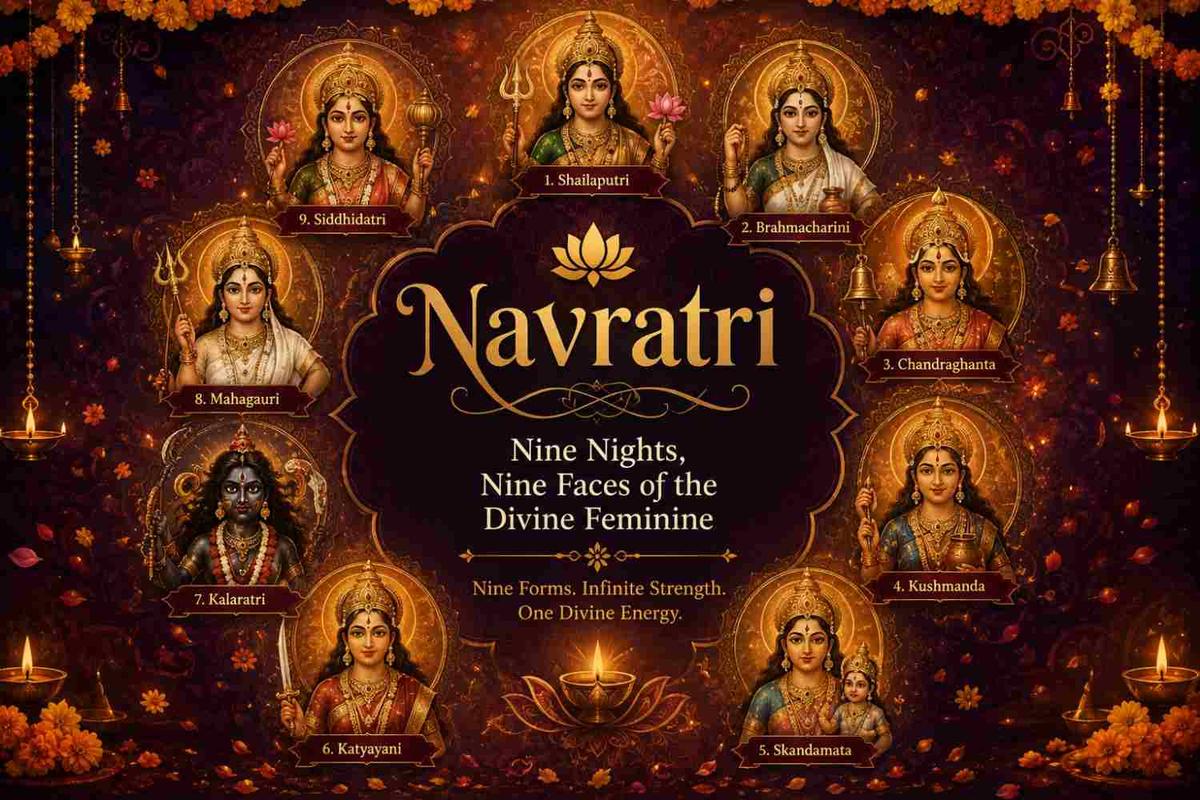
Navratri: Nine nights, nine faces of Shakti
The first indication of Navratri usually comes not from any temple. This could be a spontaneous display of a tiny kalash in the corner of your house, the planting of new barley seeds into the moist so