Maa Kushmanda: The smile that lit the Cosmos

RIYA SHARMA
HRDYAM - DISCOVER SACRED JOURNEYS, WISDOM & WELLNESS
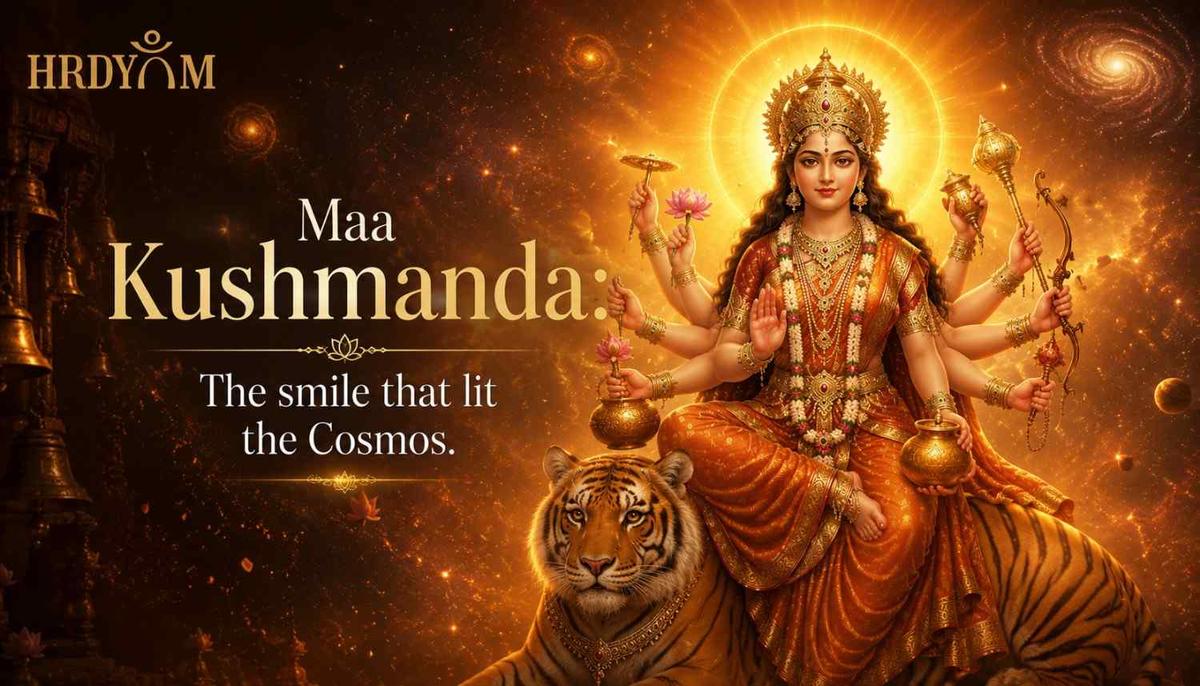
The fourth day of Navratri is devoted to worshipping Maa Kushmanda, the fourth form of Navdurga. The legend of Maa Kushmanda completely changes the direction of the Navratri pilgrimage. Following the calmness of Maa Shailputri, the asceticism of Maa Brahmacharini, and the boldness of Maa Chandraghanta, here comes the goddess who represents creation herself.
According to tradition, Maa Kushmanda is the creator of cosmic energy and is said to have made the world light using her gentle smile. It is usually explained that her name consists of three separate words: Ku, meaning little; Ushma, meaning warmth or energy; and Anda, meaning cosmic egg.
She has an extremely unusual image. Traditionally, she is shown with eight hands, each of which holds some objects that are related to creation, protection, knowledge, prosperity, and meditation. Maa Kushmanda is also known for riding a lion and shining like the sun.
And yet, perhaps the most beautiful thing about her story is the concept that great power can emerge from an extremely subtle thing.
It can emerge from a smile.
It can come from a spark.
It can come from some warmth in absolute darkness.
Thus, Navratri Day 4 not only celebrates cosmic creation; it can also be seen as a celebration of the potential to create in our everyday life. Even something as simple as an idea, a small act of kindness, breaking an old habit, or choosing to start anew might seem inconsequential at first. But with the right attention, even the tiniest of beginnings can turn into something much bigger.
Thus, Maa Kushmanda brings an element of expansion into the Navratri pilgrimage.
The first three days have made the seeker strong with stability, discipline, and courage. But now comes the time for the next big step: what do you intend to create with all that strength?
Maa Kushmanda's story asks you not just to overcome obstacles, but to create with them.
The mother behind creation
Maa Kushmanda is worshiped on the fourth day of Navratri and is considered the fourth manifestation of the Navdurga. Maa Kushmanda is associated with the creation of the universe and has the powers of warmth, energy, and creation.
It is believed that in ancient times, when there was darkness everywhere, Maa Kushmanda created the cosmic egg through her smile, thus creating light and life in the universe. Her name is generally related to Ku (small), Ushma (energy or warmth), and Anda (cosmic egg).
She is also referred to as Ashtabhuja Devi or the eight-armed Goddess. Maa Kushmanda carries different things in her eight hands, such as a rosary, chakra, mace, lotus, bow and arrow, kamandalu, and a pot full of nectar.
The reason why she stands out is because of her relation to the Sun. It is said that she lives within the core of the sun and gives the energy needed for life.
While Maa Chandraghanta is known for symbolizing strength and protection, the story of Maa Kushmanda is about creation and vitality.
The message of Maa Kushmanda for Navratri Day 4 is so beautiful in its simplicity: “Before anything can be created, it requires energy and light”. No matter if it’s an idea, a habit, a relationship, or anything else-from that small start, something amazing can grow.
When her smile became the first light
According to tradition, before the process of creation, there existed only darkness and chaos in the universe. Maa Kushmanda is believed to have created light with her smile, thus creating the Brahmanda, which means cosmic egg.
Connection with the Sun is one of the significant aspects of Maa Kushmanda's mythology. It is believed that she lives in the center of the sun and provides it with energy to warm the world and give life.
Maa Kushmanda has eight hands in her representation, where she holds various items such as a lotus, bow and arrow, chakra, mace, rosary, kamandalu, and amrita kumbha. She is shown riding on the lion.
The uniqueness of her story from the earlier versions of Navdurga is that her character does not include suffering or overcoming the enemy. Instead, she symbolizes the creative power that gives birth to life.
Her story is filled with another lesson for people. The creation of something big does not start with it being huge. The idea starts in our minds, skills start with our practice, relationships start with our first connection. And a new page can start with our choice.
The symbolism of Maa Kushmanda transforms all these humble beginnings into something greater-light coming out of the dark and possibilities arising out of nothing.
Eight arms, infinite possibilities
Symbols of Maa Kushmanda include allusions related to the process of creation, energy, nourishment, and abundance. This image of Maa Kushmanda differs from the warrior-like image of Maa Chandraghanta. The symbolism here is more centered around the life-giving forces.
Eight Arms
Maa Kushmanda is also called Ashtabhuja Devi or the eight-armed Goddess. These numerous arms stand for her ability to create and control the processes of creation.
Cosmic Egg
The Brahmanda (cosmic egg) is one of the main symbols associated with Maa Kushmanda. It stands for the entire universe where creation takes place in spite of the first impression of emptiness.
The Sun
The connection with the Sun is associated with the ideas of energy, heat, light, and vigor. Similarly to the way the Sun helps life appear on Earth, Maa Kushmanda embodies the energy needed for creation and existence.
The Lion
The lion denotes power and courage. The lion adds an element of strength to her otherwise nurturing and creative personality. Strength is important for creation.
The Pot of Nectar
The pot of nectar, which she holds in her hand, is symbolic of life, nourishment, and vigor. It symbolizes the nurturing part of her power.
Her Smile
Her most unique symbol might be her gentle smile. It is said that creation took place through her smile. It symbolizes the concept that creation may take place out of the simplest thing possible, like warmth, happiness, and positive energy.
It thus symbolizes that Maa Kushmanda is a Goddess of creation rather than destruction. Her incarnation on Day 4 of Navratri is an indication that to have power is not just to protect yourself but also to use that power in creation.
From inner stillness to radiance

Goddess Kushmanda introduces an entirely new element to the Navratri pilgrimage: creation.
Days 1-3 are about cultivating the attributes required to advance on the journey, namely stability, discipline, and boldness. Day 4 marks the shift from "what can I overcome" to "what can I create?"
Her connection to the Sun is highly significant. Light is required for growth, just as energy is required for action. Our aspirations require attention and effort before becoming a reality in much the same way.
In addition, Maa Kushmanda inspires us to recognize the importance of a humble start. We usually seek perfect timing or confidence or ideal conditions to get going on something. However, her symbolism is just the opposite; even a tiny flame has the potential to light up a big area someday.
This being said, Day 4 is a great opportunity to think about:
What is the new concept that I want to cultivate?
What is the habit that can make a difference in my life?
What is it that I keep on putting off since it seems too insignificant?
How can I inject some warmth into the life of someone?
Maa Kushmanda tells us that any creation starts from somewhere – even a tiny spark.
Welcoming light through ritual
Maa Kushmanda's worship on Day 4 is done with the aid of clean offering materials and pure thoughts. The puja involves calling upon Maa Kushmanda as the source of vitality, sustenance, and wellness.
Steps for Puja
Cleanse the puja area and yourself before starting. Arrange the image/idol of Maa Kushmanda along with a Kalash.
Light up the ghee diya and incense sticks, and start by praying to Lord Ganesha.
Offer flowers, akshat, kumkum, and chandan to Maa Kushmanda.
Offer bhog items in the form of pumpkin or its preparations.
Chant the mantra of Maa Kushmanda: ॐ देवी कूष्माण्डायै नमः॥
Offer fruits as well as other sattvic foods according to your family custom.
Chant aarti by ringing a bell and pray for good health, vitality, prosperity, and well-being.
Distribute the bhog as prasad among family members after you have completed the ritual.
It is not necessary to make the fourth day's ritual too grandiose. The uniqueness of Maa Kushmanda puja lies in its motive, which is gratitude towards life, vitality, nutrition, and the ability to create.
If you are observing a Navratri vrat, then prepare the bhog according to your family's fasting ritual.
The offerings that complete the ritual
Puja Samagri for Maa Kushmanda on Day 4 of Navratri can be kept traditional and simple. This is because the Kalash from Day 1 remains throughout Navratri. Hence, there is no need to do things from scratch.
| Puja Samagri | Purpose |
|---|---|
| Maa Kushmanda's image or idol | Main focus of the puja |
| Kalash | Continues from Day 1 |
| Fresh flowers | Offering to the Goddess |
| Kumkum / Roli | Tilak and puja |
| Akshat | Used during prayers |
| Chandan | Traditional offering |
| Ghee diya | For lighting during worship |
| Dhoop / Incense | Part of the puja |
| Fruits | Sattvic offering |
| Malpua | Traditional bhog |
| Pumpkin or Kushmanda | Associated with the Goddess's name |
| Panchamrit | Offering according to family tradition |
| Camphor | For aarti |
| Japa mala | For mantra chanting |
Kushmanda, or pumpkin, has an especially fascinating link with her name and is used as an offering in certain traditions. Malpua is yet another food item commonly offered to Maa Kushmanda during her bhog.
Sweetness for the mother of creation

The offering made to Goddess Kushmanda shows the nurturing nature of the form of the goddess. The sweet Malpua is an offering that is usually made to the goddess on the fourth day of Navratri.
| Bhog | How it is offered |
|---|---|
| Malpua | A traditional sweet offering for Maa Kushmanda |
| Pumpkin (Kushmanda) | Associated with the Goddess's name and symbolism |
| Kheer | A simple milk-based offering |
| Fresh fruits | Light and sattvic offering |
| Mishri | Offered for sweetness |
| Dry fruits | Can be included as a simple offering |
The preparations for the Navratri vrat can easily be adjusted as per the rules regarding the ingredients allowed during your vrat.
The crucial step here is to make the bhog clean and offer it first before eating the bhog yourself. The moment puja is done, the food can then be consumed by the family members as prasad.
As the day is dedicated to Maa Kushmanda, who is linked to creation and nurturing, the bhog on this day holds special significance compared to the bhog of earlier days. Not only do we eat food, but food serves as a reminder of the power with which life is nurtured and sustained.
Orange: the warmth of vitality
The color is usually connected with Maa Kushmanda on Day 4 of Navratri. The color symbolizes the warmth, power, excitement, and brilliance associated with her relationship with the Sun.
The orange color also adds liveliness to the festival. It fits well with Maa Kushmanda being associated with creation and life-giving power after some calm colors of the previous days.
Inclusion of Orange Colour in Day 4 Puja
One can wear an orange saree, kurta, dress, or dupatta. Include orange flowers in the decoration of the puja ceremony. Include orange decorations in rangoli designs. Pick up orange colored accessories for your festival attire. Wear orange attire while participating in Garba-Dandiya ceremonies in the evening.
Orange is not a necessary requirement to perform the puja, but it is just a way of contributing towards the tradition attached to the day.
Orange seems very suitable for worshipping Maa Kushmanda as it represents the warmth of sunlight, fire, and the energy of growth.
Inviting energy, vitality, and abundance
The Mother Kushmanda has been revered by devotees for her positive effects on one's health, vigor, prosperity, and energy. Being the Goddess of creation and nourishment, her reverence has a link with growth and abundance.
Devotees have sought her blessings for:
Good health and vigor: The worship of Maa Kushmanda has been linked with the Sun as a source of energy for life.
Prosperity and abundance: The form of Maa Kushmanda has a relationship with nourishment and creation.
Positivity: The worship has been related to positivity due to her imagery.
Strength and energy: Devotees pray to her for energy to carry out their tasks.
Growth and new beginnings: Since Maa Kushmanda is the Goddess of creation, her worship becomes significant for starting a new chapter in one's life.
Peace and happiness: The nurturing side of Maa Kushmanda helps create peace at home.
Removal of negativity: Being the deity of light, she helps in driving away darkness from devotees' lives.
In addition to these beliefs, the story of Maa Kushmanda provides a message for everyone: Energy gets its meaning through creation, not just reaction.
Thus, her story could become an excellent occasion for thinking about what you wish to nurture in yourself-an idea, a connection, a skill, a habit, or something else.
Navratri Day Four teaches us that the process of development is much more than wishing for changes. It needs energy and nourishment.
Keep the fourth day intentional
Worship of Maa Kushmanda involves aspects such as creation, energy, and nourishment. Hence, Day 4 can be celebrated with a positive attitude rather than with too much rigidity.
- Complicating the Puja Rituals Too Much
Elaborate arrangements and many samagri are not required to perform a puja. You just need an organized space, some basic ingredients of samagri, and genuine devotion in your prayers.
- Thinking that Fasting is all about Deprivation
Observing vrat is based on your religious traditions and personal preferences. Try not to turn fasting into a competition for you, and do not ignore your body's needs.
- Using Excessive Food for Bhog
Since Maa Kushmanda is related to aspects of nourishment and abundance, preparing too much food that will eventually be wasted does not match the idea of the bhog offering.
- Asking About Prosperity Only
The aspect of prosperity in relation to Maa Kushmanda is one side of the symbol. But Day 4 does not only involve prayers for obtaining material goods.
- Not Recognizing the Meaning of Pumpkin Offering
There is an interesting tradition associated with the name of Maa Kushmanda and her association with the pumpkin fruit.
- Ignoring the Spirit of Creation
The Day 4 ritual is a chance for you to reflect on the kind of creation that you are working on in your own life. Doing rituals the whole day without giving it some thought will make it very mechanical.
- Squandering Your Vital Force
Maa Kushmanda is a symbol of creative energy. The day should be used for doing something productive or creating something.
How is a festival celebrated in many traditions?

Navratri’s fourth day is marked by various rituals that are carried out in different parts of India, including household puja, fasting, music, local festivals, and food rituals.
| Region | How Day 4 is Celebrated |
|---|---|
| Gujarat | Devotees continue evening Garba and Dandiya, with colourful traditional clothing, music, and community celebrations. |
| Maharashtra | Families continue daily Devi worship, fasting, and visits to temples, while communities organise devotional and cultural programmes. |
| North India | Many households continue their daily Navratri puja and vrat, while temples hold special prayers and devotional gatherings. |
| South India | Golu/Kolu displays remain an important part of the festive atmosphere, with families visiting one another and sharing prasadam. |
| Himachal Pradesh | Devi temples and local religious traditions remain an important part of Navratri observance, with devotees visiting temples and making offerings. |
| Rajasthan | Navratri celebrations combine Devi worship with regional music, traditional clothing, temple visits, and community festivities. |
Make every celebration more meaningful with HRDYAM
The fourth day of Navratri, known as Maa Kushmanda's Navratri, is a wonderful chance to learn about the relationship between spirituality, culture, and the sacred heritage of India.
At HRDYAM, we consider it important to visit temples after gaining knowledge about their mythology, traditions, rituals, and people. The spiritual tours offered by us will allow travellers to visit sacred destinations of India extraordinarily.
Be it spiritual journeys to Devi temples, Shakti peetha tour packages, or any other form of pilgrimage, HRDYAM is the perfect destination for you.
In addition to this, you will also be able to find Puja essentials, spiritual products, Vedic astrology services, and customized spiritual tours at HRDYAM.
The tale of Maa Kushmanda focuses on creation and cultivation. The same concept can be applied to the process of traveling in order to explore, comprehend, and come back with a unique experience.
Navratri this year will make your travel journey an experience of India's spiritual legacy.
Where light begins within
The fourth day of Navratri is when the Navdurga's journey takes an entirely new turn. Maa Kushmanda is not associated with battles or penances. She is all about creation, energy, warmth, and nourishment.
The legend of Maa Kushmanda introducing light to the world with her smile holds a simple yet important lesson that something great can originate from something very tiny.
Invention is the product of an idea, success is the fruit of a decision, and better health can originate from a single healthy practice. What's important is how far you go from the point where everything began.
Maa Kushmanda also teaches us that creation needs energy. As the Sun needs warmth to sustain life on Earth, our dreams need our attention and dedication to flourish.
Not everything has to be big.
Sometimes, just a little spark is all you need to start making your own world.
Spiritual travel researcher, Vedic cultural writer, and contributing editor at HRDYAM.
You Might Also Like
Tags
More Articles
View all
What is HRDYAM? The AI-Powered Spiritual Ecosystem
The spiritual essence of India has not merely consisted of temples alone. It is found in pilgrimage circuits, old rituals, Vedic astrology, Yoga, Ayurveda, sacred rivers, traditions of the region, art

How HRDYAM blends spirituality with sustainability
How would pilgrimage change if it were no longer viewed as a trip to a shrine but as an engagement with the entire sacred geography? The river next to the shrine, the communities that live by the shri
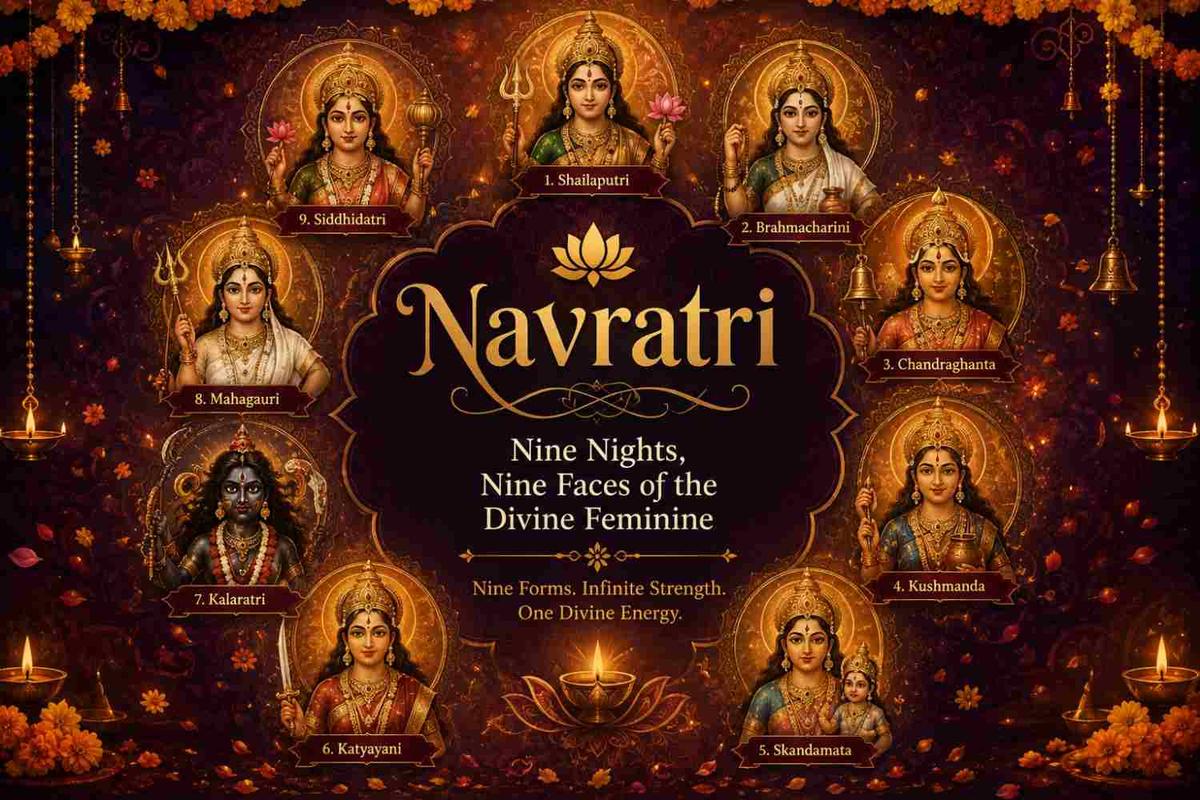
Navratri: Nine nights, nine faces of Shakti
The first indication of Navratri usually comes not from any temple. This could be a spontaneous display of a tiny kalash in the corner of your house, the planting of new barley seeds into the moist so