Ayodhya Deepotsav & Lakshmi Poojan: a festival of light and grace

RIYA SHARMA
HRDYAM - DISCOVER SACRED JOURNEYS, WISDOM & WELLNESS
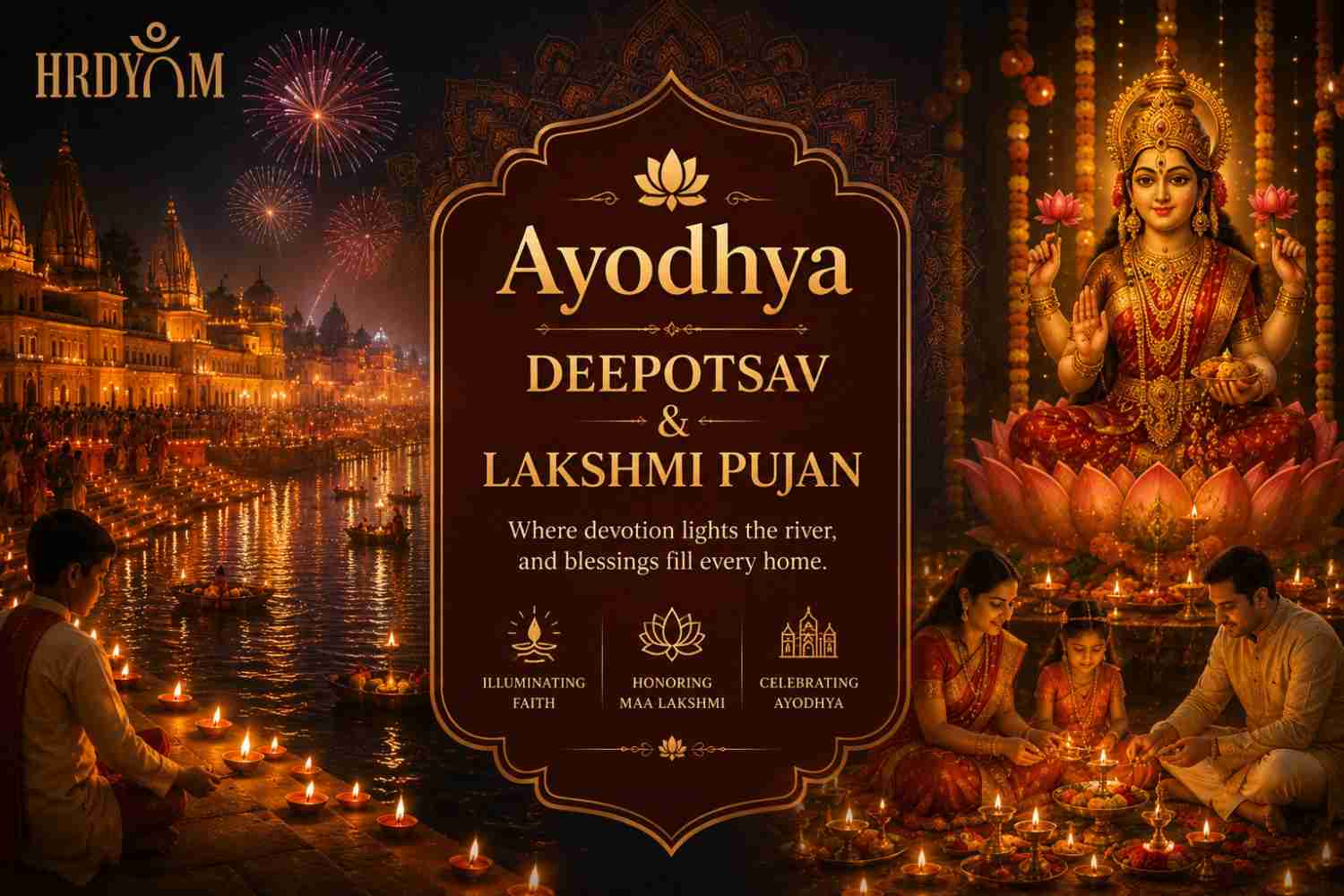
There is a certain magic that comes with watching Ayodhya once it gets dark. As soon as night falls on the Sarayu River, there starts appearing some diya here and there on the ghats. The number of flames increases gradually until it appears as though the whole city is surrounded by a lit river.
This is the essence of the festival Deepotsav, which was first celebrated at the time of the return of Lord Rama to his homeland Ayodhya from fourteen years of banishment. As per the legend, the city was illuminated in honor of Rama, Sita, and Lakshman with a number of lamps.
Over the centuries, the tale remains alive with the help of diyas, and each flame reminds one of homecoming, hopes, and the victory of light over darkness.
Thousands of flames coming together make the city not just lit but also a revived ancient tale.
What happens when a thousand flames become one?
As the night deepens, the diyas start changing Ayodhya. One becomes a string of lamps, the string becomes a ghat, and before long, the whole city seems to glow beside the Sarayu.
The magic is in the sheer simplicity of a diya. Each flame may not be spectacular, but together, they make something remarkable. In its own subtle way, it is an age-old concept. With all the lights brought together, darkness doesn’t have much room left at all.
For those who participate in it, a diya is not just a way to decorate a house or a riverside ghat. It becomes a sign of invitation: welcoming hope, goodness, wealth, and an entirely new start.
That might just be what makes the Deepotsav festival so enchanting. Amidst all the grandeur of countless lamps, there is the very same personal touch of being in a house where one’s family lives. Light a lamp, sit together, and rejoice in knowing that there is always a way back to the light.
What does a city look like when Rama comes home?
The beginning of Deepotsav is rooted in the homecoming of Rama, Sita, and Lakshmana. After being in exile for fourteen years, Rama came back to Ayodhya, and it is believed that the citizens greeted him with the lighting of diya lamps around the city.
However, now this memory is depicted on a different scale. Ghats get decorated with lamps, temples become illuminated, devotional music can be heard everywhere, and even the streets become participants in Deepotsav celebrations. It happens so that what was once represented by just a few lamps at home becomes something much more powerful-a celebration shared by a whole city.
Nevertheless, the essence of the festival remains very beautiful and simple. The coming of Rama is the coming of hope, dharma, and righteousness after dark times. Therefore, these lamps become not just decoration but symbols of celebration of the coming of the beloved king to his hometown.
For a tourist, Deepotsav may be seen as a wonderful festival. However, for the people of Ayodhya, it is also a retelling of their story.
What does the Sarayu see in the glow?
With thousands of lamps lighting up the ghats, Sarayu takes part in the festival too. Each flame reflects in the flowing waters of the river, creating an impression that stars have been filled into the river waters.
Rivers in Indian culture have long ceased to be merely sources of water supply for people. Rivers have become places of praying and remembering people. Ayodhya has the unique combination of the Sarayu River, giving Deepotsav a quiet and majestic touch.
It is especially symbolic of lighting diya beside the river. The flame is so delicate and transient, while the river flows through the endless ages. While one symbolizes transience, the other is continuity.
Folding hands in front of the lit ghats, a message seems to be silently conveyed here: although traditions become grander and grow larger with time, their light can continue traveling through generations.
Where does the festival's last light return?
From the grandeur of the ghats of Ayodhya, the meaning of Diwali becomes more humble. The festival leaves its riverside location to find a space inside the homes, where individuals prepare a little space of their own to perform their respective puja.
The floors are washed, rangolis are created at the doors, new clothes are taken out, and diyas are placed near doors and windows. Each ritual performed here has one simple purpose in mind-to cleanse the home and purify it.
Here comes Lakshmi Puja in the picture. Goddess Lakshmi, who is known for auspiciousness, prosperity, and abundance, is worshipped on this day as people thank the divine for all that they have received and pray for blessings for the upcoming year.
However, prosperity in this context does not necessarily involve money only. One can find many kinds of prosperity in one’s life-health, happiness, relations, peace, work, and contentment.

What does Lakshmi Pujan really welcome?
The sounds of hustle and bustle start receding as family members congregate at the puja site. A clean cloth is laid down, flowers are put out, diyas are lit, and Goddess Lakshmi is worshiped through the recitation of prayers. For some time, the busyness of life makes room for thankfulness.
Lakshmi Pujan is a celebration of calling for prosperity and good luck in one’s house. However, this holiday has a meaning that goes beyond material success. It reminds people to appreciate their resources, work, and relationships as those which give their prosperity meaning.
That is why the significance of cleanness and orderliness during Diwali is so great. Getting ready for the holiday is not only about cleaning up but also getting rid of things that are no longer needed to let something new come.
As the last diya is lit, the prayer turns out to be truly beautiful: "May my house have enough, may my heart stay thankful, may my prosperity come with wisdom".
What if prosperity meant more than gold?
This explains why the celebration of Lakshmi Pujan is distinct from merely wishing to acquire wealth. It goes beyond just praying for possessions, because it involves living the life that comes with having something.
Often, after the ritual, families open their new account books, pray for success in their endeavors, and thank the Almighty for providing sustenance. For the businessmen, Diwali may mean the start of something new.
| What we seek | What it can represent |
|---|---|
| Dhana | Material prosperity and financial stability |
| Dhanya | Food, nourishment and abundance |
| Arogya | Health and well-being |
| Santosha | Contentment with what we have |
| Sadbuddhi | Wisdom to use prosperity responsibly |
How has CM Yogi's Deepotsav transformed Ayodhya?
With the initiative and guidance provided by the Uttar Pradesh Chief Minister Yogi Adityanath, the Deepotsav held in Ayodhya has broken records for grandeur and divinity in the festival.
A part of the key highlights of the Ayodhya Deepotsav: Over 26 Lakh (2.6 million) Diyas: Over 26 lakh oil lights are lit on the banks of the Saryu River, covering the entire area of Ram Ki Paidi.
Shobha Yatra (Procession): CM Yogi greeted Lord Shriram, Mata Sita, and Lakshman when they alighted from the 'Pushpak Viman' Helicopter, followed by the royal coronation and aarti ceremony.
Maha Aarti: A grand Maha Aarti is being organised on the banks of the Saryu River by 2100 Vedic Pandits.
Modern Laser and Drone Show: A drone laser light show representing Ram Mandir, Shri Ram, and Hanuman Ji became the main highlight of the event.
Heritage Promotion: This event incorporates international artists, magnificent processions, and laser and drone shows that retell tales from the Ramayana. Additional cultural sites such as the Ramayana wax museum have been included in the tourist itinerary.
High Volume of People Coming in: The number of tourists soared from less than 3 lakhs in 2017 to more than 160 million in 2024, while innumerable tourists would pour in until 2025. In peak times, the number of tourists in Ayodhya exceeded that of the Taj Mahal in Agra.
Livelihoods of Locals: An influx of tourists led to the creation of numerous jobs in hotels, transportation services, and small-scale enterprises.
When Ayodhya's light meets the Lakshmi Puja at home
Although Deepotsav and Lakshmi Pujan might be thought to fall under distinct phases of Diwali, they collectively narrate one big story.
In Ayodhya, light represents a joyous return home. In homes across the country, Lakshmi Pujan brings the same light into households and invites people to embrace good fortune in their personal lives. One festival illuminates the entire city while the other lights a tiny flame within homes.
| Ayodhya Deepotsav | Lakshmi Pujan |
|---|---|
| Celebrates Rama’s return | Invokes Goddess Lakshmi |
| Public and collective | Intimate and familial |
| Lamps illuminate the city | Lamps illuminate the home |
| Symbolises hope and dharma | Symbolises prosperity and auspiciousness |
When does a celebration become a memory?
As the final prayers are being offered and the crowd starts to disperse, the lights keep on burning. Some of them burn brightly, some fade away in the darkness of the night. But the essence of the evening continues.
A kid remembers the glittering effect created by the Sarayu. A family remembers coming together to worship at the puja. Someone brings back with them either a miniature diya, a photograph, or just a memory of standing amidst thousands of lights.
These are the ways through which a tradition passes down from one generation to another-not only through scriptures and rituals but also by memories. Every generation celebrates Diwali in their own way but still holds within themselves the emotion that was felt by the previous generations.
And maybe this is the actual magic of the Ayodhya Deepotsav and Lakshmi Puja: the way an age-old tale comes alive in the present world to remind us that every generation gets the opportunity to light its own lamp.
When an old story finds a new generation
"The best thing about any living tradition is that it does not belong only to one generation." This is what we observe in Ayodhya, where kids see elders making diyas, where family congregations are held to pray, and where rituals take place that have stories centuries old.
In the case of Deepotsav, a child may get familiar with it as being a beautiful night of lights. But later on, when he/she grows up, he/she will realize why these lamps are being lit because they represent the victory of good over evil.
Similarly, this can happen with the festival of Lakshmi Pujan, where a kid may just do it without knowing much about it, but with growing age he/she will learn the importance of gratitude and prosperity.
This is how culture is slowly and silently transferred from one generation to another through hands learning to light a diya.
What else does a diya carry besides light?
"The best aspect of all traditions is that they do not belong to one generation." This is what we witness at Ayodhya, where children witness elders making the diyas, where there are family gatherings for praying, and where there are some rituals which are centuries old and have some fascinating stories behind them.
The same way in the case of Deepotsav, initially a child may just be aware that this is the night of lighting lamps and it is a very beautiful night. But later, as they grow up, he/she will understand the significance of lighting those lamps, which symbolize the triumph of good over evil.
The same will be the case in the festival of Lakshmi Pujan, where a child will initially be doing it without knowing anything much about it, but with the passage of time he/she will start realizing its significance regarding prosperity.
This is how culture is slowly and silently passed from one generation to another through hands learning how to light a diya.
When the glow fades, what remains?
Once the diyas have burnt out, once the decorations have been taken down, there remains another legacy of the festival of Diwali.
Diwali leaves us with the message of going back home-not only physically to our loved ones but also to our roots and values, and maybe even to ourselves. The return of Lord Rama to Ayodhya symbolizes how we all need to find our way back after our struggles, whereas the festival of Lakshmi Pujan is a reminder for us to be thankful for all the good things that we have in our lives.
This festival is also an opportunity for the act of renewal. As houses get cleaned and lights are lit up, it allows us the chance to let better behavior and better decisions into our lives.
That is probably the reason why the light of Diwali keeps shining even when the last light goes out.
Can a little Deepotsav begin at home?

It might be difficult for many people to celebrate Deepotsav at the banks of Sarayu, but the essence of Ayodhya can enter every household as well.
It may start with simple acts like cleaning the entrance of the house, creating a rangoli, and lighting some traditional diyas before getting together without any distractions from daily life. Before Lakshmi Pujan, one may take some time and thank God for work, family, health, and everything that he or she has.
Children can get involved in the holiday too, listening to the tale of Rama’s return, helping with diyas and making decorations. That way, they learn the tradition and become active participants in the celebration.
It is not necessary to imitate the grandeur of Ayodhya-it is enough to try and recreate its atmosphere-a home full of light, togetherness, gratitude, and hope.
When tradition becomes a journey with HRDYAM
The significance of Indian festivals such as Deepotsav and Lakshmi Pujan cannot be understood just from an HRDYAM perspective in terms of time. It is a chance for HRDYAM to explore the stories, temples, and traditions of India through various festivals and spiritual trips.
A trip to Ayodhya for Deepotsav can take tourists not only around the beautiful sights but also into the world where there will be illumination of the ghats of the River Sarayu, ancient temples, and prayers of Ayodhya, the land of Lord Rama.
By organizing spiritual journeys in a thoughtful manner, HRDYAM hopes to bring a certain degree of importance, comfort, and relevance to these experiences of visiting the temples. Visiting the temples is not all about visiting them but rather about understanding why generation after generation has been coming back to them.
Maybe somewhere in the midst of the thousands of diyas and the lone flame of a domestic altar of god, the travelers will realize that the best journeys are those which give us a little more light inside us.
Conclusion
However, in time, the festivities will come to an end. The crowds will dissipate, the music will die down, and slowly, the diyas will start going out. But the tale behind their existence remains.
The Deepotsav of Ayodhya celebrates the return of Rama and of light following a period of darkness. The Lakshmi Pujan makes this more personal as it transforms the diya into a wish for prosperity and a fresh start in life.
This is perhaps the reason why these customs remain relevant even through generations. They do not just call us to recall the past but also to embrace it in the present.
And as the last spark goes out, the celebration comes to a close, but the light persists. Not the physical light from the diya, but the light of hope that we carry inside ourselves.
Spiritual travel researcher, Vedic cultural writer, and contributing editor at HRDYAM.
You Might Also Like
Tags
More Articles
View all
What is HRDYAM? The AI-Powered Spiritual Ecosystem
The spiritual essence of India has not merely consisted of temples alone. It is found in pilgrimage circuits, old rituals, Vedic astrology, Yoga, Ayurveda, sacred rivers, traditions of the region, art

How HRDYAM blends spirituality with sustainability
How would pilgrimage change if it were no longer viewed as a trip to a shrine but as an engagement with the entire sacred geography? The river next to the shrine, the communities that live by the shri
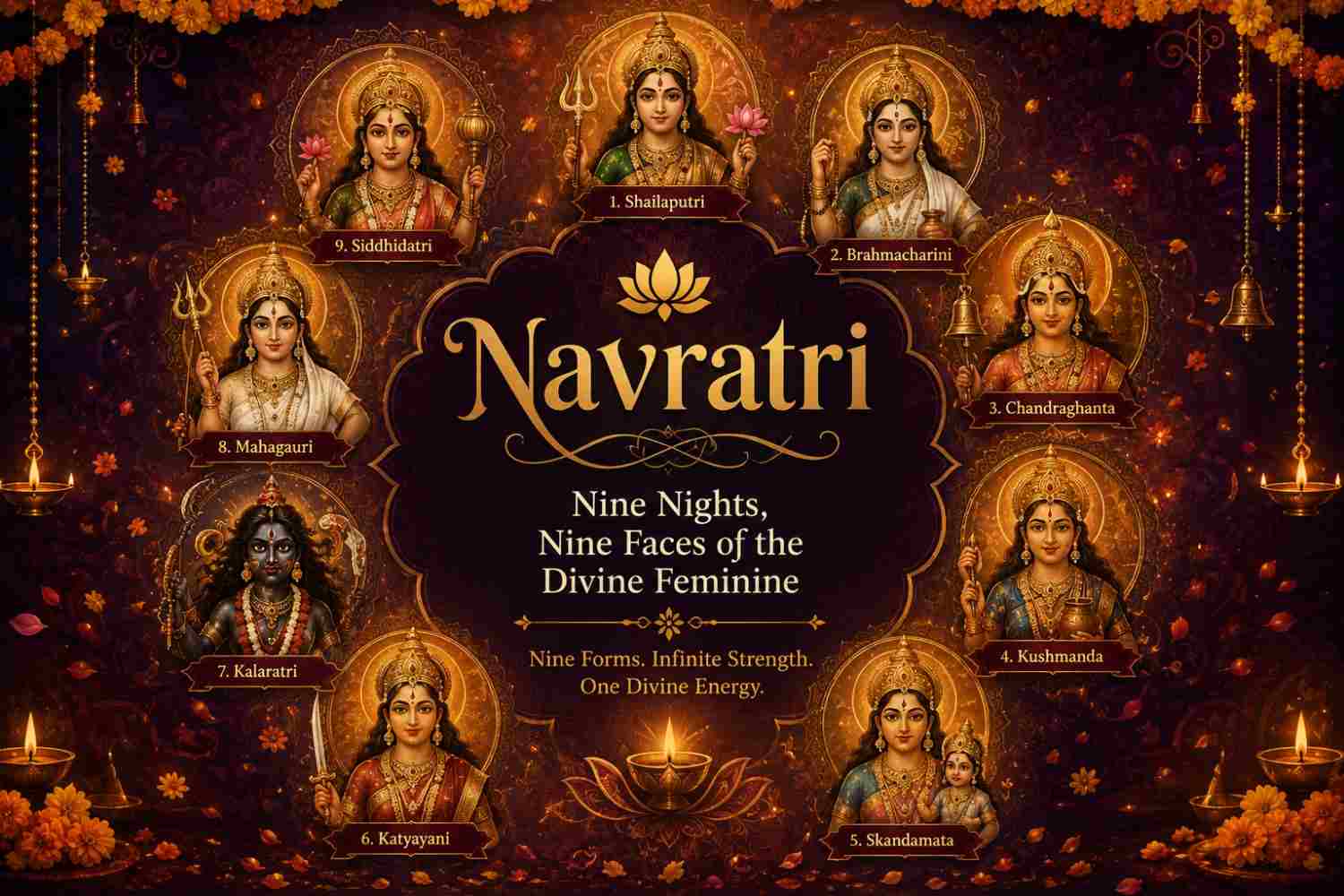
Navratri: Nine nights, nine faces of Shakti
The first indication of Navratri usually comes not from any temple. This could be a spontaneous display of a tiny kalash in the corner of your house, the planting of new barley seeds into the moist so