What is HRDYAM? The AI-Powered Spiritual Ecosystem

RIYA SHARMA
HRDYAM - DISCOVER SACRED JOURNEYS, WISDOM & WELLNESS
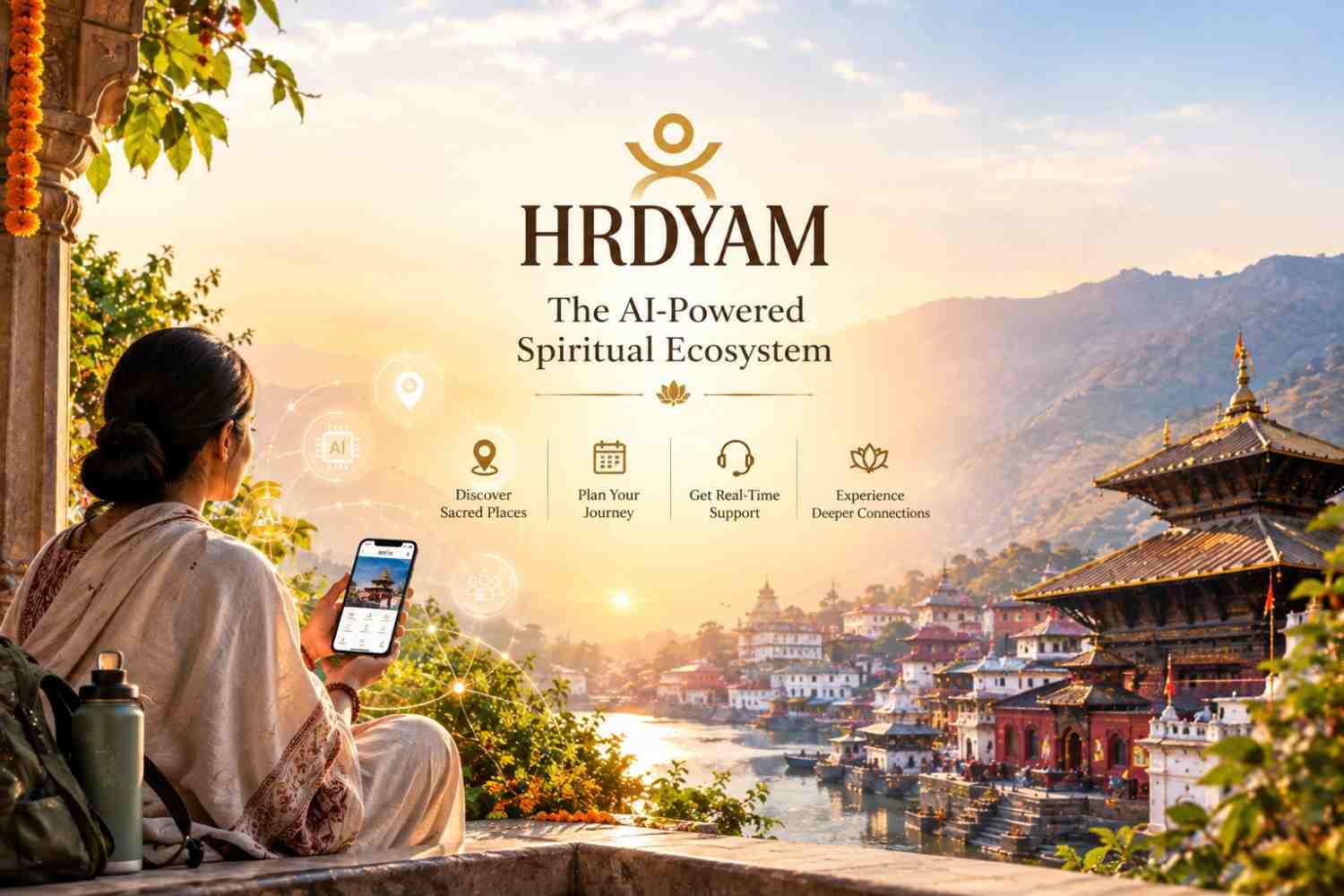
The spiritual essence of India has not merely consisted of temples alone. It is found in pilgrimage circuits, old rituals, Vedic astrology, Yoga, Ayurveda, sacred rivers, traditions of the region, artisans, priests, texts, and many more stories that have been passed on from generation to generation.
However, how people explore this vast spiritual world has transformed beyond recognition.
For instance, a traveller today can use Google to find a temple, plan a pilgrimage online using travel portals, seek guidance on Vedic astrology from another platform, buy a Rudraksha from an e-commerce site, and look up YouTube to learn about the ritual he/she is going to do. Spiritualism in the digital era has become highly fragmented despite the strong connections that exist within the tradition.
This is where HRDYAM was conceptualized. HRDYAM is an artificial intelligence-driven spiritual technology ecosystem that combines spiritual travel, Vedic astrology, puja services, yoga and wellness, sacred products, and temple discovery in one. Launched by ZoAstro Tech Private Limited, the platform is built on the principle of making available the spiritual essence of India in an authentic manner.
However, what is an AI-powered spiritual ecosystem, and why does India need it?
Why does India need a spiritual ecosystem today?
India already possesses an enormous spiritual economy. People visit temples, pilgrimage sites, ashrams, and sacred landscapes in huge numbers. Spiritual practices also become more and more closely associated with wellness, meditation, yoga, astrology, and conscious travelling.
The scale of the Indian tourist movement demonstrates such an opportunity. As per the data provided by the Ministry of Tourism on its official dashboard, India had about 4.29 billion domestic tourist visits in 2025, which is 45.6% higher compared to 2024. The same dashboard shows that the country registered more than 20.22 million international tourist visits in 2025.
However, scale becomes another challenge because of the issue of discovery. The traveler does not know which priest will be competent enough, whether a spiritual product is authentic, what ritual to perform, how to plan a pilgrimage, and how to distinguish traditional knowledge from commercial ones.
However, an ecosystem will be different from a simple marketplace because the goal is to connect various stages of the journey of a seeker, rather than treat every spiritual need as an individual transaction.
What does HRDYAM actually mean?
HRDYAM derives its name from the concept of Hridaya, which is derived from Sanskrit and refers to the heart or inner center.
HRDYAM sees this concept as being more than just its name, but as a philosophy where the platform is trying to make man the center of technology instead of the technology being the center of the experience.
As per the philosophy of the company, HRDYAM is seen as a digital heritage ecosystem for the purpose of preserving and sharing the knowledge heritage of India. Such heritage could include oral history, regional heritage, devotional music, folklore, festivals, indigenous knowledge, and other forms of knowledge.
Thereby, it has two aspects: experience and preservation. This is because it aims to assist one in experiencing the pilgrimage now while ensuring that the knowledge about such a pilgrimage is not lost in the future.
How does the HRDYAM spiritual ecosystem work?
In its simplest form, HRDYAM covers many spiritual requirements under one roof.
Some of the important offerings from the present portal include temple tours, Vedic astrology, pujas, well-being programs, spirituality-related products, and spiritual tours.
| HRDYAM Vertical | What it offers | Purpose for the seeker |
|---|---|---|
| Spiritual Travel & Temple Tours | Pilgrimages, temple journeys, and curated sacred experiences | Discover and experience sacred destinations |
| Vedic Astrology | Personalised astrology consultations and chart-based guidance | Understand traditional Jyotish perspectives |
| Puja & Ritual Services | Access to structured Vedic rituals and practitioners | Perform rituals with appropriate guidance |
| Yoga & Wellness | Yoga, meditation, Ayurveda and wellness retreats | Support physical, mental, and spiritual well-being |
| Sacred Store | Crystals, Rudraksha, Yantras and other spiritual products | Access curated spiritual products |
| Temple & Sacred Places Discovery | Information about temples and sacred destinations | Research and plan spiritual journeys |
What is key about this is that these are not necessarily six independent ventures brought together on one website. HRDYAM’s goal is to integrate these ventures into an ecosystem that has to do with spirituality, where the experience of one naturally leads to the other.
For instance, when someone is interested in Kashi, he or she may be interested in learning about the temple rituals, going on a pilgrimage, doing a puja, or even consulting a Vedic astrologer. An ecosystem can bring all these things together without forcing the seeker to start afresh.
Where does AI fit into spirituality?
“AI-powered spiritual platform” can appear paradoxical at first sight. Spirituality is a very human phenomenon. AI is a technology.
However, HRDYAM is not treating AI as some kind of replacement for priests, teachers, astrologers, yoga teachers, and spiritual practices. AI can serve as an access layer.
It can be used to organize large amounts of information, personalize discovery, simplify complex concepts, recommend things, and generally make traditional knowledge more digestible in digital form.
This is especially applicable to topics such as Vedic astrology, which are often complicated for beginners due to terminology and calculation aspects. In its own content related to astrology, HRDYAM refers to AI as a simplification of complex Jyotish frameworks.
Thus, the real value is not “AI replacing spirituality.” It is about AI assisting people to access spiritual knowledge.
What makes HRDYAM different from a normal travel platform?
A traditional travel portal is essentially centered on transportation, accommodation, attractions, and bookings.
The spiritual trip is to be framed differently.
What is special about that temple? What is its background? What rituals are connected with it? Who may carry out the ritual? What is needed to know before entering the temple? Are there any other places of worship in the area?
The HRDYAM's approach begins with the assumption that a destination is more than just an attraction. The destination is part of a dynamic system of spirituality and culture.
HRDYAM's own platform of HRDYAM integrates spiritual travel with information, wellness, astrology, rituals, and sacred products, in contrast to pilgrimages considered a conventional holiday travel category.
The reason why it is essential to distinguish them is that the spiritual tourist of today needs something more than practical information. He needs context. He needs authenticity. And he wants convenience too.
How does HRDYAM build trust into spiritual services?
Trust becomes especially significant once digital platforms step into domains where relationships usually play an essential role.
The tourist is used to comparing various hotels on the basis of their prices and reviews. However, how does one go about evaluating a priest, astrologer, sacred items, or ritual?
The obvious response to this question would not be five-star reviews.
According to HRDYAM, it applies verification processes to various areas of its platform. As it follows from the About section, astrologers are background-verified, pandits and teerth purohits have to be certified, and sacred items are lab-certified.
| Trust Area | HRDYAM's stated approach |
|---|---|
| Astrologers | Background verification |
| Pandits & Teerth Purohits | Certification/credential verification |
| Sacred Products | Lab certification before listing |
| Pilgrimage Experiences | Curated journeys and verified guides |
| Customer Access | Website, phone, and WhatsApp channels |
| Transactions | Digital booking and payment infrastructure |
This aspect is very critical, especially in an industry that may be misled by false information and exaggerations.
With HRDYAM, technology now has another duty, that of ensuring that authenticity is easily identifiable.
Is HRDYAM only about Hindu spirituality?

HRDYAM has a strong foundation in the Hindu spiritual culture of India, involving Vedic wisdom, temples, pilgrimages, and Jyotish.
But according to its philosophy, the platform is open to all who seek sincerely, irrespective of their religion, nationality, and background. This differentiation is important.
Spiritual culture in India has varied forms, and now spiritual tourism is attracting not only pilgrims but also international tourists. A platform meant for a global audience should ensure that it shares its knowledge without assuming that everyone who uses it knows about the Sanskrit language, rituals, and culture.
The idea here is not to strip the tradition of its essence. The goal is to build a bridge from which an outsider may enter the tradition.
How does HRDYAM connect spirituality with wellness?
The contemporary wellness movement has generated great interest in yoga, meditation, Ayurveda, retreats, and conscious living.
Wellness could be about relaxation, physical fitness, or mental revitalization. Spiritual practices could revolve around philosophical aspects, discipline, rituals, introspection, and knowledge lineage.
HRDYAM facilitates the meeting between spirituality and wellness by combining yoga and wellness retreats with pilgrimage and spiritual knowledge on one platform. It has various descriptions of experiences related to yoga, meditation, Ayurveda, and wellness retreats in sacred locations.
It is possible to have a culturally enriched experience of wellness and not treat age-old practices as standalone lifestyle practices.
For example, the experience of a wellness retreat at Rishikesh becomes much more interesting when the traveler is aware of the spiritual background of yoga.
Why is preserving India's spiritual heritage part of HRDYAM?
There are two aspects to India’s spiritual legacy. One is tangible: temples, sculptures, texts, pilgrimage trails, monuments, and sacred lands.
The other aspect is intangible: oral histories, ritual practices, family stories, local lore, songs, knowledge systems, and practices from teacher to student.
The second aspect is especially endangered. In the event that the custodian of traditional knowledge passes away without passing down his or her knowledge to another person, a whole aspect of cultural history is lost forever. Hence, the stated social impact goal of HRDYAM entails the documentation of oral histories and the support of scholars, storytellers, musicians, temple historians, and other custodians of traditional knowledge. It adds value to the platform in more ways than merely commercial.
How can technology aid in preserving a living civilization from becoming a museum?
Can spiritual tourism support local communities?
The pilgrim site is more than just the main temple.
Priests, guides, drivers, artisans, flower vendors, local chefs, homestay providers, academics, and small business owners contribute to the spiritual economy.
When tourism increases but economic activity does not benefit these communities, then success can be achieved without social sustainability.
This is becoming an issue for tourism policies across the globe. The United Nations Tourism's 2025 Best Tourism Villages program, for instance, considers sustainable development, cultural/natural heritage, infrastructure, and community well-being while specifically stating that tourism helps small businesses and traditions.
Similarly, HRDYAM's ecosystem model recognizes that local communities and traditional keepers of knowledge are essential to the spiritual heritage. It talks about responsible pilgrimage by helping local homestays, grassroots communities, and traditional custodians while easing pressure on sites that are too crowded.
Here comes the point where spiritual tourism transcends consumption and becomes community engagement.
What does current tourism data tell us about the opportunity?
The significance of an appropriate time for an integrated spiritual platform is important.
The official data recorded in the official 2025 dashboard of the Ministry of Tourism predicts a tourism contribution of approximately Rs. 15.74 trillion, which is 5.22% of GDP and 84.63 million tourism jobs.
The India Tourism Data Portal of the Ministry of Tourism provides the official data on tourism, including domestic and international tourism, employment, tourism GDP, accommodation, etc.
This makes a very interesting scenario for spiritual tourism in India. India has not only increased the number of travellers, but it has also increased the number of travellers who can now discover, compare, book, and learn through digital means.
Is AI changing the way people discover spiritual knowledge?
In fact, there is already a trend in the larger tourism industry toward personalization using technology.
The 2026 website of the Ministry of Tourism indicates an “AI Champions for Digital Governance” summit hosted by ITDC, SCOPE, and LBSNAA, indicating a focus on the use of artificial intelligence and digital technology throughout the institutions.
In the context of spiritual tourism, personalization will be completely different from traditional travel suggestions.
As opposed to suggesting the “Top 10 Places to Visit,” an AI-driven spiritual experience will determine if one needs to find a pilgrimage, wellness, spiritual culture, worship of deities, temples, astrology, or a quiet spiritual experience.
Technology becomes relevant in that context. Artificial intelligence does not dictate spirituality. It helps the spiritual seeker sort out the huge amount of existing information.
What does a complete spiritual journey look like on HRDYAM?
The traveler can start by looking for a pilgrimage to Kashi. He will find temples and spiritual places, understand the cultural history of the place, and plan his itinerary. After this, he can select the relevant puja services, contact a verified astrologer, visit a wellness center, or buy a spiritual product related to his journey.
Every experience will be unique in its own way. However, with the platform, all these experiences can become part of a single spiritual journey.
| Stage | Seeker's Need | Possible HRDYAM Connection |
|---|---|---|
| Discover | “Where should I go?” | Temple and pilgrimage discovery |
| Understand | “Why is this place important?” | Spiritual and cultural content |
| Plan | “How should I travel?” | Curated spiritual journeys |
| Participate | “Which ritual or service do I need?” | Puja and ritual services |
| Reflect | “What can I learn or practise?” | Yoga, wellness and spiritual knowledge |
| Continue | “How do I carry this experience forward?” | Astrology, wellness and sacred products |
How does HRDYAM approach sustainable pilgrimage?

Temples and pilgrimage sites might suffer from congestion, pollution, strain on water resources and infrastructure, as well as the commercialization of the indigenous culture.
The HRDYAM responsible pilgrimage strategy thus emphasizes low-impact travel, local homestay accommodation, community involvement, and exploration of underdeveloped spiritual sites instead of bringing together all the pilgrims in already overloaded places.
This strategy is consistent with the larger direction of tourism policies in India. There is a National Strategy for Sustainable Tourism at the Ministry of Tourism, as well as strategies for rural tourism and rural homestay accommodation.
Sustainability, in this case, is not just an additional aspect. It is incorporated into the whole pilgrimage experience.
What is HRDYAM not trying to become?
HRDYAM will be better understood in terms of what it is not as well.
It is not just another hotel-and-flight booking website. HRDYAM is not meant to devalue spirituality by providing general wellness materials. It is not meant to be any unverified marketplace where any individual can sell a spiritual item or service without having any responsibilities whatsoever.
Most importantly, the philosophy that HRDYAM embraces is in no way related to mass tourism, fear astrology, and general spiritual business that is not based on any tradition at all.
This is crucial for the position of the brand. It is not the goal of HRDYAM to become the biggest spiritual platform. The goal is to become a trustworthy one.
What does HRDYAM ultimately want to build?
Essentially, HRDYAM is trying to address a contemporary issue with the aid of an age-old resource.
India already has the temples, the texts, the pilgrimage trails, the spiritual customs, the teachers, the artisans, the healing methods, and philosophy. The task lies in joining all these dots together in a manner that is credible, accessible, and relevant to the contemporary seeker.
This is the role that HRDYAM is trying to play. Not just a travel site. Not just an astrology site. Not just a wellness marketplace.
But a virtual spiritual ecosystem where connections can be made between journeys, learning, people, and experiences.
This overarching mission can be summarized in one key idea: Technology must not supersede the holy experience. It must be used to discover, make sense of, participate in, and preserve it.
And in a country where the traditions of spirituality have spanned thousands of years, languages, and generations, this may be the most critical journey for technology to help make.
Spiritual travel researcher, Vedic cultural writer, and contributing editor at HRDYAM.
You Might Also Like
Tags
More Articles
View all
How HRDYAM blends spirituality with sustainability
How would pilgrimage change if it were no longer viewed as a trip to a shrine but as an engagement with the entire sacred geography? The river next to the shrine, the communities that live by the shri
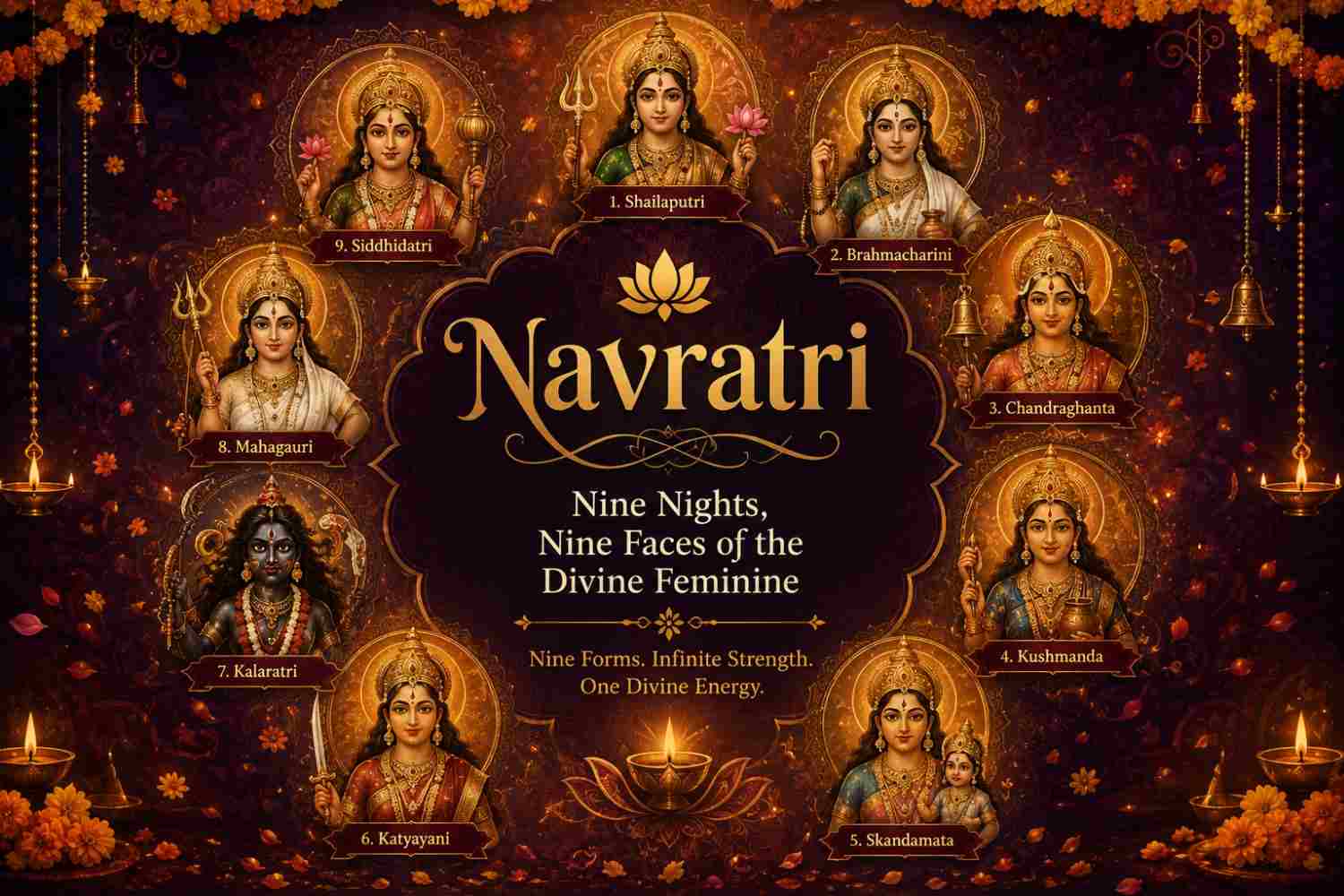
Navratri: Nine nights, nine faces of Shakti
The first indication of Navratri usually comes not from any temple. This could be a spontaneous display of a tiny kalash in the corner of your house, the planting of new barley seeds into the moist so
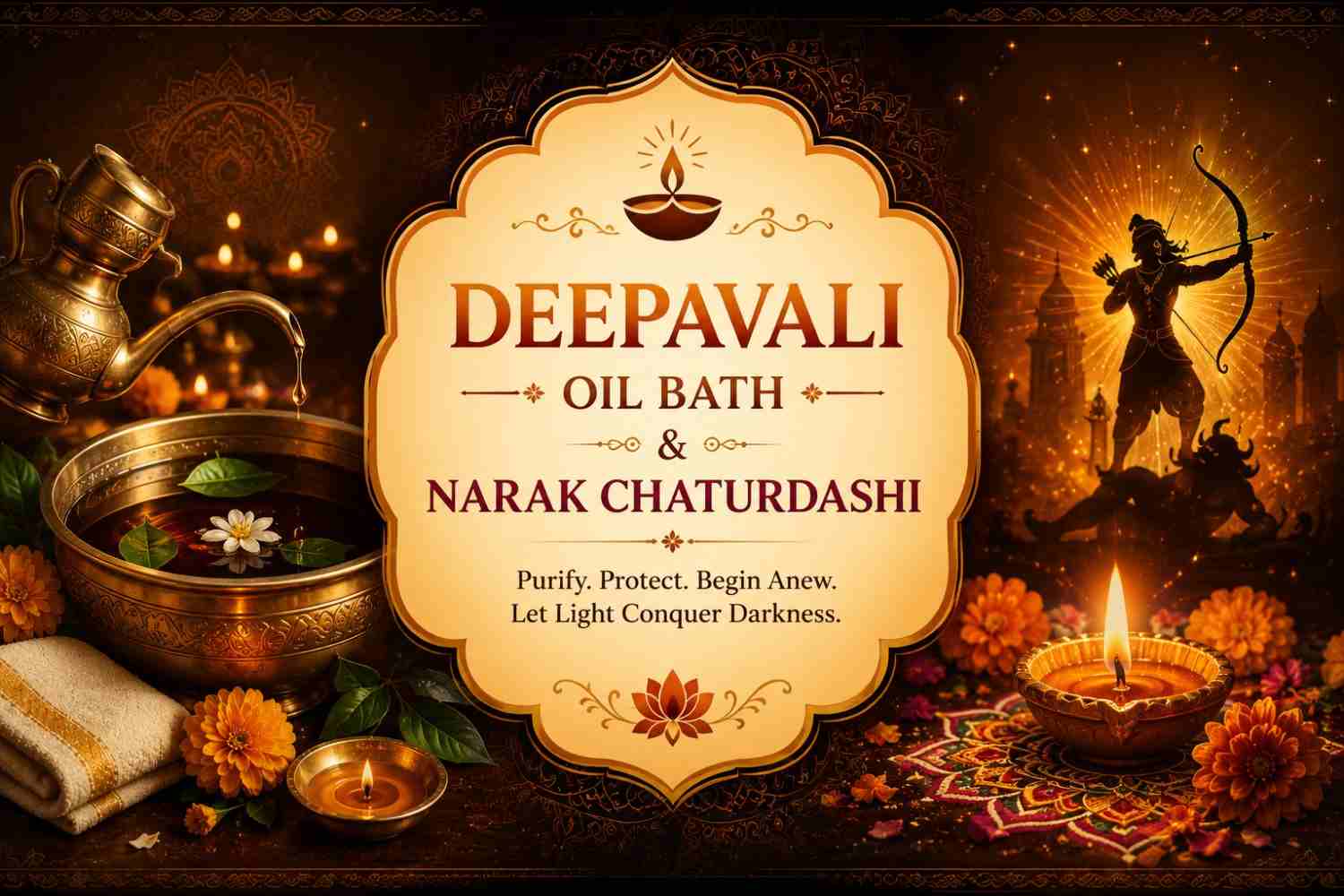
Deepavali oil bath & Narak Chaturdashi: the sacred morning before Diwali
Not all families start off the celebrations of Diwali with crackers and lighting of lamps during the night hours. For several families in South India, the celebration starts much earlier-even before t