Maa Mahagauri: the radiant mother who turns austerity into grace

RIYA SHARMA
HRDYAM - DISCOVER SACRED JOURNEYS, WISDOM & WELLNESS
Following the night of Maa Kalaratri, there is a remarkable change in the atmosphere on the eighth day of Navratri.
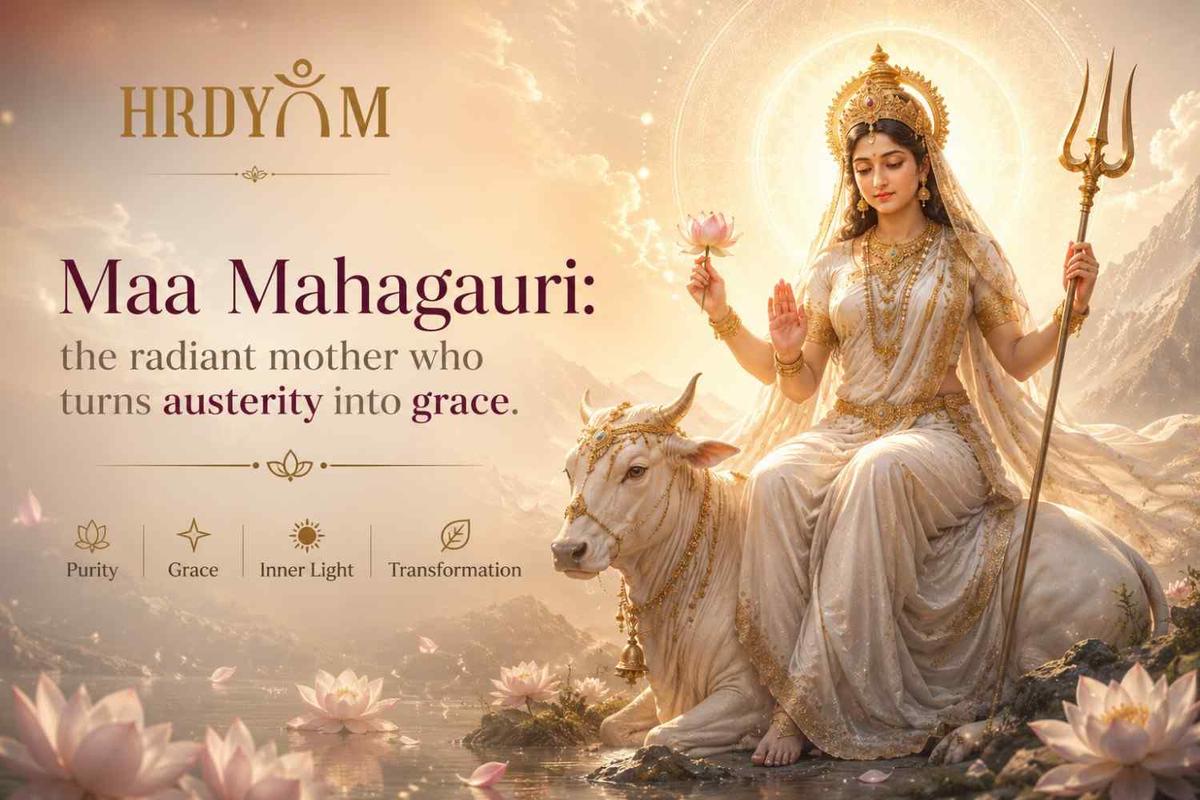
The eighth form of Navdurga is Maa Mahagauri, whose name means Maha, meaning great or immense, and Gauri refers to her radiant white form. Maa Mahagauri is usually presented in pictures as a goddess dressed in white, sitting on a white bull. This results in an image of utmost calmness and serenity.
Maa Mahagauri is way beyond just an image.
She represents purity, peace, clarity, compassion, and rebirth. Maa Mahagauri appears in the sequence of Navratri in much the same way that calm follows the storm.
While Day 7 was about dealing with darkness, Day 8 poses the question: Who do we become after confronting it?
Mahagauri is believed to be connected with Parvati's penance for Lord Shiva. After years of austerity and penance, she appeared in her radiant form.
Her story, however, is more than just becoming externally radiant. It is a story about what takes place when one strips away the heaviness within oneself-anger, confusion, frustration, ego, and fear-and achieves clarity within.
Her four hands hold the trident and the damaru, while her other hands provide fearlessness and blessings. The combination holds its own importance, for peace does not mean vulnerability. Her peaceful image holds the essence of Shakti.
Maa Mahagauri tells us that transformation does not always need to be drastic.
Sometimes it may be as simple as forgiving someone, starting over, releasing one's frustration, simplifying one's life, or being comfortable with oneself.
After the dark and fearful presence of Kalaratri, Mahagauri lets us know that the reason we confront our fears is not to stay in them.
Who is the goddess of radiant purity?
Maa Mahagauri is celebrated on the eighth day of Navratri and is known as the eighth manifestation of the Navdurga. In a literal sense, her name signifies immense purity and brightness. The traditional depiction shows her wearing white, having four arms, and riding a white bull.
Her look is extremely serene. She holds a trident and damaru, and the rest of her hands show abhaya and varada mudras.
Traditionally, Mahagauri is linked to the intense tapasya performed by Goddess Parvati. Her unique journey from being an ascetic to being bright gives her a special position in the series of Navratri: she symbolizes the emergence after perseverance and spiritual practice.
Hence, her symbolism differs greatly from that of Maa Kalaratri.
Kalaratri asks for facing the darkness.
Mahagauri stands for the fruit of it-clarity, serenity, purification, and rejuvenation.
The white color of this Goddess cannot be taken to symbolize physical beauty or complexion.
In spirituality, the whiteness of the Goddess stands for purity, tranquility, and an uncluttered mind.
This day is dedicated to peace and prosperity. Therefore, Day 8 seems to be a period of calm after the storm of the past few days.
Maa Mahagauri reminds us that transformation doesn't always result in more strength or ferocity.
Sometimes, the highest degree of transformation is to become light, serene, and peaceful within oneself.
How did Mahagauri find her radiance?
The tale of Mahagauri has much to do with the severe penance of Goddess Parvati for gaining Shiva as her husband. According to tradition, Parvati had performed rigorous penances for a considerable time, and even under challenging circumstances, she remained determined.
As a result of her rigorous penance and her being under the influence of natural surroundings, her complexion turned black. But once she was accepted by Shiva, it is said that he bathed her with the water of the Ganga, and in return, her bright form came into the light. This bright form was named Mahagauri.
The story is not about a mere change in the form of Parvati. It is all about transformation through patience and determination.
There are some instances where the dark aspect of the goddess Parvati turns into Kaushiki, who will later challenge Shumbha and Nishumbha.
This is quite intriguing given the connection between the ferocious aspect of the goddess and the peaceful representation of Mahagauri. The contrast is indeed important considering after the seventh day.
Kalaratri is indeed the representation of the encounter with the dark side, while Mahagauri is the manifestation of what happens when such darkness is overcome.
This is why her story touches people going through tough times. Tough times do not determine the ultimate version of oneself.
Sometimes the version of oneself that emerges from tough times is more peaceful and stronger than the one at the beginning.
What does her radiant form symbolize?
The form of Maa Mahagauri appears to be the total contrast to Maa Kalaratri's form. While day seven was about darkness and transformation, the eighth day is all about white, calmness, balance, and rejuvenation. The usual depiction of this goddess has four arms, a white bull, white clothing, a trident, a damaru, and blessing hands.
Her Radiant White Form
Her white form symbolizes purity, clarity, and calmness. This should be taken as a spiritual symbol and not a physical beauty standard.
It indicates a mind that is now light due to getting rid of unwanted negativity.
The White Bull
Maa Mahagauri rides on a white bull, which is symbolic of strength, steadiness, patience, and calmness. Unlike the aggressive lion of warrior goddesses, the bull is symbolic of peace.
The Trident
The trident serves as a reminder that peace is not synonymous with powerlessness. Maa Mahagauri can still annihilate those who pose obstacles to righteousness and purity of mind.
The Damaru
The damaru, linked to Shiva, symbolizes rhythmic vibration and the creative energy of life itself. The inclusion of the damaru in her form gives a new aspect to her-the aspect of dynamism along with stillness.
Abhaya Mudra
Her abhaya mudra is a symbol of fearlessness and assurance. After all the symbolism of Kalaratri, her gesture acquires great significance for us because, after encountering fear, we learn to overcome it.
Varada Mudra
The varada mudra symbolizes generosity and blessings. The mudra symbolizes the benevolent nature of the goddess and the state of receiving grace after enduring hard times.
Together, all the symbols convey a beautiful message:
"Chastity is not frailty. Tranquility is not passivity. Gentleness coexists with great strength."
Maa Mahagauri represents the state in which power has been brought to a state of calmness and balance.
How is Maa Mahagauri worshipped on Day 8?
The worship of Maa Mahagauri is considered the worship of purity, peace, and good fortune. Day 8 puja of Maa Mahagauri can be done in an easy way using white flowers and sattvic offerings.
Procedure of Puja Vidhi
Clean the worship area and take a bath before starting worship.
Place the idol of Maa Mahagauri on a white cloth.
Light a diya and an incense stick and start the worship with a peaceful prayer.
Offer white flowers, akshat, kumkum, and white sandalwood to the Goddess.
Offer fruits and white sattvic bhog like kheer or any other sweet.
Mantra: ॐ देवी महागौर्यै नमः॥
Take a few moments to meditate and pray for peace, clarity, forgiveness, and a new beginning.
Finish off the aarti and the puja with a note of thanks.
Day 8 is also associated with the Kanya Puja ritual, where the girls are revered and are offered food as a form of showing respect for the divine female.
Maa Mahagauri puja is very easily understood-having been through the dark, make room for peace.
What should you keep for the Puja?
In the case of Maa Mahagauri, the puja for Day 8 may consist of basic and pure offerings. The color white, flowers, coconut, fruits, and sweets are related to her puja.
| Puja Samagri | Purpose |
|---|---|
| Maa Mahagauri's image or idol | Main focus of worship |
| Kalash | Continues from Day 1 |
| White flowers | Traditional offering |
| White cloth | Can be offered to the Goddess |
| Kumkum / Roli | Tilak and puja |
| Akshat | Used during prayers |
| Chandan | Traditional offering |
| Ghee diya | For lighting during worship |
| Dhoop / Incense | Part of the puja |
| Coconut | Important Day 8 offering |
| Fruits | Sattvic offering |
| Kheer or white sweets | Bhog |
| Panchamrit | Used according to family tradition |
| Camphor | For aarti |
| Japa mala | For mantra chanting |
What bhog delights Maa Mahagauri?
Coconut (Nariyal) is the most common Day 8 Bhog of Maa Mahagauri. Various desserts prepared from coconuts, Kheer made from coconuts, and various other Satvik dishes are also offered.
| Bhog | How it is offered |
|---|---|
| Coconut | Traditional offering associated with Day 8 |
| Coconut barfi | Sweet preparation made from coconut |
| Coconut kheer | A gentle, sattvic sweet |
| Kheer | Traditional milk-and-rice preparation |
| Halwa | Common Ashtami bhog |
| Puri & black chana | Traditionally prepared especially for Ashtami/Kanya Puja |
| Fresh fruits | Simple sattvic offering |
The symbolism of the coconut tree is especially relevant to Maa Mahagauri as well. Its tough outer covering and clean inside are an ideal representation of how we should see past appearances and uncover the essence within.
In addition, many families cook halwa, puri, and black chana during Ashtami in honor of Kanya Puja.
Thus, the inner meaning of the bhog of Maa Mahagauri is the importance of simplicity and purity-of doing away with the unnecessary and embracing the wholesome and honest.

Why is pink marked on Day 8?
The color pink is associated with the 8th day of Navratri and Maa Mahagauri. The color signifies love, kindness, compassion, harmony, and emotional warmth.
How to Wear Pink on the 8th Day of Navratri
Wear a pink saree, suit, lehenga, kurta, or dupatta.
Put some pink flowers in your puja setup.
Go for blush or pastel pink decorations for your puja.
Incorporate the color in your rangoli or other decorations at home.
It is not mandatory to wear pink on the day of puja. It is a celebration ritual, and people from different backgrounds have different traditions related to the color.
What blessings do devotees seek?
Mahagauri is traditionally known for the attributes of peace, purity, harmony of emotions, prosperity, and spirituality. Her blessings are sought mainly on Ashtami, which is a day deeply associated with renewal and introspection.
Prayer to Maa Mahagauri seeks blessings for:
Inner peace: Her tranquil form stands for calmness and emotional harmony.
Purification: Her symbolism prompts you to release all negative aspects and emotions, such as grudges.
Clarity: Her luminous form is the embodiment of a clearer state of mind.
Relational harmony: According to traditional beliefs, her blessings bring harmony in relationships.
Prosperity: Her blessings are sought by devotees for happiness and abundance.
Spirituality: Worshiping Maa Mahagauri encourages inner devotion and spirituality.
Renewal: Being associated with purification makes Day 8 the right day for you to let go of old stuff.
However, perhaps the most profound advantage is lightness within.
Usually when we think of transformation, it’s about becoming stronger or more determined or more powerful. But in Maa Mahagauri, there is another way of looking at it-transformation can also be about becoming more free.
Free from past anger. Free from past mistakes. Free from unneeded fear.
What should you avoid on Day 8?
Day 8 is especially linked with Maa Mahagauri, Durga Ashtami, and also with Kanya Puja in many communities. It is all about purity, respect, compassion, and devotion-not about doing ritualistic activities.
- Doing Kanya Puja as a Ritual
If little girls are called for Kanya Puja, the spirit of the ritual should be one of respect and love for the children. The girls should be made to feel loved and respected, and not just asked to go through the process.
- Scolding and Forcing the Children
Sometimes children may be shy, naughty, or might not finish eating their meal. According to traditional advice, children should be treated lovingly and not scolded, embarrassed, or forced to eat.
- Concentrating too much on “Physical Fairness” of Girls
The name Gauri means luminosity. However, Maa Mahagauri has spiritual significance and is not human physical beauty judged on the basis of the color of her skin.
- From Purity to Perfectionism
Being pure does not necessarily imply living a perfect life. Day 8 can then also be seen as a call to get rid of all the things that clutter one's mind, such as resentment, guilt, bad habits, or negativity.
- Excessive Elaboration of the Puja
It is not necessary to transform the Ashtami into a contest in decorations, food, clothing, or rituals.
- Losing the Purpose of the Bhog
Irrespective of whether the family chooses halwa-puri-chana, coconut, kheer, or some other customary bhog offering, the key point here is to keep in mind the bhav in the bhog, not extravagance.
- Seeing Forgiveness as a Sign of Weakness
The calming image of Maa Mahagauri should be enough to convince people that forgiving someone does not entail condoning their actions.
How does India celebrate Day 8?
Day 8 in Navratri is also Durga Ashtami or Maha Ashtami, and therefore considered to be one of the most important days during Navratri. Maa Mahagauri is worshipped as the eighth Navdurga, but there is a beautiful variation in the celebration of Ashtami throughout the country.
| Region | How Day 8 is Celebrated |
|---|---|
| West Bengal & Eastern India | Maha Ashtami is a major day of Durga Puja, with elaborate pandals, pushpanjali, devotional rituals, and the powerful Sandhi Puja. |
| North India | Maa Mahagauri is worshipped, and Kanya Puja/Kanjak is widely observed, with young girls honoured and offered prasad. |
| Gujarat | Navratri continues with energetic Garba and Dandiya celebrations, bringing together devotion and community festivities. |
| Maharashtra | Household Devi worship, fasting, and Kanya Puja form part of the Ashtami traditions in many communities. |
| South India | Ashtami falls within the larger Navratri period of devotional worship, with traditions such as Golu/Kolu continuing in many households. |
| Bihar & Uttar Pradesh | Alongside Devi worship and Kanya Puja, community celebrations and Ramleela traditions may accompany Navratri. |
Kanya Puja: A special Ashtami tradition
Perhaps one of the most distinctive rituals of Day 8 in northern India is Kanya Puja or Kanjak/Kumari Puja. Young girls are invited into the house, honored, fed, and offered presents as a way of showing reverence to the Shakti of the female.
It is especially interesting to connect this tradition with the festival of Maa Mahagauri since it shows how the sacred cannot be limited to idols only. The divine feminine is manifested through living people.
On the other hand, in Bengal and East India, there is a completely different mood of Ashtami with numerous pandals, dhak drums, group prayers, and Sandhi Puja.
This is how Indian festivals become so intriguing. The very same day can mean a private puja in one household, Kanya Puja in another place, and a big community celebration elsewhere.
The same essence of the celebrations in different traditions and forms.
How can HRDYAM make your Navratri meaningful?
Day 8 of Navratri holds the serenity of Maa Mahagauri in terms of purity, rejuvenation, compassion, and inner clarity. The day of Ashtami is also significant for Kanya Puja and Durga Puja.
Hence, it is a wonderful day to delve into the tradition of Shakti worship in living India. All across the nation, there are numerous Goddess Temples that encapsulate the tradition of years of mythology, festivals, rituals, and local traditions.
With HRDYAM, pilgrimage will not only be about visiting a Goddess Temple but also understanding its history and mythology, rituals, and cultural significance.
Be it your desire for Goddess pilgrimage, Shakti Peethas pilgrimage, Temple tours, or even spiritual travel, HRDYAM can help you incorporate all this into one meaningful package.
There is an amazing message that can be found in the tale of Maa Mahagauri even for the traveller: At times, the trip transforms the pilgrim who comes back from it rather than the destination itself.
So, during this Navratri season, make sure that you make your pilgrimage a trip to serenity and discovery.
Carrying Mahagauri's light forward

Day eight of Navratri, dedicated to Maa Mahagauri, brings peace. Also known as Durga Ashtami, this day is considered one of the most important days of Navratri worship.
Maa Mahagauri is an embodiment of purity, peace, compassion, clarity, and renewal. The story of Maa Mahagauri proves that transformation is not only about making us stronger but also lighter.
Having defeated her fears on Maa Kalaratri day, Maa Mahagauri now shows how to get rid of unnecessary burdens that are inside of us-bitterness, guilt, confusion.
The peace-loving form of Maa Mahagauri is also reminding us of an important aspect of purity-it is not perfection but willingness to heal.
And while Navratri approaches its end, Maa Mahagauri leaves us with a simple yet meaningful lesson:
You do not have to stay who your toughest times made you. You can heal. You can forgive. You can start anew.
And sometimes transformation comes from the ability to be at peace with yourself.
Spiritual travel researcher, Vedic cultural writer, and contributing editor at HRDYAM.
You Might Also Like
Tags
More Articles
View all
What is HRDYAM? The AI-Powered Spiritual Ecosystem
The spiritual essence of India has not merely consisted of temples alone. It is found in pilgrimage circuits, old rituals, Vedic astrology, Yoga, Ayurveda, sacred rivers, traditions of the region, art

How HRDYAM blends spirituality with sustainability
How would pilgrimage change if it were no longer viewed as a trip to a shrine but as an engagement with the entire sacred geography? The river next to the shrine, the communities that live by the shri
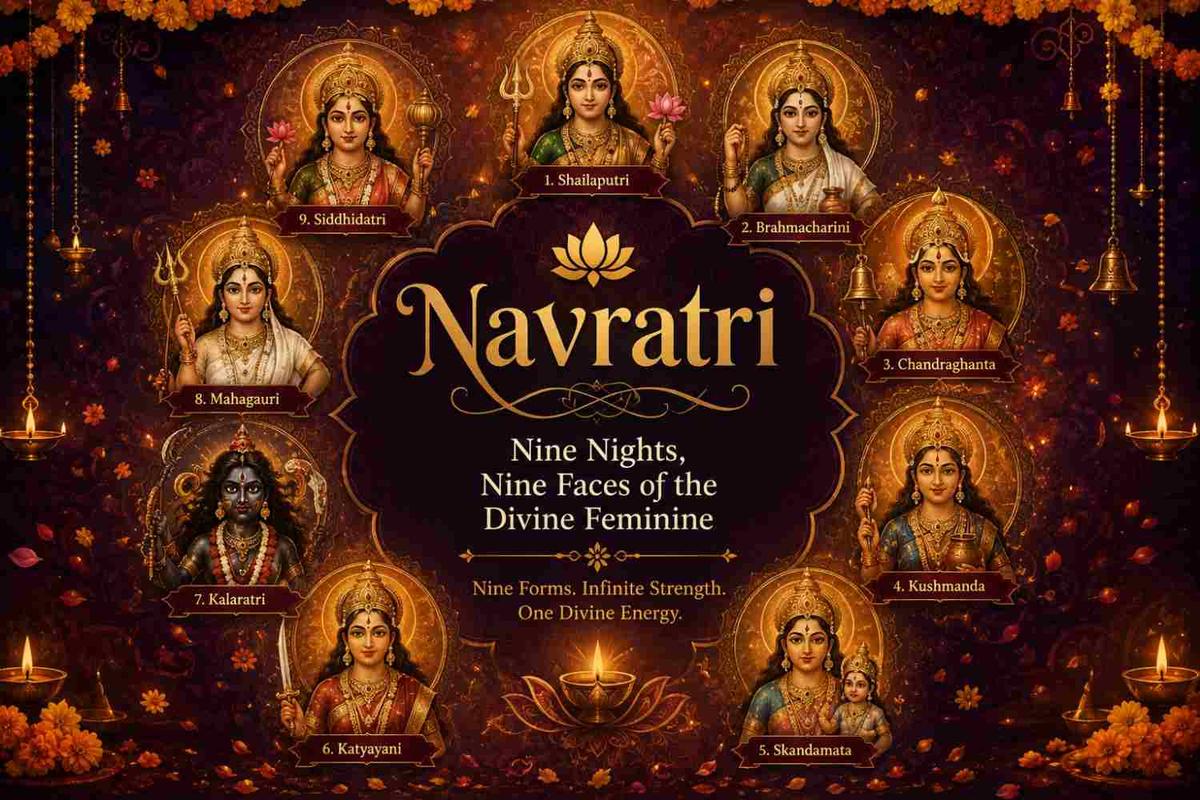
Navratri: Nine nights, nine faces of Shakti
The first indication of Navratri usually comes not from any temple. This could be a spontaneous display of a tiny kalash in the corner of your house, the planting of new barley seeds into the moist so