Shri Naina Devi temple: Where the divine mother watches over the world

RIYA SHARMA
HRDYAM - DISCOVER SACRED JOURNEYS, WISDOM & WELLNESS
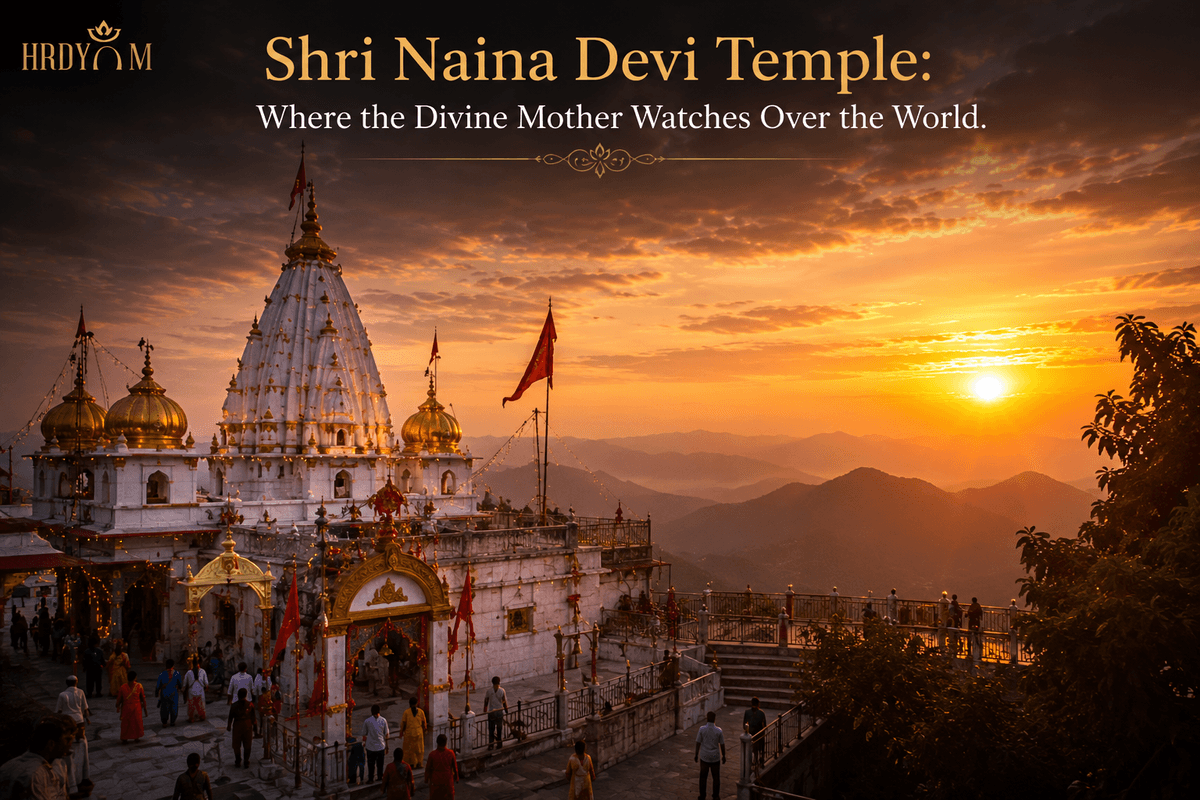
The journey to the Shri Naina Devi Temple doesn’t end at the entrance gate of the shrine. Before reaching the temple, as one climbs up through the Shivalik Hills along the winding road, it becomes cold and gradually becomes serene. Gobind Sagar Lake lies sprawling under the blue skies below. It is also possible to ascend to the top of the hill either by stairs or by the modern-day ropeway.
As one approaches the white temple that stands majestically against the backdrop of the Himalayas, one gets enthralled for a few moments, not because they have reached the summit, but due to the sight before them. The chanting of "Jai Mata Di" can be heard all around, the bells of the temple reverberate, and hundreds of people continue climbing with unwavering belief.
Whereas most temples receive prayers for prosperity or success, many devotees visit Shri Naina Devi for a more personal reason; they seek clarity in times of decision-making, strength in times of uncertainty, and the comforting knowledge that their Divine Mother watches over them. Many people feel the presence of peace while being near the Goddess which is hard to describe in words.
As per the traditions of Hinduism, Shri Naina Devi Temple is one of the 51 Shakti Peethas where Goddess Sati's body was scattered after Lord Shiva carried her burning corpse throughout India. The Goddess' divine eyes (naina) are supposed to have fallen on this hill. Hence, this sacred place acquired both its name and its importance.
The history of the temple goes back hundreds of years, through stories about the sages, local kings and common people whose belief made this humble hilltop one of the most significant places for pilgrimage in northern India. Nowadays, millions of people continue to visit the temple annually during the celebrations of Navratri and Shravan Ashtami Fair, during which the whole hill gets filled with the sound of devotional songs and colourful processions of worshippers.
However, beyond celebrations and worshippers there is much more. It doesn't matter whether a visitor finds the temple early in the morning when the sun starts to illuminate the mountains or in the evening during a peaceful aarti when lamps are glowing in the twilight sky – Naina Devi gives a chance to everybody who visits her temple to have a break, breathe and find something higher.
That may be the reason why so many pilgrims keep visiting Naina Devi time after time. They come not only for blessings, but to remember that, just like a mother does not lose her eyesight for her children, Maa Naina Devi always sees and cares about everybody who approaches her with faith.
| Attribute | Detail |
|---|---|
| Temple Name | Shri Naina Devi Temple |
| Location | Bilaspur District, Himachal Pradesh, India |
| Associated Body Part of Goddess Sati | Eyes (Naina) |
| Presiding Goddess (Shakti) | Maa Naina Devi |
| Associated Bhairava | Krodha Bhairava |
| State | Himachal Pradesh |
| Elevation | Approx. 1,177 metres (3,862 ft) above sea level |
| Temple Type | Hilltop Shakti Peetha |
| Believed Origin | Ancient shrine associated with Sage Naina and local hill rulers |
| Best Time to Visit | October to March; Chaitra & Sharad Navratri; Shravan Ashtami Fair |
| Nearest Airport | Chandigarh International Airport (Approx. 110 km) |
| Nearest Railway Station | Anandpur Sahib Railway Station (Approx. 20 km) |
| UNESCO Status | Not a UNESCO World Heritage Site |
| Temple Timings | Generally 5:00 AM – 10:00 PM (may vary on festivals) |
| VIP Darshan | Available during major festivals and peak pilgrimage days |
| Photography Rules | Allowed in the outer premises; prohibited inside the sanctum |
| Dress Code | Modest and respectful attire recommended |
| Major Festivals | Chaitra Navratri, Sharad Navratri, Shravan Ashtami Fair |
| Temple Management | Shri Naina Devi Temple Trust, Himachal Pradesh |
The sacred legend that transformed a hilltop into an eternal seat of Shakti

Every Shakti Peetha represents a story of the sacrifice of a mother, the grief of a father and the emergence of one of the most sacred pilgrimage places in Hinduism. Shri Naina Devi Temple is connected with the legend that dates back several thousand years.
King Daksha decided to organize the yajna ceremony but did not invite his son-in-law, Lord Shiva to participate. Unwilling to tolerate the dishonor to her husband, Goddess Sati immolated herself in the holy fire. Overwhelmed with grief, Lord Shiva carried her body and roamed the universe while dancing the terrible Tandava that could destroy the cosmic balance.
To restore cosmic harmony, Lord Vishnu used his Sudarshan Chakra to separate the body of Sati into different pieces. Each time the sacred pieces touched the ground, the place was sanctified and became a Shakti Peetha.
According to legends, at Naina Devi the eyes (naina) of Sati fell upon the hill. For this reason, people worship the Goddess at this place as an eternal Mother with compassionate eyes. This name is also associated with Shri Naina Devi Temple.
One of the other legends that has been popular among the locals about the origins of this temple revolves around the story of a humble shepherd called Naina. He noticed that every day when his cow used to graze in that area, it would pour milk on a particular rock. Puzzled, he narrated the incident to the King, who had a vision from the Goddess that she was residing in that particular area. The place was turned into a shrine and subsequently became a grand temple.
Sage Naina, it is said, performed his spiritual meditation in this region and attained the blessings of the Divine Mother. Through stories of mythology, legends, or years of devotion, the only truth that is consistent in all these beliefs is that this hill has always been considered a site of prayers being fulfilled.
Devotees today come to worship in this temple with as much devotion as their ancestors did before them. It is believed that Maa Naina Devi sees all the devotees and gives the power to face any challenge in life with determination.
From royal patronage to modern pilgrimage, discover the temple's remarkable journey
Shri Naina Devi Temple has been considered for centuries a very important place of worship of Shakti in the north of India. Although it has roots in ancient myths, the entire history of the temple consists of legends, the support of royal patrons, and the faith of many pilgrims. It is true that originally this place was a mere hill temple but over time it became an important pilgrimage site.
| Period | Event |
|---|---|
| Mythological Era | According to Hindu tradition, the eyes (Naina) of Goddess Sati fell here, making the site one of the 51 sacred Shakti Peethas. |
| Ancient Period | The hilltop was revered by sages and local communities as a sacred place of Goddess worship long before a formal temple existed. |
| Local Legend | A shepherd named Naina is believed to have discovered the sacred site after witnessing miraculous events involving one of his cows, leading to the establishment of the shrine. |
| Early Medieval Period | Pilgrims from the surrounding hill kingdoms began visiting the shrine, gradually increasing its spiritual importance across the region. |
| 8th Century CE (Traditional Belief) | Some traditions attribute the construction or restoration of the shrine to local rulers who promoted Shakti worship in the Himalayan region. |
| 17th–18th Century | The temple received continued patronage from the rulers of the Bilaspur princely state, who supported its expansion and maintenance. |
| 19th Century | Better pilgrimage routes connected the shrine with Punjab and the surrounding Himalayan regions, increasing the number of annual visitors. |
| Post-Independence | The Shri Naina Devi Temple Trust was established to oversee temple administration, pilgrim facilities, and conservation efforts. |
| Present Day | Shri Naina Devi Temple welcomes millions of devotees every year and remains one of the most important pilgrimage sites in Himachal Pradesh, particularly during Navratri and the Shravan Ashtami Fair. |
Built high among the hills, every pathway leads closer to the divine mother
Sitting elegantly at a height of 1,100 metres, Shri Naina Devi Temple gives visitors a great experience combining spirituality with natural beauty. As compared to temples buried inside forests or chiselled on mountains, Shri Naina Devi Temple rises majestically on top of a hill surrounded by the serene waters of Gobind Sagar Lake and Shivalik Hills.
The pure white architecture of the temple decorated with golden domes stands in sharp contrast to the greenery of nature. Multicolored flags continue to sway amidst the mountain winds whereas sounds of temple bells can be heard well in advance before approaching the temple itself. Irrespective of the route taken, whether the age-old stairs or the new ropeway, the temple unveils itself one by one to make your journey unforgettable.
Located inside the temple is the Garbhagriha (sanctum sanctorum) where devotees pay homage to Maa Naina Devi. This revered shrine is beautifully decorated with flowers, red chunris, silver ornaments and various other decorations according to seasons and festivals. In comparison to many famous temples renowned for their sculpture carvings, here the devotion of devotees is towards the divinity of the Goddess only.
Over the years, the temple complex has grown in size to meet the demands of the growing pilgrim crowds. Queue corridors, courtyards, rest places, and properly organized routes allow the pilgrims to move easily on even the busiest days of the festival. There are several small shrines for Lord Ganesha, Lord Hanuman, and Lord Shiva in the temple premises too, enabling pilgrims to perform their pilgrimage completely.
Another striking feature of the temple is its picturesque location. Being inside the temple complex, one can enjoy magnificent sights of Gobind Sagar Reservoir, distant hills of the Himalayas, and beautiful valleys below. For many pilgrims, these magnificent landscapes become a vital component of their spiritual journey.
Even though new facilities have appeared in the course of time, the temple still manages to preserve its spirituality. Each architectural element has been created to serve pilgrim needs and keep the hilltop temple untouched by time.
Why seekers believe Naina Devi blesses every journey with strength and protection
Of all the 51 Shakti Peethas in India, the Shri Naina Devi Temple holds a special place because it signifies the wisdom, vision, and divine protection that come from the eyes of the Divine Mother. As per legend, the eyes of Goddess Sati fell here making this temple a living testimony that the Divine Mother always keeps an eye on her devoted followers.
The term "Naina" refers to the eyes, but in the context of Hindu philosophy, the eyes stand for more than their physical purpose; instead, they symbolize knowledge, awareness, intuition, and enlightenment. Hence, devotees often approach the temple for more than material favors and also for guidance at crossroads in their lives.
The temple is dedicated to Maa Naina Devi, an incarnation of the Adi Shakti which is the cosmic energy that maintains the entire universe. It is widely believed that the Goddess always takes care of people who place faith in her with full devotion in the same way a mother takes care of her children.
For hundreds of years now, kings, soldiers, traders, and simple pilgrims have ascended this sacred hill before setting forth on important journeys or entering into new phases of life. To this day, students pray for success in their education, families pray for happiness and wealth, and countless other devotees thank the goddess for the fulfillment of their dreams.
This temple is also an essential destination for the Himachal Shakti Peetha pilgrimage, making the temple spiritually connected to the temples of Chintpurni, Jwalamukhi, Brajeshwari Devi, and Chamunda Devi. Countless pilgrims visit this circuit, believing that visiting all the shrines in question will give one a closer spiritual connection with the Mother in her different manifestations.
Probably the most precious gift offered by the temple of Naina Devi to its devotees is not some miracle but something much more important. Standing on the top of the hill, surveying the vast panorama below, many pilgrims leave feeling assured that no matter what happens, the eyes of the compassionate Goddess never stop watching over them.
When devotion fills the hills with celebration, music and faith
The Shri Naina Devi Temple receives devotees from all over India throughout the year; however, it turns into a hub of religion when the festival times arrive. The air rings with religious tunes as well as chanting of “Jai Mata Di,” and many pilgrims assemble at the temple to receive the blessings of the Goddess Mother.
| Festival | Significance |
|---|---|
| Chaitra Navratri | One of the busiest times of the year. Thousands of devotees visit the temple during the nine sacred days dedicated to the Divine Mother, with special pujas, bhajans, and extended darshan hours. |
| Sharad Navratri | Celebrated in September–October, this festival attracts pilgrims from Himachal Pradesh, Punjab, Haryana, Delhi, and neighbouring states. The temple is beautifully decorated and hosts elaborate rituals throughout Navratri. |
| Shravan Ashtami Fair | The temple's largest annual fair, held during the Shravan month. Lakhs of devotees undertake the pilgrimage, creating a festive atmosphere with devotional processions, cultural programmes, and community service. |
| Guru Purnima | Many devotees combine visits to nearby Anandpur Sahib with darshan at Naina Devi, reflecting the region's shared spiritual heritage. |
| Makar Sankranti | Pilgrims seek the Goddess's blessings for prosperity and a positive beginning to the new harvest season. |
| Diwali | The temple is illuminated with hundreds of lamps as devotees offer prayers for peace, happiness, and prosperity. |
Experience the temple's sacred traditions from sunrise to nightfall
Each morning at Shri Naina Devi temple starts with prayers in the early hours of the dawn as the priests wake up the goddess through chanting of prayers and ritualistic practices. The devotees also perform various rituals that have been conducted since time immemorial.
| Time | Ritual |
|---|---|
| 5:00 AM | Temple opens; Mangala Aarti and morning prayers |
| 6:00 AM – 11:30 AM | General Darshan and daily pujas |
| 12:00 PM | Bhog offered to the Goddess |
| 12:30 PM – 3:00 PM | Archana, special pujas, and continuous darshan |
| 6:30 PM | Evening (Sandhya) Aarti |
| 8:00 PM onwards | Devotional prayers and final darshan |
| 10:00 PM | Temple closes after Shayan rituals (timings may vary during festivals) |
Apart from the above activities, there are other things that one can do like Archana, offering coconuts and Chunris to the Goddess, lighting lamps, and performing their prayers. Navratri and Shravan Ashtami fairs have some other religious activities that go on late at night.
Choose the right hour to embrace the temple's peaceful atmosphere
It is open on all days of the week, and pilgrims can visit here round the year. During Navratri, Shravan Ashtami, and other important festivals, timings may be extended to handle a large number of pilgrims.
| Day | Opening Time | Closing Time |
|---|---|---|
| Monday | 5:00 AM | 10:00 PM |
| Tuesday | 5:00 AM | 10:00 PM |
| Wednesday | 5:00 AM | 10:00 PM |
| Thursday | 5:00 AM | 10:00 PM |
| Friday | 5:00 AM | 10:00 PM |
| Saturday | 5:00 AM | 10:00 PM |
| Sunday | 5:00 AM | 10:00 PM |
Temple is open all year round without having any weekly holiday. Darshan can be extended during major festivals as per the pilgrim count and the rules set by temple management.
Find the darshan experience that best suits your pilgrimage
No matter whether you are visiting for the first time or coming back after decades, there are different darshans at Shri Naina Devi Temple for varied purposes.
General (free) Darshan: Available for everyone and does not cost anything. The average waiting time during normal days is about 30 minutes to an hour, and during the weekend and festivals, it could go up to many hours.
Special/VIP Darshan: At times when the place witnesses huge numbers of devotees due to the pilgrimage season, the temple management offers special darshans that can shorten your waiting period.
For Senior Citizens and People with Disability: Special assistance is provided for senior citizens and people with any disability. Ropeway helps in making the whole journey easy for people who are unable to walk on the stairs.
By Ropeway: Many devotees take the help of the ropeway to make the journey to the temple as they have the advantage of reaching the temple by making minimal efforts.
Online Information: Information related to temple timings and other updates related to the pilgrimage is generally announced through the Shri Naina Devi Temple Trust and Himachal Pradesh Tourism Department.
Participate in sacred ceremonies with devotion and proper guidance

One can get several pujas and offerings arranged easily by the temple office or authorized priests available within the temple premises. It is recommended that one arrives early during Navratri and the Shravan Ashtami Mela because there is greater demand for the rituals.
| Puja / Service | Availability |
|---|---|
| General Darshan | Daily |
| Archana | Available through authorised priests |
| Special Puja | Available on request |
| Chunri & Coconut Offering | Daily |
| Bhog Offering | Available during temple hours |
| Navratri Special Pujas | During Chaitra & Sharad Navratri |
| Group / Family Pujas | Can be arranged through the temple office |
Pilgrims are advised to make bookings for rituals from the temple counter only and not from any other agents providing special services outside the temple compound.
Every season offers a different glimpse of Naina Devi's beauty
The Shri Naina Devi Temple is open all year round, but each season brings about a unique experience. The colder season that lasts from October to March is the best period to visit the temple with its cool and clear weather. If you want to see the temple in all its splendor, visit it during the Chaitra Navratri, Sharad Navratri, or the well-known Shravan Ashtami Fair, where many devotees come to worship the Divine Mother.
However, if you would like a more peaceful experience, weekdays early mornings from October to February are the best choice.
| Month | Weather | Crowd Level | Notes |
|---|---|---|---|
| January | Cold, pleasant (4–18°C) | Moderate | Clear mountain views and comfortable darshan. |
| February | Pleasant (6–21°C) | Moderate | Ideal for sightseeing and peaceful temple visits. |
| March | Mild and sunny | Moderate | Excellent weather before summer begins. |
| April | Warm | High | Chaitra Navratri attracts large crowds. |
| May | Pleasant to warm | Moderate | Popular among summer travellers escaping the plains. |
| June | Warm | Moderate | Good weather with increasing tourist activity. |
| July | Monsoon begins | High | Shravan Ashtami Fair draws thousands of devotees. |
| August | Cool with rainfall | Very High | Pilgrimage season continues during the annual fair. |
| September | Pleasant after monsoon | Moderate | Green hills and fewer crowds. |
| October | Cool and clear | Very High | Sharad Navratri celebrations. |
| November | Cool, dry | High | One of the best months for pilgrimage. |
| December | Cold and crisp | Moderate | Peaceful atmosphere with beautiful winter views. |
Multiple routes lead to one of Himachal's most revered Shakti Peethas
Shri Naina Devi Temple is located on the Shivalik Hills in Himachal Pradesh. Travel to the temple is easy from all modes of transport including air, rail and road transport. It does not matter whether you are coming from the nearby state or from any other state within India, you will find it convenient to access the temple, and the best part is that the last few kilometers offer stunning views of the hills. You can visit HRDYAM to plan your temple tours.
Getting to Naina Devi from Major Cities
Delhi
Delhi is perhaps the most convenient place to start your journey to the Shri Naina Devi Temple as there are plenty of buses and taxis available for Naina Devi from Delhi. It takes around 6-7 hours to reach there by road. There are plenty of trains to Anandpur Sahib and one needs to cover the distance by either taxi or bus after that.
Chandigarh
Being around 110 kms away from Naina Devi Temple, it is the closest airport and city for the temple. Travelling from Chandigarh by road takes around 2.5 to 3 hours.
Amritsar
It takes around 4 to 5 hours to reach Naina Devi Temple from Amritsar by road.
Bengaluru
The shortest way is through a flight from Bengaluru to Chandigarh followed by a taxi/buses ride to Naina Devi which takes about three hours.
Mumbai
One can fly directly to Chandigarh followed by road travel. Others who prefer traveling via rail can make connections in Delhi/Chandigarh to reach Anandpur Sahib.
| Mode | From | Approx. Distance / Time |
|---|---|---|
| Rail | Anandpur Sahib Railway Station | ~20 km / 35–45 min |
| Air | Chandigarh International Airport | ~110 km / 2.5–3 hrs |
| Road | Bilaspur | ~70 km / 2 hrs |
| Road | Chandigarh | ~110 km / 2.5–3 hrs |
| Ropeway | Base Station to Temple | ~8–10 min |
Alternatively, pilgrims may choose to walk up the stairs leading to the temple or use the cable car, which provides an amazing view of the hill and Gobind Sagar Lake while easing the journey for women and elderly people.
Continue your journey through the sacred and scenic landscapes of the region

A trip to Shri Naina Devi Temple is easily integrated with many more places of religious and scenic interest within the regions of Himachal Pradesh and Punjab.
| Attraction | Approx. Distance | Highlight |
|---|---|---|
| Anandpur Sahib | ~20 km | One of Sikhism's holiest cities and home to Takht Sri Keshgarh Sahib. |
| Gobind Sagar Lake | ~10 km | Scenic reservoir offering panoramic views and boating opportunities. |
| Bhakra Dam | ~25 km | One of India's highest gravity dams and a major engineering landmark. |
| Sri Keshgarh Sahib | ~20 km | Birthplace of the Khalsa Panth established by Guru Gobind Singh Ji. |
| Baba Balak Nath Temple (Deotsidh) | ~75 km | Popular pilgrimage dedicated to Baba Balak Nath. |
| Chintpurni Temple | ~115 km | One of the revered Shakti Peethas of Himachal Pradesh. |
| Jwalamukhi Temple | ~135 km | Famous for its eternal natural flames. |
| Brajeshwari Devi Temple (Kangra) | ~165 km | Historic Shakti Peetha dedicated to Maa Vajreshwari. |
| Chamunda Devi Temple | ~185 km | Sacred temple nestled beside the Baner River. |
Enjoy local Himachali flavours that enrich your pilgrimage experience
The cuisine around the Shri Naina Devi Temple is indicative of the hospitality of the locals in Himachal Pradesh. Pilgrims usually offer prasad that comprises halwa, coconut, batasha, dry fruits, and mishri, which is later distributed among their family members and relatives.
There are numerous stalls in and around the temple offering a variety of freshly made vegetarian dishes like rajma-chawal, kadhi-chawal, chole-poori, aloo paratha, and thali. On occasions and during festivals, a lot of devotees also join the community langar where delicious meals are provided for free as an offering to God.
Be sure not to miss the unique delicacies of Himachal Pradesh such as Madra, Siddu, Babru, Mittha, and kheer. Moreover, a cup of hot tea while looking at the Shivalik hills is something that most visitors enjoy a lot.
Choose a peaceful stay close to the temple and surrounding hills
There are several dharamshalas, budget-friendly hotels, and luxury resorts available for pilgrims who want to visit Shri Naina Devi Temple at Anandpur Sahib and Bilaspur.
Budget Accommodation: Budget dharamshalas and guest houses are available in proximity to the temple that provide comfortable yet basic accommodation to the pilgrims.
Mid-Range: Mid-range hotels at Anandpur Sahib and Bilaspur have good facilities and can serve as a choice for family trips and pilgrimages.
Luxury: There are some luxurious hotels and resorts at Chandigarh and nearby hills where visitors can avail themselves of good rooms and other facilities.
Senior-Friendly Accommodations: There are hotels available around the temple where a lift facility is available along with other facilities such as road connectivity and parking.
| Category | Budget Traveller | Mid-Range | Luxury |
|---|---|---|---|
| Accommodation (per night) | ₹800 – ₹1,800 | ₹2,500 – ₹6,000 | ₹8,000 – ₹20,000+ |
| Local Transport (per day) | ₹200 – ₹400 | ₹800 – ₹1,500 | ₹2,500+ |
| Food (per day) | ₹300 – ₹700 | ₹800 – ₹2,000 | ₹3,000+ |
| Temple Offerings | ₹100 – ₹500 | ₹500 – ₹1,500 | As per devotion |
| Guided Pilgrimage (Optional) | — | ₹2,000 – ₹4,000 | ₹5,000+ |
A carefully planned route to experience faith without rushing the journey
One-Day Yatra
Get an early start and make sure you reach the temple before 7:00 AM to have a serene darshan experience prior to crowds coming. After worshipping Goddess Naina Devi, you may spend a few minutes enjoying the scenic views of Gobind Sagar Lake. Travel down through the ropeway or by foot and relish a Himachali dinner before going to Anandpur Sahib and then completing your tour.
Two-Day Yatra
Day 1: Naina Devi Temple → Darshan → Ropeway Ride → Gobind Sagar Lake → Overnight stay near Anandpur Sahib.
Day 2: Takht Sri Keshgarh Sahib → Bhakra Dam → Trip back.
Three-Day Shakti Circuit
Day 1: Shri Naina Devi Temple & Gobind Sagar Lake.
Day 2: Chintpurni Temple → Jwalamukhi Temple.
Day 3: Brajeshwari Devi Temple → Chamunda Devi Temple → End of the trip.
Small preparations can make your hill pilgrimage more comfortable
Dress comfortably and decently because the temple is a place of worship. Considering that the temple lies in a hilly area, you need comfortable footwear up to the shoe deposition point.
Those planning to climb up the stairs should take with them a bottle of water and do so early in the morning especially during the summertime. Senior citizens and families with children can use the ropeway for easier movement.
Photography is allowed in the open grounds and in scenic spots but photography is strictly prohibited in the sanctum sanctorum.
You should have change in your hand for making offerings to the deity and buying any souvenir. However, many places accept electronic payments these days.
Crowds will be much more during Navratri and Shravan Ashtami fair period. You should try to come before sunrise in order to minimize waiting time.
Weather in the hilly region changes very quickly during winter and monsoon season. So, take a light jacket/umbrella according to the season.
Use authorized counters only for puja booking and donation. Always refuse any unsolicited offer from unauthorized people.
In case of family trips with senior citizens, you can use ropeway facilities around the temple premises.
Remarkable stories that reveal the temple beyond its legends
Shri Naina Devi is one of the 51 Shakti Peethas, where the eyes of Goddess Sati are said to have fallen.
It is built at an altitude of around 1,177 meters, providing a breathtaking view of the Shivalik Hills.
The temple is located amidst the gigantic Gobind Sagar Lake, which is the largest artificial lake in northern India.
Visitors can visit the temple by either trekking through hundreds of steps or by using the ropeway.
The popular Shravan Ashtami Fair draws lakhs of visitors each year from all over North India.
The temple is linked with the nearby holy town of Anandpur Sahib, thus, becoming a special pilgrimage for both Hindus and Sikhs.
Many pilgrims take up Himachal Shakti Peetha Yatra, visiting Shri Naina Devi along with Chintpurni, Jwalamukhi, Brajeshwari Devi, and Chamunda Devi.
According to local legend, the temple was rediscovered due to miraculous occurrences seen by a shepherd regarding his cow.
It is accessible year-round and operates under the administration of Shri Naina Devi Temple Trust.
Seeing sunrise over Gobind Sagar Lake is regarded as one of the best experiences for visitors.
Explore trusted writings on Naina Devi's history, faith, and traditions
Shakti Peethas of India – An encyclopedia of the holy temples devoted to the Divine Mother.
Cult of the Goddess Kali in Bengal – Helpful for gaining insight into the larger Shakta tradition in India.
Hindu Goddesses: Visions of the Divine Feminine in the Hindu Religious Tradition – By David Kinsley.
Sacred Geography of Goddess in South Asia (Edited Book).
Devi Mahatmya (Durga Saptashati) – A primary scripture devoted to the Divine Mother.
Shiva Purana – Has some significant stories related to Sati, Shiva, and the Shakti Peethas.
Experience Naina Devi through thoughtfully curated journeys and personalized assistance
Pilgrimage to Shri Naina Devi Temple is made even more purposeful and enjoyable with careful planning and proper spiritual guidance. With HRDYAM, one gets to make the most out of the experience and explore the spirituality along with comfortable travel.
The pilgrimage experts of HRDYAM can plan an itinerary for Naina Devi, Chintpurni, Jwalamukhi, Brajeshwari Devi, and Chamunda Devi so that it becomes easy for you to perform the Himachal Shakti Peetha Circuit. Accommodation, travel, ropeway services, visits to temples, and spiritual experience at these places are made possible with the help of our team of experts who make things convenient for you during individual, family, and senior pilgrimages.
For those who are seeking spiritual experience and blessings, you can take the help of our Vedic Astrologers to get the right auspicious dates for your darshan. In addition to this, you can take a look at our specially-curated range of spiritual puja items.
With HRDYAM, every pilgrimage becomes more than just a tour – it becomes a spiritual experience.
Where blessings meet the horizon

Pilgrimages will sometimes gift us photos. Other times, they gift us an altogether different kind of insight.
The Shri Naina Devi Temple is one such pilgrimage site. Towering above the plains where the mountains touch the sky, it constantly serves as a reminder to each traveler that faith means an ascent, step by step and prayer by prayer, until you finally make the descent to the top.
Whether you reach the top with fellow devotees reciting "Jai Mata Di" all the way, or you take the ropeway slowly and enjoy the panoramic view of the Gobind Sagar Lake, it all leads to the same destination, a holy site that has seen devotees for centuries pray for courage, guidance, and the blessings of Mother Nature.
Standing in front of Maa Naina Devi, amid the sounds of the temple bells and the chill in the mountain air, you will understand why generations of people keep visiting this hill. The darshan may bring many blessings, but what makes this place special is the peace you carry back with you.
Spiritual travel researcher, Vedic cultural writer, and contributing editor at HRDYAM.
You Might Also Like
Tags
More Articles
View all
Hinglaj Mata: Where faith crosses every border
The journey to some temples starts with the sound of temple bells. However, when it comes to the pilgrimage to Hinglaj Mata Temple, the starting point of this journey is not sound but silence - the si
Tripura Sundari: Where beauty becomes divine
One of the few temples in India that has been named based on a profound philosophical thought, rather than a location, is called "Tripura Sundari," which means "The Beautiful One of the Three Worlds."
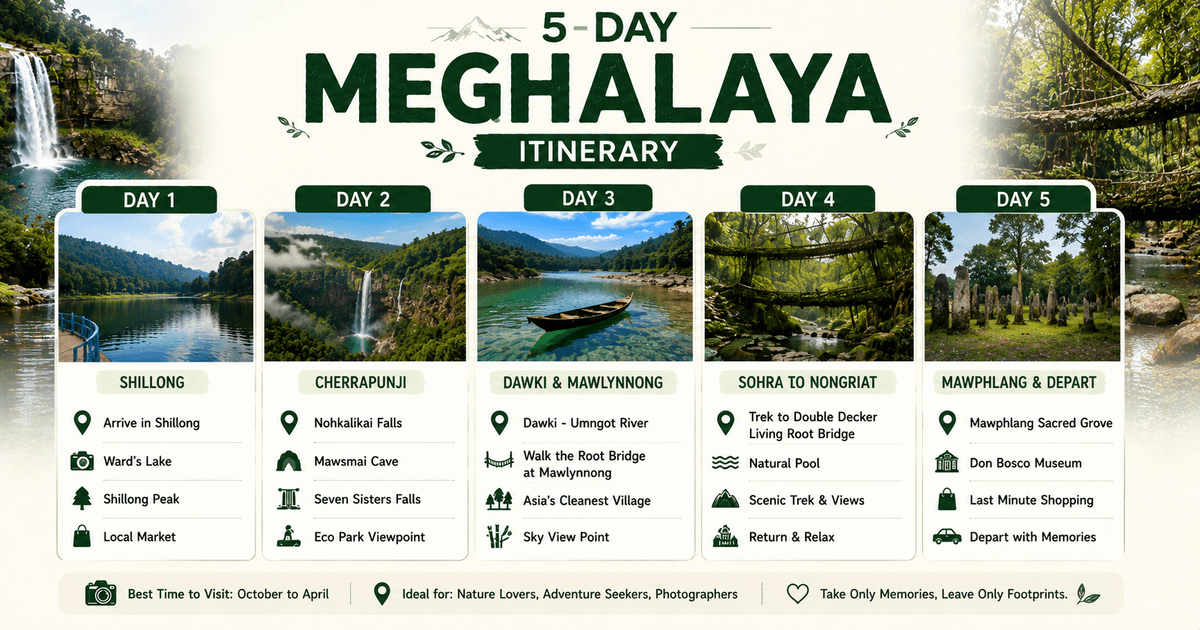
5-Day Meghalaya Itinerary
There's a version of this itinerary floating around every travel blog that promises you can do Shillong, Cherrapunji, Dawki, and Mawlynnong in five days without breaking a sweat. Technically true. Pra