51 Shakti Peethas explained: why they matter

RIYA SHARMA
HRDYAM - DISCOVER SACRED JOURNEYS, WISDOM & WELLNESS
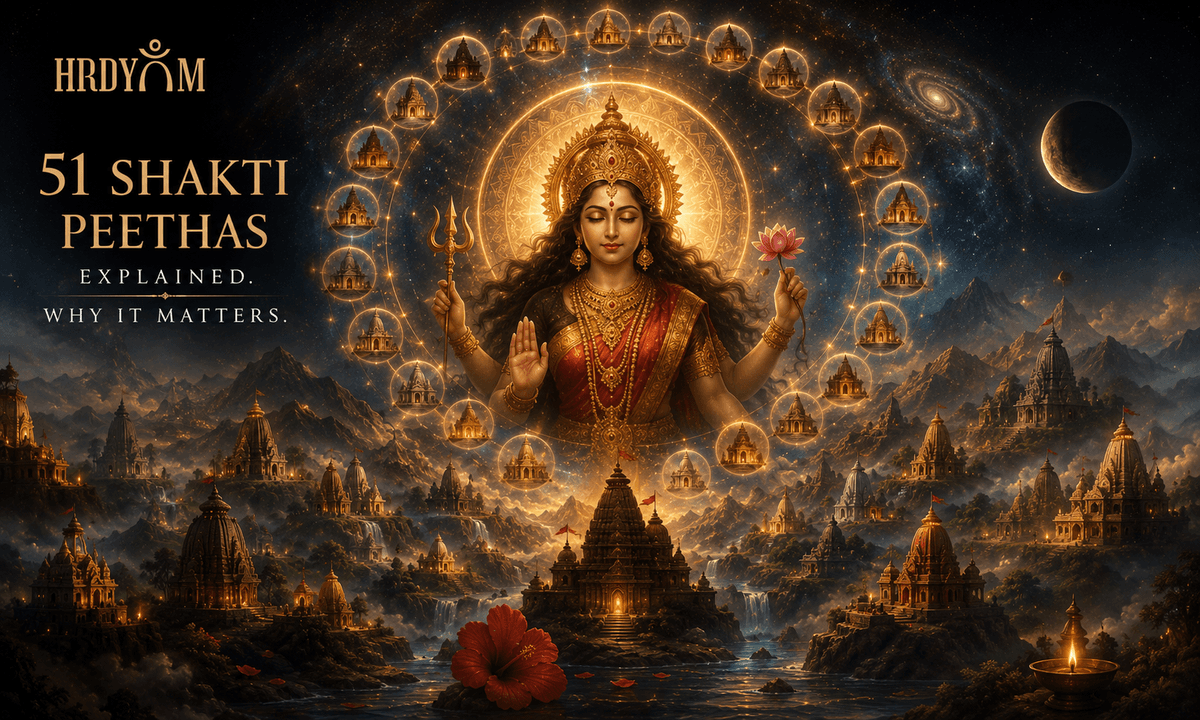
Have you ever thought why so many devotees from across India and even other countries travel to visit temples that are collectively known as the Shakti Peethas?
For many pilgrims, this is more than just visiting yet another temple or seeing yet another destination on their travel list. A mother offers prayers for the prosperity of her family members; young lovers ask for a blessing before setting out on their new journey, while an old pilgrim realizes his lifelong dream, which had been hidden deep inside his heart for so many years.
On first look, these temples seem to be spread around the country or even around the globe without any obvious connection between them. However, according to Hindu legend, all these temples have something in common- one of the epic legends in Indian mythology.
This legend explains why people visit Shakti Peethas to this day.
The story behind the 51 Shakti Peethas

Shakti Peethas are mentioned in many Hindu religious books like the Devi Bhagavata Purana, the Kalika Purana, and the Shiva Purana.
As per these religious scriptures, the daughter of King Daksha, Sati, decided to marry Lord Shiva despite her father's disapproval of him and considering him unsuitable for her. Her father never accepted their marriage.
Daksha planned an immense yajna and invited kings, sages, and deities from all over the universe, but deliberately left out Shiva and Sati.
Though the Lord asked her not to go, she had this feeling that, even after all, her daughter, she should be welcomed in her father's house, and went there without Lord Shiva.
But seeing her husband being humiliated by her family, Sati could not bear it anymore and entered the yajna fire.
When Lord Siva came to know about it, he was shocked to the core.
Lord Shiva carried Sati's dead body on his shoulder and started wandering in the universe. His cosmic dance, called Tandava, was disturbing everything until Lord Vishnu stopped him.
Vishnu used his Sudarshan Chakra to divide the body of Sati into several fragments. The areas where the fragments of the Goddess's body or ornaments and other holy things of hers fell were consecrated as Shakti Peeths.
Why 51 Shakti Peethas?
The first question that arises in many pilgrims' minds is,
"Exactly why fifty-one?"
The explanation is traditional, and there is no common historical record.
A number of ancient texts have a different number of Shakti Peethas, some say four, some speak about 18 or 51, while others name even 108 holy places. But the tradition of 51 Shakti Peethas is one of the most common traditions of the Shakta tradition.
In addition, many researchers believe that the number 51 comes from 51 letters of the Sanskrit language (Matrikas), the sound vibration through which the universe is created. In this sense, each Shakti Peetha is not only a holy place on Earth but also an individual manifestation of Divine power.
Instead of being considered merely places of pilgrimage, these temples are often regarded as spiritually connected centers located in the territory of the Indian subcontinent.
More than just temples, they are living traditions
One might see the Shakti Peethas as mere temples.
However, just spending some time in each of them will make one understand that they are so much more than just temples.
Right before dawn, the priests start preparations for the rituals that will take place throughout the day. The devotees arrive bearing flowers, coconuts, scarlet fabric, and prayers brought by them from hundreds, sometimes thousands, of kilometers away. Some of them come seeking strength during hard times; others pay their tribute and gratitude because their prayers have been heard.
There are various traditions, festivals, architectural styles, local legends, and forms of worship specific to each temple. There is a special form of aniconic goddess worship at Kamakhya in Assam, as well as the continuous centuries-long devotion influencing the rituals and celebrations at Kalighat in Kolkata. And there are always the eternal flames at Jwala Ji in Himachal Pradesh.
The rituals may vary, but the essence is always the same-the worship of Shakti, the universal divine energy of life.
Many pilgrims who go to Shakti Peetha do not make this pilgrimage seeking miracles. They make this pilgrimage for an experience of a different kind.
The most admired Shakti Peethas
All 51 Shakti Peethas are revered; however, some have received special prominence due to their traditions, history, and thousands of devotees who visit each of them on an annual basis.
| Shakti Peetha | Location | Traditional Significance |
|---|---|---|
| Kamakhya Temple | Guwahati, Assam | Associated with the Divine Feminine and the annual Ambubachi Mela, symbolizing fertility, creation, and Shakti worship. |
| Kalighat Temple | Kolkata, West Bengal | One of the most revered Shakti Peethas, dedicated to Goddess Kali and an important centre of Shakta tradition. |
| Jwala Ji Temple | Kangra, Himachal Pradesh | Famous for its naturally occurring eternal flames, which are worshipped as the manifestation of the Divine Mother. |
| Vishalakshi Temple | Varanasi, Uttar Pradesh | Closely associated with the spiritual heritage of Kashi and revered as one of the sacred abodes of the Divine Mother. |
| Hinglaj Mata Temple | Balochistan, Pakistan | One of the oldest and most sacred Shakti Peethas, attracting devotees from across South Asia despite its remote location. |
| Mahalakshmi Temple | Kolhapur, Maharashtra | Dedicated to Goddess Mahalakshmi and regarded as a significant centre of prosperity, devotion, and Shakti worship. |
There are specific traditions and rituals for every temple. This variety is one of the unique features of the Shakti Peetha tradition. Despite the fact that people go to various places, there is the same spiritual story behind every single one of them.
The relevance of the Shakti Peethas in contemporary times
With the world increasingly becoming one where travelers tend to tick off destinations from their bucket lists, the Shakti Peethas offer a different kind of travel experience.
Visiting these holy places is never just about the monument. It is rather about taking time to participate in the ancient rituals, listen to the traditions of the place, talk to the temple priests, and experience a culture that has been alive for ages.
It is also a means by which many families reconnect with each other through multi-generational spiritual journeys. The grandparents tell stories that have been passed down through generations, the parents tell their kids about the traditions that formed part of their upbringing, and the kids get to learn that spirituality is not only about performing certain rituals but also has something to do with one's heritage.
Each Shakti Peetha offers a Unique journey
Even though all the Shakti Peethas share the same mythological background, each trip provides unique experiences.
Accessing Kamakhya Temple means hiking up the Nilachal Hills, along with indulging in the cultural heritage of Assam. A pilgrimage to Kalighat allows pilgrims to revel in the vibrancy of Kolkata, whereas the Jwala Ji Shakti Peetha provides a quite different ambience in the hills of the Himalayas.
The weather, topography, customs, timings of temples, availability of lodging, and accessibility are quite diverse at each place. A family visiting the Shakti Peethas with parents or kids will have to take care of these details so that their journey does not become too complicated for their spiritual fulfillment.
Such knowledge is equally essential for visiting the Shakti Peethas as for understanding the myths behind them.
Thoughtful planning for Shakti Peeth pilgrimages
As opposed to normal vacations, spiritual trips call for thorough planning.
For instance, temple opening times could be different during festivals. There are some areas that receive very many visitors on certain dates. Other places might even be located in mountains where climatic changes are quite rapid.
Planning well ahead with a personalized pilgrimage itinerary enables the whole family to minimize stress related to traveling, and considerations you should think about include:
The right season for comfortable travels.
Accommodation near the temple.
Local practices and dress code.
Travel plans for older people.
Having your medical supplies handy.
Consult temple information before traveling.
With thoughtful planning of the trip, one will be able to make room for the trip itself.
Frequently asked questions
What are 21 Shakti Peethas?
The 21 Shakti Peethas are a set of holy pilgrimage spots for Hindus that relate to Goddess Sati. According to Hindu beliefs, the body of Goddess Sati was dismembered by the Sudarshana Chakra of Lord Vishnu after which Lord Shiva carried her body and different parts of it fell at various places, becoming the Shakti Peeths. There are variations in the number of Shakti Peethas and lists of them among different texts and regional traditions.
What is the Importance of Shakti Peethas in the Hindu religion?
The Shakti Peethas are regarded as holy shrines where there is believed to be a unique presence of Shakti (the divine feminine).
Is there a list of exactly 21 Shakti Peethas?
No, because depending on the source, the total number of Shakti Peethas can be either 18, 51, 52, or 108. So a list of 21 Shakti Peethas consists of chosen temples that have some importance, rather than being fixed for all religious groups. For instance, tourism sites classify some shrines as Peethas in 51 or 52 Shakti Peetha lists.
Which is the most famous Shakti Peetha in India?
There is no single Shakti Peetha that is considered “the most important”, since each Peetha has its own stories and significance. Some well-known Shakti Peethas include Kamakhya, Kalighat, Jwala Ji, Brajeshwari, Mahalakshmi, Tripura Sundari, and Vaishno Devi temples.
When should one visit Shakti Peeths?
The perfect time will vary according to the specific temple or location. Navratri is a very important festival for Shakti worship and is attended by many pilgrims. Other festivals like Ambubachi at Kamakhya, or festivals dedicated to the Goddess in regional locations, will make visiting the temples an interesting experience.
How HRDYAM facilitates the creation of meaningful pilgrimage journeys
In HRDYAM, pilgrimage is not about booking flights and hotels.
Each family's requirement is unique. Some may need a serene spiritual getaway, whereas some may be travelling with elderly people who need a slow-paced itinerary with high accessibility. While some want to perform temple rites, some may want to visit other spiritual sites along with the current journey.
By combining all these aspects into one single platform, HRDYAM tries to ensure that families can focus on their devotion and not on the logistics of the journey.
If it is your first spiritual journey or the realization of a lifetime aspiration, proper planning will add another dimension to the whole process. HRDYAM works to make personalized spiritual trips that offer both comfort and planning for its clients, allowing the family members to enjoy their faith rather than fret over the details.
Conclusion

The history of the 51 Shakti Peethas is more than a myth recorded in religious literature.
It lives on each day with the pilgrims who set foot on the holy grounds seeking blessings, thanksgiving, healing, and spiritual solace.
There are those whose dreams for the future they carry inside themselves.
Then there are those who have come to express their gratitude for the answered prayers.
Then there are those who are just looking for some silence amidst the places where generations of faith have taken root.
Perhaps that is what makes the Shakti Peethas relevant even today. It shows us how religion isn't just about myths. It can be seen in every pilgrimage undertaken and prayer offered. It can be felt in every generation willing to preserve its traditions.
After all, the memories of these sacred places do live on long after the pilgrimage ends and the pilgrim is gone. Maybe that is the true meaning of the Shakti Peethas.
Discover every aspect of your spiritual journey - from pilgrimages and Vedic consultations to wellness retreats and authentic sacred products- at HRDYAM.
Spiritual travel researcher, Vedic cultural writer, and contributing editor at HRDYAM.
You Might Also Like
Tags
More Articles
View all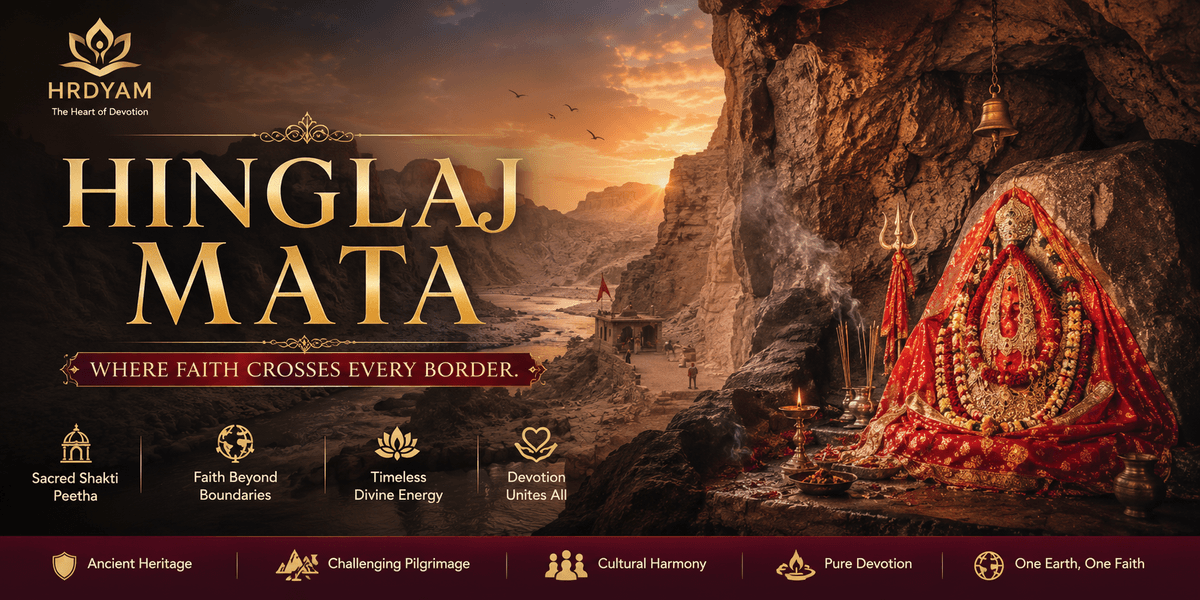
Hinglaj Mata: Where faith crosses every border
The journey to some temples starts with the sound of temple bells. However, when it comes to the pilgrimage to Hinglaj Mata Temple, the starting point of this journey is not sound but silence - the si
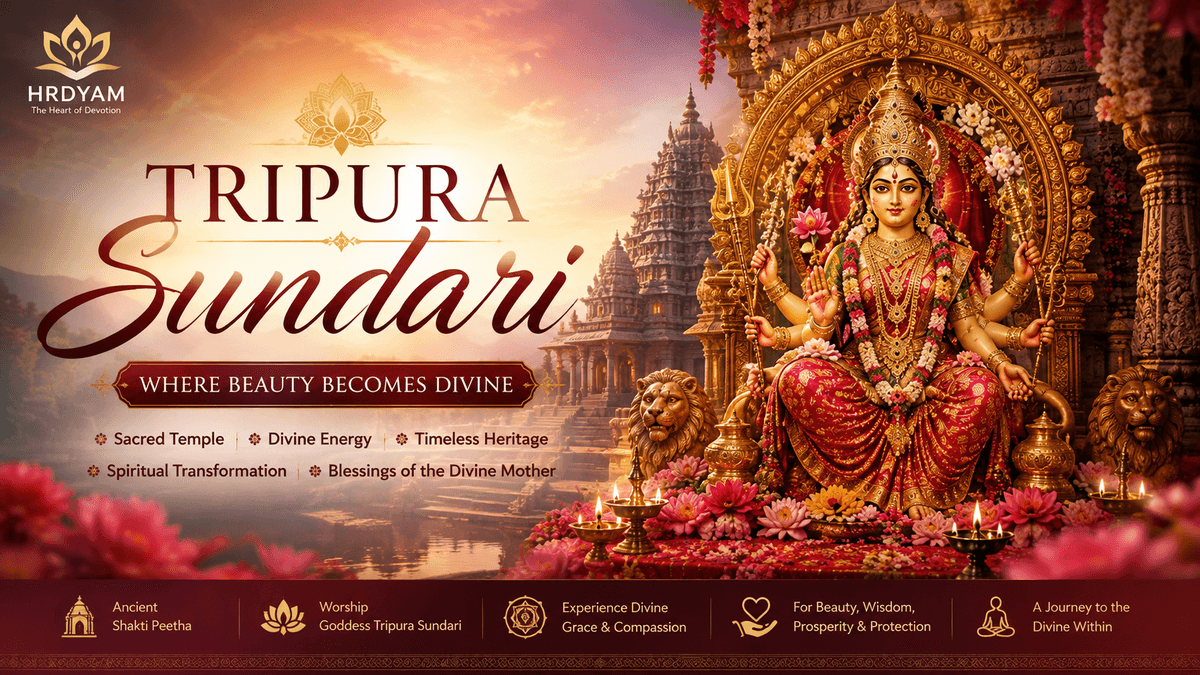
Tripura Sundari: Where beauty becomes divine
One of the few temples in India that has been named based on a profound philosophical thought, rather than a location, is called "Tripura Sundari," which means "The Beautiful One of the Three Worlds."

5-Day Meghalaya Itinerary
There's a version of this itinerary floating around every travel blog that promises you can do Shillong, Cherrapunji, Dawki, and Mawlynnong in five days without breaking a sweat. Technically true. Pra