When Kolkata builds a new world for the Goddess

RIYA SHARMA
HRDYAM - DISCOVER SACRED JOURNEYS, WISDOM & WELLNESS
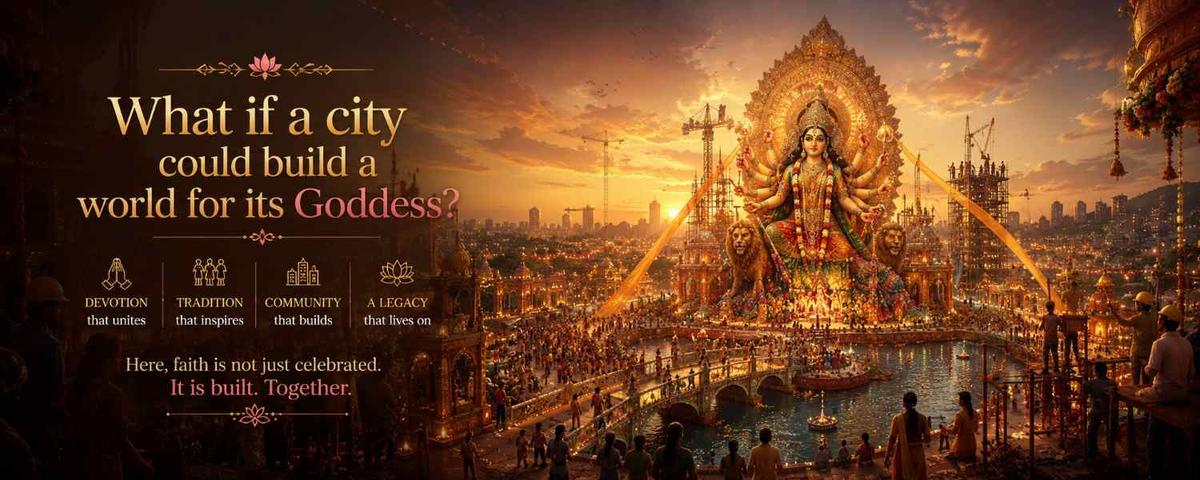
Before the onset of the autumn season in West Bengal, Kolkata will have started making preparations for the long-awaited arrival.
Months go by with artists, decorators, sculptors, electricians, and residents' committees working hard under cover. Bamboo skeletons come up, clay structures form, materials and lights start coming in, and concepts, which were once just on paper, gradually take on huge physical forms.
These are the Pandals.
However, to merely describe them as decorative structures would not do them any justice at all. A Durga Puja pandal in Kolkata could be anything from a temple, a palace, a village, a contemporary art installation, or a whole imaginative world made out of daily objects.
And right at the center of each of these is Maa Durga.
It is the contrast that gives Kolkata's Durga Puja its special character, because while the goddess herself is worshipped via an image fashioned from the humblest river clay, the temporary house built around her can turn into one stunning piece of public art.
This amazing combination of worship, skill, spectacle, and participation caught the attention of UNESCO when the Durga Puja of Kolkata was added to the Representative List of the Intangible Cultural Heritage of Humanity in 2021.
For a few days in autumn, Kolkata does not just celebrate Durga Puja during Navratri. It builds a whole world for her to return to.
What happens when the Goddess comes home?
All the bright lights, music, and magnificent pandals conceal a much deeper story.
As per the beliefs and myths related to Hinduism, Mahishasura, the mighty buffalo demon, had conquered the gods and dominated the three worlds. However, in order to defeat him, the gods merged their power to give rise to Durga, the warrior goddess holding all the powers together in her. Riding on a lion and battling with Mahishasura, she emerged victorious and restored the equilibrium to the world.
However, in West Bengal, the story attached to the festival is much closer to hearts than anything else.
In West Bengal, apart from the warrior avatar of Maa Durga, she is also called Uma, who has come back to her parental home from Mount Kailash with her children-Lakshmi, Saraswati, Kartik, and Ganesha. Hence, her coming is always celebrated with immense affection, like welcoming your own daughter to her hometown.
It is because of this that the last day becomes so emotionally charged. The Goddess who comes amidst celebration has to finally leave as well.
The beating of the drums subsides. Goodbyes are said. And when the idol is taken towards the water for visarjan, the celebrations become a delicate act of bidding adieu.
It is because of this that in Bengal, Durga Puja is not only a victory but also a homecoming; the victory of good over evil and the happiness of taking Maa back home.
How does clay learn to breathe as the Goddess?
Before the grand pandals emerge, before the lights are lit and the dhak reverberates throughout the city of Kolkata, there exists a world where the Goddess Durga takes birth.
Kumartuli is a traditional potter's district of Kolkata, where for generations now potters have worked with bamboo, straw, and clay to create the image of the Goddess along with that of her children. The image starts with a skeletal frame and then builds into a complex human figure, with layers of clay adding to the idol's expression and character. Kumartuli is the core of the Kolkata idol-making tradition. It is truly poetic in nature.
The Goddess who shall soon be seated beneath the grand illumination of lights and grand pandals starts in an unexpectedly humble form-earth, straw, and the hands of the artisan.
But then comes the time known as Chokkhu Daan, when the Goddess's eyes are painted. This marks not only the end of an art piece but the moment of awakening of the idol itself.
What if devotion could take the shape of art?
Once the goddess takes on physical form, another process of metamorphosis occurs.
In Kolkata, bamboo, fabric, wood, metal, clay, and lights turn into temporary architectural wonders. While some pandals reproduce historic temples, others create their pandals using themes inspired by villages, arts, literature of Bengal, or current social topics. In such a way, the whole city becomes an open-air gallery in which each neighborhood gives its own vision of how Maa Durga is to be honored.
That is when Kolkata's famous thematic pandals reveal their true potential. The beauty of the latter is not only in their enormousness and lavishness but also in imagination, which can turn an ordinary neighborhood into a memorable one even after Puja is over.
It is the charm of the impermanence that makes everything look special. All the amazing constructions are created being aware that their lifespan is measured in several days. Thousands of people are going to line up to admire the architecture of these constructions, capture it with their cameras, pay homage to it-and the festival is over.
When the city comes alive: Dhak, Dhunuchi and cultural performances
A Kolkata Durga Puja pandal is never silent.
Before you see the deity, the resounding beats of the dhak may reach your ears through the streets. Next come the sound of conch shells, bells, devotional songs, and the buzz of people. Durga Puja turns into a festival not just to see, but also to hear and experience. UNESCO recognises traditional drumming, performing arts, and community participation of Bengalis as essential components of the festivity.
And then arrives the Dhunuchi Naach.
Holding a dhunuchi-a traditional earthen pot containing fragrant materials-the dancers perform according to the beats of the dhak, twirling the pot in specific patterns. From an offering, it becomes an amazing spectacle of incense-filled air, music, and movement.
Meanwhile, around it, the life of Kolkata culture unfolds through music, dance, theatre, and other folk performances and community programmes. In many areas, the Puja becomes a platform for local artists to perform their art.
That is how the festival acquires its unique Bengali identity.
What does devotion taste like when everyone shares the table?
But by the time the afternoon rolls around, after the rituals and the morning fervor, yet another dimension of Durga Puja starts to take shape-one that does not need any stage at all. Bhog.
The food offered to Maa Durga at community pandals is distributed among the devotees and visitors. The ingredients of a traditional Bengali Puja bhog may include fragrant khichuri, labra, beguni, chutney, and a dessert like payesh.
However, there is something more profound about bhog than what goes on the plate.
People gather to eat as one unit, usually in rows and rows, eating the same food irrespective of what corner of the earth they hail from. Whereas the pandal outside might have been built to be admired by the thousands who visit, inside the community feast takes on a completely different hue: Food is offered, taken, and shared.
It is this sense of collective participation which makes Durga Puja a very important part of the community life of Kolkata. According to UNESCO, the festival is one where the various social boundaries come together through worship, art, food, music, and celebration.
And possibly that is why the memories of Bengalis are filled not just with photographs of majestic deities but also with the flavor of bhoger khichuri.
What if every Pandal told a different story?

There is a moment in Durga Puja where the whole of Kolkata is no longer a city but a path of discoveries. There are paths leading into other paths; there is lighting that leads to a new world, and now and then, there is an idol, there is another creation, another crowd in awe.
Top ten Kolkata Durga Puja Pandals
| No. | Pandal | What Makes It Special |
|---|---|---|
| 1 | Bagbazar Sarbojanin | One of Kolkata's oldest and most traditional community pujas, known for its classic atmosphere and devotional character. |
| 2 | Kumartuli Park | Located close to the famous idol-makers' quarter, making it a wonderful place to experience Bengal's clay-idol tradition. |
| 3 | College Square | Famous for its spectacular lighting and the beautiful reflection of the illuminated pandal across the adjoining lake. |
| 4 | Santosh Mitra Square | Known for ambitious themes, elaborate installations, and striking visual presentation. |
| 5 | Mohammad Ali Park | Popular for its large-scale pandals, often inspired by distinctive architectural forms. |
| 6 | Badamtala Ashar Sangha | A celebrated South Kolkata puja known for creative themes and artistic interpretations of Durga. |
| 7 | Suruchi Sangha | Famous for its socially and culturally inspired themes, bringing regional traditions into its pandal designs. |
| 8 | Ballygunge Cultural Association | A popular community puja combining traditional worship with artistic decoration and cultural programmes. |
| 9 | Ekdalia Evergreen | Renowned for its grand traditional-style pandals and beautifully crafted Durga idols. |
| 10 | Jodhpur Park | A major South Kolkata attraction, known for contemporary themes, artistic installations and large crowds. |
When Durga Puja came alive on the Indian Cinema screen
Durga Puja has always been cinematic, with its lighting, dhak music, red and white sarees, large idols, and the crowded streets, along with the emotional goodbye of Visarjan. It is quite natural for filmmakers to make use of this aspect in their films.
| Film | Year | Language | What It Captures |
|---|---|---|---|
| Devdas | 2002 | Hindi | The iconic “Dola Re Dola” sequence captures the grandeur, colour and feminine energy of Durga Puja. |
| Parineeta | 2005 | Hindi | Set in Kolkata, the film uses Puja to bring characters together and features a memorable Dhunuchi dance sequence. |
| Kahaani | 2012 | Hindi | Kolkata's Durga Puja becomes part of the thriller's very fabric, culminating in a powerful Vijaya Dashami climax that echoes the victory of good over evil. |
| Vicky Donor | 2012 | Hindi | Pandal-hopping introduces a Punjabi protagonist to Bengali culture, making Puja part of an evolving intercultural romance. |
| Lootera | 2013 | Hindi | The film's Bengal setting brings out a quieter, nostalgic side of Durga Puja and the cultural atmosphere of an earlier era. |
| Gunday | 2014 | Hindi | Durga Puja provides the backdrop for a high-energy celebration, with dhak and festivities becoming part of the film's visual world. |
| Utsab | 2000 | Bengali | A family gathering during Puja becomes a window into relationships, old tensions, and the emotional meaning of coming home. |
| Joi Baba Felunath | 1979 | Bengali | Feluda's mystery unfolds against the atmosphere of Durga Puja, combining tradition, celebration, and suspense. |
| Uma | 2018 | Bengali | A dying girl's wish to experience Durga Puja brings an entire community together, turning the festival into an act of compassion. |
| Rocky Aur Rani Kii Prem Kahaani | 2023 | Hindi | The film uses Durga Puja as a vibrant setting for romance, family, and cultural celebration, bringing the festival to a new generation of mainstream audiences. |
How does a city say goodbye to its Goddess?

The time comes when everyone feels the inevitable arrival of something that they do not want to happen. Vijaya Dashami.
Having celebrated for several days with music, worshipping, visiting decorated pandals, and celebrating, finally Maa Durga needs to depart from here. For Bengalis, this is like a farewell of a daughter from her parents' house. Before the immersion takes place, devotees give a farewell to Maa Durga through several rituals, prayers, and sometimes even through Sindoor Khela, during which women put on vermilion to Maa Durga and share it.
Idols get separated from the pandals.
Dhaks become louder. Processions start moving towards Hooghly, where people dance, sing, and say their goodbyes. Finally, the image made of the river clay gets immersed in the water. UNESCO calls this farewell part of Durga Puja an expression of Durga Puja meaning as “homecoming” or the seasonal return to one's roots.
It is a lovely contradiction-the festival is all about victory, but its main feeling is farewell.
And with the crowds chanting “Aashche bochhor abar hobe,” or “She will be back next year,” the suddenly vacated pandal takes on a new meaning.
The lights could be switched off. The beats could die away. But Kolkata is eagerly waiting for her next return.
What makes Durga Puja more than a celebration?
It would be easier to describe Durga Puja in Kolkata when it is thought of not as a festival taking place in the city, but when the city itself becomes the festival.
The craftsmen make the idols, the neighbourhood committees make the pandals, the musicians make the dhak sound resonate throughout the streets, the artists perform on stage, the bhog is made by families, and millions of spectators move from one celebration to another. UNESCO regards the combination of religious, artistic, and craft traditions with community spirit as one of the main distinctive characteristics of Durga Puja in Kolkata.
And this might be the reason why the festival seems to be bigger than any ritual.
A pandal may exist only for several days, but the artistry behind it will be passed to future generations. A community feast exists only for an afternoon, but it creates a common table where people who will never meet can gather. A cultural performance is a one-hour event, but it becomes a memory of the whole neighbourhood.
All the big festivals in the end become the expression of one thing-human beings who create something beautiful and invite everyone to join them.
What if you could experience Durga Puja beyond the crowds?
To experience Durga Puja through HRDYAM is to move past the façade and learn the stories behind this festival.
Explore Kolkata’s lit-up streets, view their majestic pandals and amazing clay idols, hear the sounds of dhak, see the vibrancy of dhunuchi naach, and have an authentic bhog. Learn about the artisans behind the scenes, rituals of this festival, the mythological significance, and the rich culture of Bengal on the way.
Because your trip to Bengal during Durga Puja should not be about merely clicking pictures of stunning pandals.
You should come away with an appreciation of what makes the Goddess return to her home, what makes an entire city welcome her back, and what makes saying goodbye so significant.
Experience more than just Durga Puja; experience the culture of Bengal through HRDYAM. You can also explore other spiritual trips to fulfill your spiritual heart.
Conclusion
Finally, the dhak becomes silent. People start to disperse, the pandals are demolished, and Maa Durga embarks on her trip to be immersed in the river. The worlds made for her vanish just as quickly as they come into existence.
But Durga Puja was more than just a festival.
It was the transformation of mud to an art form, worship to festivity, streets to stage, food to a blessing, and strangers to family.
This might explain why people in Kolkata look forward to Durga Puja every year with so much anticipation. For a couple of days, the city comes alive, and when Maa Durga is gone, the people are left with the promise of her return.
Pandals might be temporary. Memories aren’t. And somewhere between the beats of the dhak, the light of the idols, and the chant of “Aashche bochhor abar hobe,” Kolkata makes us realize that festivals don’t always mean just that. They mean a sense of belonging.
Spiritual travel researcher, Vedic cultural writer, and contributing editor at HRDYAM.
You Might Also Like
Tags
More Articles
View all
What is HRDYAM? The AI-Powered Spiritual Ecosystem
The spiritual essence of India has not merely consisted of temples alone. It is found in pilgrimage circuits, old rituals, Vedic astrology, Yoga, Ayurveda, sacred rivers, traditions of the region, art

How HRDYAM blends spirituality with sustainability
How would pilgrimage change if it were no longer viewed as a trip to a shrine but as an engagement with the entire sacred geography? The river next to the shrine, the communities that live by the shri
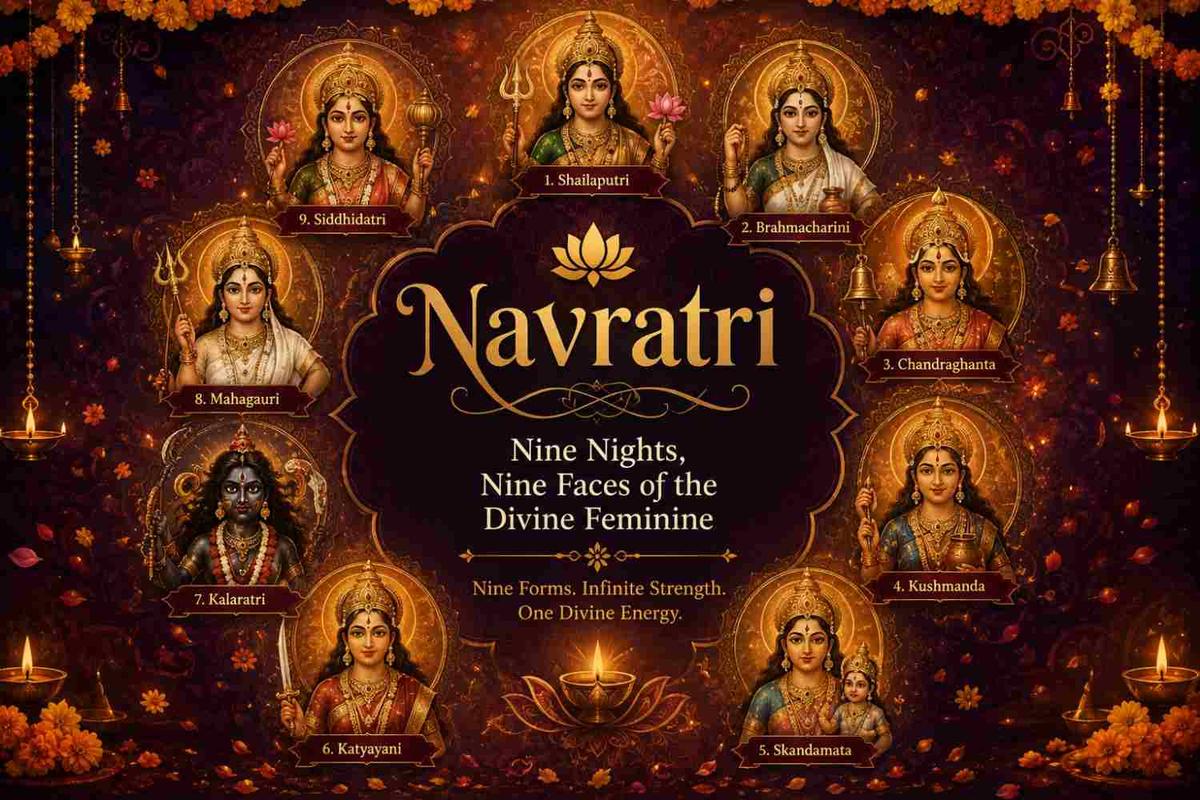
Navratri: Nine nights, nine faces of Shakti
The first indication of Navratri usually comes not from any temple. This could be a spontaneous display of a tiny kalash in the corner of your house, the planting of new barley seeds into the moist so