Makar Sankranti: Harvest festival, rituals & traditions of India

RIYA SHARMA
HRDYAM - DISCOVER SACRED JOURNEYS, WISDOM & WELLNESS
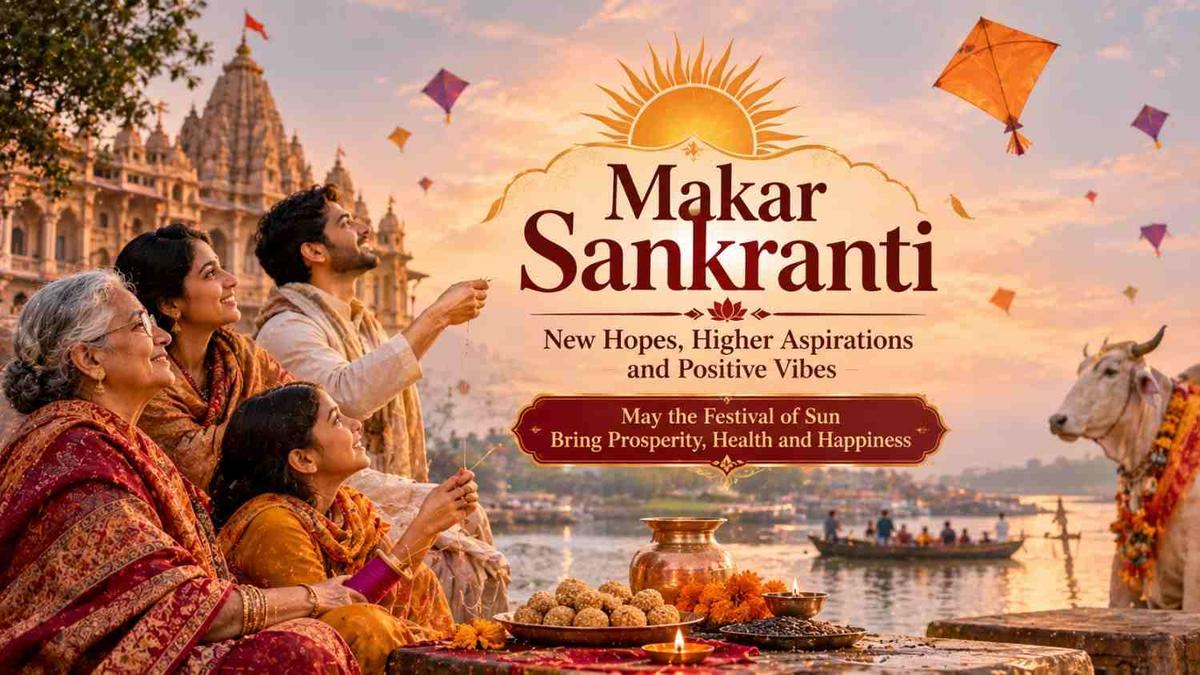
A beautiful tale from Hindu mythology tells us about the annual celestial event that happens when the Sun enters its new zodiac sign. The change brings with it new energy, growth, and longer days. This event is called Makar Sankranti.
This is not just an astronomical event, but the stories behind it are beautiful. The relationship between the gods, love, kindness, and the change of seasons is all captured in this festival. In fact, Surya Dev is worshipped, and farmers celebrate this festival as it is very special to our religion and culture in India.
What is the story and mythological significance behind Makar Sankranti?
One of the popular mythological associations related to this festival is the return of Surya Dev to his son Shani Dev (associated with Makara Rashi/ Capricorn). As per Hindu astrology, Shani is the planetary lord of Makara. This transition of the Sun into the Makara sign is believed to be the union of Surya and Shani. Signifying the importance of peace and harmony between differences.
A very important part is related to the Mahabharata epic. During the Kurukshetra War, Bhishma Pitamah was lying on an arrow bed, as he had attained a boon by which he could choose the time of his death. He waited for the auspicious time of Uttarayan to leave his physical body. This made it more popular that Uttarayan is an auspicious time for spirituality and attaining freedom.
As Surya Dev (source of light, energy, and life) is worshipped on this day, the transition of the sun into Makara Rashi is seen as a favorable time for prayers, donations, bathing in sacred waters, and doing spiritual activities.
Why is Makar Sankranti celebrated across India?
Makar Sankranti is a celebration of the transition of the sun from Dhanu Rashi (Sagittarius) to Makara Rashi (Capricorn). It marks the start of the Uttarayan period, which is considered to be auspicious.
The festival also falls in many regions of India during the harvest season. The farmers thank the sun for its blessings of good crops, sunlight, and natural resources. Thus, it is considered a time of celebration for farmers.
People celebrate this change of seasons differently across the country. In Gujarat, it is called Uttarayan. In Tamil Nadu, it is called Pongal. In Assam, it is called Magh Bihu, and in some parts of North India, it is called Khichdi.
When is Makar Sankranti in 2027? What are the important timings?
Makar Sankranti 2027 will be celebrated on 15th January 2027. This is when the Sun enters Makara Rashi. As it occurs after sunset on 14th January, the actual festival celebration and Punya Kaal are done on the next day.
The following are the auspicious timings for New Delhi. It can vary based on your location and Panchang.
| Important event | Date | Timing (New Delhi) |
|---|---|---|
| Lohri | 14 January 2027 | Evening |
| Makara Sankranti moment | 14 January 2027 | 9:14 PM |
| Makar Sankranti | 15 January 2027 | Friday |
| Punya Kaal | 15 January 2027 | 7:15 AM - 5:46 PM |
| Maha Punya Kaal | 15 January 2027 | 7:15 AM - 9:00 AM |
What do the Sun's movement and Uttarayan symbolise?
Makar Sankranti celebrates the passage of the Sun into the Makara Rashi (Capricorn), according to the traditional Hindu calendar. It is associated with Uttarayan, which means the Sun moving North. This is seen as a positive time for performing spiritual acts, praying, giving to charity, and starting fresh.
In terms of astronomy, the apparent movement of the Sun North is linked to the seasons on Earth. Around 21st/22nd December, we hit the shortest day of the year in the Northern Hemisphere (winter solstice). After this, we start to see more daylight hours. However, Makar Sankranti isn’t precisely celebrated at the winter solstice. It is celebrated according to the traditional solar calendar.
This festival celebrates the passing of the sun through the solar calendar and the changing of seasons.
What rituals are performed on Makar Sankranti?
Makar Sankranti is traditionally celebrated by taking a bath, praying to the sun god, giving donations, and sharing food. While the customs may vary between families/regions, they all convey a theme of gratitude, cleansing, and kindness.
- Snan: This takes place when people take a morning bath. Many will visit holy rivers to have a ceremonial bath. Many pilgrimage sites are visited during this time, including Prayagraj, Haridwar, and Gangasagar.
- Surya Arghya: Water is offered to the rising sun. People will also pray for good health, fortune, and well-being.
- Daan: Giving donations is seen as a lucky thing to do during this time. People give donations of sesame seeds, jaggery, rice, khichdi, grains, blankets, and clothing.
- Til-Gud: Sharing sweets made from sesame and jaggery.
- Prayer: Some people will say prayers related to the sun god. Others will do Japa or visit temples.
- Flying Kites: In areas like Gujarat, flying kites plays a large part in the celebrations. This makes Makar Sankranti a personal and kind festival.
How is Makar Sankranti celebrated in different states of India?

The Festival is celebrated with various names. It has several variations depending on the region, with its harvest seasons, food culture, farming communities, and traditions.
| State/Region | Festival name | Major traditions |
|---|---|---|
| Gujarat | Uttarayan | Kite flying, Undhiyu and Chikki |
| Tamil Nadu | Pongal | Harvest rituals, Pongal preparation and cattle worship |
| Assam | Magh Bihu / Bhogali Bihu | Community feasts, bonfires and traditional foods |
| Uttar Pradesh and Bihar | Khichdi | Holy bathing, khichdi preparation and charity |
| Maharashtra | Makar Sankranti | Exchange of til-gul sweets |
| Karnataka | Sankranti | Sesame-jaggery exchange and harvest celebrations |
| Andhra Pradesh and Telangana | Sankranti | Rangoli, traditional food and harvest festivities |
| West Bengal | Poush Sankranti | Pitha preparations and Gangasagar pilgrimage |
Which traditional foods are prepared during Makar Sankranti?
Food plays a big part in this festival, as many dishes are made using seasonal and local produce. Ingredients such as sesame, jaggery, rice, and lentils are commonly used.
- Til-Gud Laddoo: These are popular sweets made using sesame seeds and jaggery.
- Gajak and Rewari: These are sweets made using sesame and jaggery, which are commonly eaten in North India.
- Khichdi: This is made using rice and lentils. It can be given out in some traditions.
- Pongal: This is a traditional Tamil dish which uses rice, milk, and jaggery
- Pitha: These are rice dishes from Assam which are associated with Magh Bihu.
- Undhiyu: This is a vegetable medley from Gujarat which is traditionally eaten during Uttarayan.
- Chikki: This is a crunchy sweet made using jaggery, peanuts/ sesame.
As well as making these dishes, it is very important to share them, as the festival focuses on sharing, seasonal produce, and giving.
Which places should you visit to experience Makar Sankranti?

Prayagraj, Uttar Pradesh
During the time of the Magh Mela, the Triveni Sangam (confluence point of Ganga, Yamuna, and the traditionally believed Saraswati) becomes a prominent centre of pilgrimage. One of the significant bathing days is on the occasion of Makar Sankranti.
Haridwar, Uttarakhand
Devotees flock to Har Ki Pauri and other ghats to pray and take a sacred bath in the Ganga. There is a unique spiritual ambiance created by the temples and the riverside in this city.
Gangasagar, West Bengal
It’s known for its annual pilgrimage when devotees gather at the confluence of the Ganga and the Bay of Bengal. It’s an important time of year for people to take a sacred dip and pray at the Kapil Muni Temple.
Ahmedabad, Gujarat
Ahmedabad is a famous place for celebrating Uttarayan. Kite flying, local markets, and traditional Gujarati cuisine make it a very vibrant place to visit.
Guwahati, Assam
Travellers can enjoy experiencing traditional dishes, communal events, and cultural festivities. This will give you a taste of the harvest traditions that exist in Assam.
TIP: During festival times, there can be heavy crowds, road closures, and high accommodation prices. Please check for any local administration advice on swimming and event times.
How can you celebrate Makar Sankranti responsibly?
To keep the spirit of the sun, nature, and harvest alive during the festival, you could do the following:
- Use safe kite strings. Avoid using glass- or metal-coated manjha, as it can cause injury to people, birds, and animals.
- Fly your kite somewhere safe and allow. Avoid power lines and roads.
- Avoid littering by throwing plastic, food packaging, and other waste into rivers.
- Donate food, warm clothing, and essentials to responsible local organisations.
- Be mindful of busy ghats and pilgrimage sites and follow guidelines.
- Be respectful of local traditions. Ask permission to take photos of people or religious events.
Frequently Asked Questions
When is Makar Sankranti in 2027?
Makar Sankranti falls on 15th Jan 2027 (Friday). The solar ingress happens on 14th Jan 2027 at 9:14 PM IST.
What is the Punya Kaal Muhurat for Makar Sankranti 2027?
New Delhi Punya Kaal is 7:15 AM to 5:46 PM, and Maha Punya Kaal is 7:15 AM to 9:00 AM on 15th Jan 2027. This may vary depending on your location.
Why is Makar Sankranti celebrated on 15th Jan 2027 even though Solar Ingress happens on 14th Jan?
Sankranti happens after sunset on 14th Jan, so the Punya Kaal for the main rituals is the next day, as per the New Delhi Panchang.
What do we donate on Makar Sankranti?
Traditionally, people donate sesame seeds, jaggery, rice, khichdi, grains, blankets, and warm clothes. This can vary between families and regions.
Is Makar Sankranti the same as Pongal and Uttarayan?
These are different celebrations of the season. They both relate to the sun's ingress into Makara. Pongal is celebrated in Tamil Nadu, and Uttarayan is the popular name for Makar Sankranti celebrations in Gujarat. There are different traditions based on the region.
How does HRDYAM help you experience spiritual festivals more meaningfully?
Makar Sankranti is the perfect time to learn about the religious culture of India. Whether it's by visiting sacred ghats, exploring ancient temples, or experiencing local harvest traditions.
We provide you with a unique way to learn about your spiritual journey. Our travel experiences will help you understand the significance behind religious destinations.
With careful planning, you'll have a relaxing and enjoyable spiritual journey. Whether it's visiting Prayagraj during the Magh Mela, Haridwar, or any other holy destination.
Every spiritual destination will create beautiful memories. Take a look at our Travellers' Experiences to see where people have gone, their stories, and what meaningful moments they've had.
Conclusion
Makar Sankranti is a harvest festival that is celebrated with much enthusiasm across the country. It is a celebration of the spirit of giving and worship of Surya Dev. This festival marks the sun entering ‘Makara’.
It is a festival of giving thanks to nature, generosity, and looking forward to new beginnings with optimism. Whether you choose to celebrate by having a holy dip, flying a kite, enjoying a traditional meal, or visiting a place of worship, it is a time filled with hope, prosperity, and unity.
Spiritual travel researcher, Vedic cultural writer, and contributing editor at HRDYAM.
You Might Also Like
Tags
More Articles
View all
Pongal 2027: the four-day harvest festival of Tamil Nadu, its story, rituals, and celebrations
With the first rays of the winter sun on Tamil Nadu's fields, families gather in their courtyards to draw vibrant 'kolams' and cook freshly harvested rice in traditional clay pots. As the milk starts
Meditation & Healing with Nature: Full Moon Soul Retreat 2026
Want to experience a healing full moon retreat in the ancient forests of Kaziranga’s ancient forests? Come, be part of a transformative journey of healing and renewal through self-reflection, intentio

3 Shakti Peethas, 3 States, 1 Divine journey
The Northeast of India is full of sacred temples and rich traditions that will leave you with memories to last a lifetime. There are many places of worship in the region, including 3 of the Shakti Pee