Chopda Pujan and Gujarati New Year: a new year beginning in ink and faith

RIYA SHARMA
HRDYAM - DISCOVER SACRED JOURNEYS, WISDOM & WELLNESS
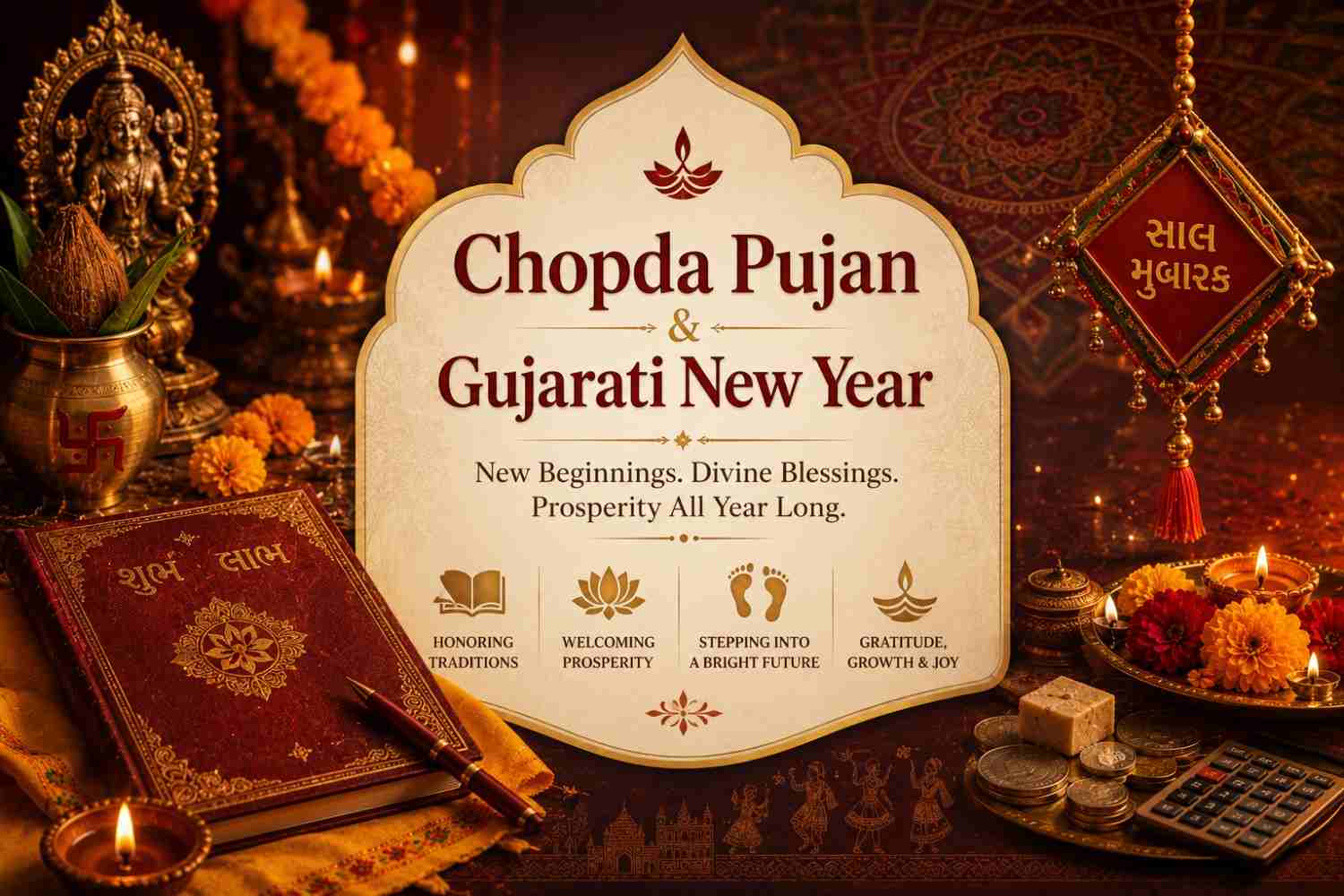
Gujarat is also a time when the feeling of ending Diwali seems to lack something, as preparations start taking place for welcoming something new-the Gujarati New Year, which is known as Bestu Varas or Nutan Varsh.
The new year of the Gujaratis starts on Kartik Shukla Pratipada, which is immediately after Diwali. In 2026, the day of Bestu Varas is 10 November. In contrast to the new year, which is observed by Indians all over the country in the month of spring, Gujarat starts its new calendar year in the midst of the celebrations of Diwali.
This is quite symbolic in itself, in a way, where an evening is dedicated to Lakshmi, light, and prosperity, and the following day welcomes a new year full of opportunities.
And right between the two lies one of Gujarat's unique traditions: Chopda Pujan.
What makes a ledger sacred?
In a Gujarati businessman's house on Diwali night, the atmosphere may feel different from that of a regular workday. The day’s accounts are settled, new chopdas, or books of accounts, are put in front of the gods, and the first pages are created for the coming year.
According to tradition, auspicious symbols like Om, Swastik, and Shubh-Labh are inscribed in the new book of accounts. Prayers are offered for the coming year to be filled with wealth, intelligence, and legitimate success with the blessings of Goddess Lakshmi and other gods.
It is noteworthy that the ritual that it is a meeting between two completely different worlds. The ledger is a symbol of trade and transactions, whereas puja is a practice of bringing these activities into an ethical dimension.
This message is very clear: before entering the next year of business, remember what matters.
What does Chopda Pujan really ask for?
Initially, one can take Chopda Pujan as a ritual asking for prosperous business. However, this ritual has a different meaning, which goes beyond the desire for prosperity.
All old accounts are completed, the new ones are started, and each new page is an invitation to start anew. Each new page is full of possibilities but also holds the responsibilities of what will eventually be written on it.
| Ritual element | What it represents |
|---|---|
| New Chopda | A fresh financial beginning |
| Swastik / Om | Auspiciousness and divine presence |
| Shubh-Labh | Well-being and prosperity |
| Lakshmi Puja | Abundance and financial stability |
| Writing the first entry | Beginning the new cycle with intention |
It is in this sense that Chopda Pujan is much more than just making more money. This is because there should be wisdom, justice, and luck that go along with this newfound wealth.
What new door does Bestu varas open?
The next morning is charged differently.
Even as homes remain festively decorated due to Diwali, the people wear new clothes, visit temples, and greet each other with 'Saal Mubarak'. Family visits are made, sweets are exchanged, and the first day of the year assumes importance as much in the personal sphere as in the calendar.
However, for the trading communities of Gujarat, the significance of the occasion goes beyond mere symbolism. It ushers in a new business cycle as most businessmen resume their work after auspicious timings on subsequent days.
Gujarat seems to bid adieu to the old year by opening, rather than closing, the accounts for the new one.
How does the marketplace keep tradition alive?
Go through an old Gujarati market in the festive season, and the tradition takes concrete form. The stores are decorated, the family is seen gathered around its business venture, and the tradition of generations of businessmen performing rituals that were earlier carried out only using handwritten ledgers.
In a recently published Times of India article about Ahmedabad's ancient markets, it was seen how some businessmen in locations like Manek Chowk still follow the age-old tradition of personally opening up their stores at the break of dawn on New Year's Day, lighting up the diyas and performing the ritual of the first entry in their account book after Chopda Pujan.
That contradiction makes the tradition even more relevant in today's times. The chopda might well go digital one day, but the need for a fresh start will always remain.
How did Chopdas travel from ink to the digital age?

The contemporary Gujarati entrepreneur could be managing his/her accounts via accounting software and cloud-based systems rather than in traditional books on paper. But the ritual itself has shown amazing flexibility.
The form may differ, but the essence remains the same: end the previous cycle, give thanks for the earnings, and initiate the new cycle with auspicious thoughts.
Recent media stories about Gujarati New Year have shown some other innovative approaches that young people take to celebrate their New Year.
May this be the secret to the survival of any tradition. It doesn’t keep the object; it keeps the essence.
When does prosperity become a responsibility?
There is one more lesson embedded in Chopda Pujan.
A ledger documents income and expenditure. It keeps track of profits and losses, but prosperity cannot only be counted in numbers. Hence, there is an occasion for asking a much bigger question on the occasion of the Gujarati New Year-what sort of prosperity are we striving for?
Prosperity in the coming year can be associated with a successful business, but it can also be a good relationship with other people, benevolence, productive activities, and prudence in handling money.
Thus, the white paper of the new chopda is not only a symbol for the businessman. It is also a symbol of an empty page that awaits to be filled with words.
How does tradition keep pace with a changing Gujarat?
The economic character of Gujarat has always been entwined with elements like entrepreneurship and trade/enterprise. This makes Chopda Pujan extremely interesting because commerce becomes a part of the festival itself.
In August 2026, however, the economic policies of the Gujarat government continued to emphasize novel ways of generating economic growth. As part of its industrial growth policy, the state government of Gujarat was encouraging investments in high-tech industries such as semiconductors and data centers.
The contrast is indeed stark. While a centuries-old tradition involves offering a traditional account book to the Goddess, the economy around it advances to more technological means.
The instruments of business might have changed from traditional chopdas to cloud computing, but the Gujarati zeal to start, build, and grow is still very much alive.
What does Annakut teach us about abundance?
Bestu Varas also coincides with Govardhan Puja and Annakut, further enhancing the morning’s symbolism.
During ceremonies held in the temples, elaborate preparations are made and offered in the form of Annakut, which symbolizes an abundance of food. The festival brings together the concepts of prosperity and gratitude, showing that food, nature, and community are sources of wealth as well.
Thus, the festival season of Gujarat gracefully transforms from one abundance into another-Lakshmi is invoked to bless people with prosperity, the chopda is being opened for a fresh financial start, and Annakut is celebrating the abundance that nourishes life.
Prosperity is viewed not only as the abundance of possessions but as the abundance that is received, shared, and appreciated.

When does a new year become a new beginning?
That may be the reason why Bestu Varas is so different from just flipping through a calendar.
It is an opportunity to take a collective breather and pay our respects to loved ones, seek blessings, recognize our labor, and ponder what the new year might bring. The phrase “Saal Mubarak” isn’t just a salutation; rather, it is a prayer for good fortune, success, and favorable beginnings.
Somewhere in a shop, which may have been there for years and years, or even in the offices of a start-up business, a new page awaits its writer. The year starts with promise.
Can a sacred tradition become a journey?
For HRDYAM, taking part in Gujarati New Year would be an opportunity for travellers to witness first-hand the unique cultural tradition of a state where spirituality and business have co-existed for centuries.
Visiting Gujarat during the festive period can go beyond sightseeing of temples for spiritual trips and monuments and become an exploration of ancient bazaars, family customs, pious practices, Annakut and Chopda Pujan, a religious custom of modern-day communities.
By organizing carefully designed spiritual and cultural tours, HRDYAM can give visitors an insight into the traditions celebrated in Gujarat and explain the importance of these practices in modern times.
As often the best way to learn about prosperity is not to look at the financial statement-but to see a family sitting around a new sheet of paper and praying for the ability to fill it wisely.
Conclusion
However, eventually, the lights of Diwali have to come down. The sweets are distributed, greetings are exchanged, and the festivity-filled streets revert to their normal routine.
However, somewhere, there is always a new chopda waiting to open.
Its leaves are all blank. There has been no profit, no loss recorded, and no story has begun yet. This is not a lack of knowledge but potentiality.
Therefore, Chopda Pujan and Bestu Varas provide us with an inspiring Gujarati message: "Close the past with gratitude; start the future with faith and let prosperity guide you."
This is because every new year, in a sense, is a blank page, and the first thing we write on that page is our prayer.
Spiritual travel researcher, Vedic cultural writer, and contributing editor at HRDYAM.
You Might Also Like
Tags
More Articles
View all
What is HRDYAM? The AI-Powered Spiritual Ecosystem
The spiritual essence of India has not merely consisted of temples alone. It is found in pilgrimage circuits, old rituals, Vedic astrology, Yoga, Ayurveda, sacred rivers, traditions of the region, art

How HRDYAM blends spirituality with sustainability
How would pilgrimage change if it were no longer viewed as a trip to a shrine but as an engagement with the entire sacred geography? The river next to the shrine, the communities that live by the shri
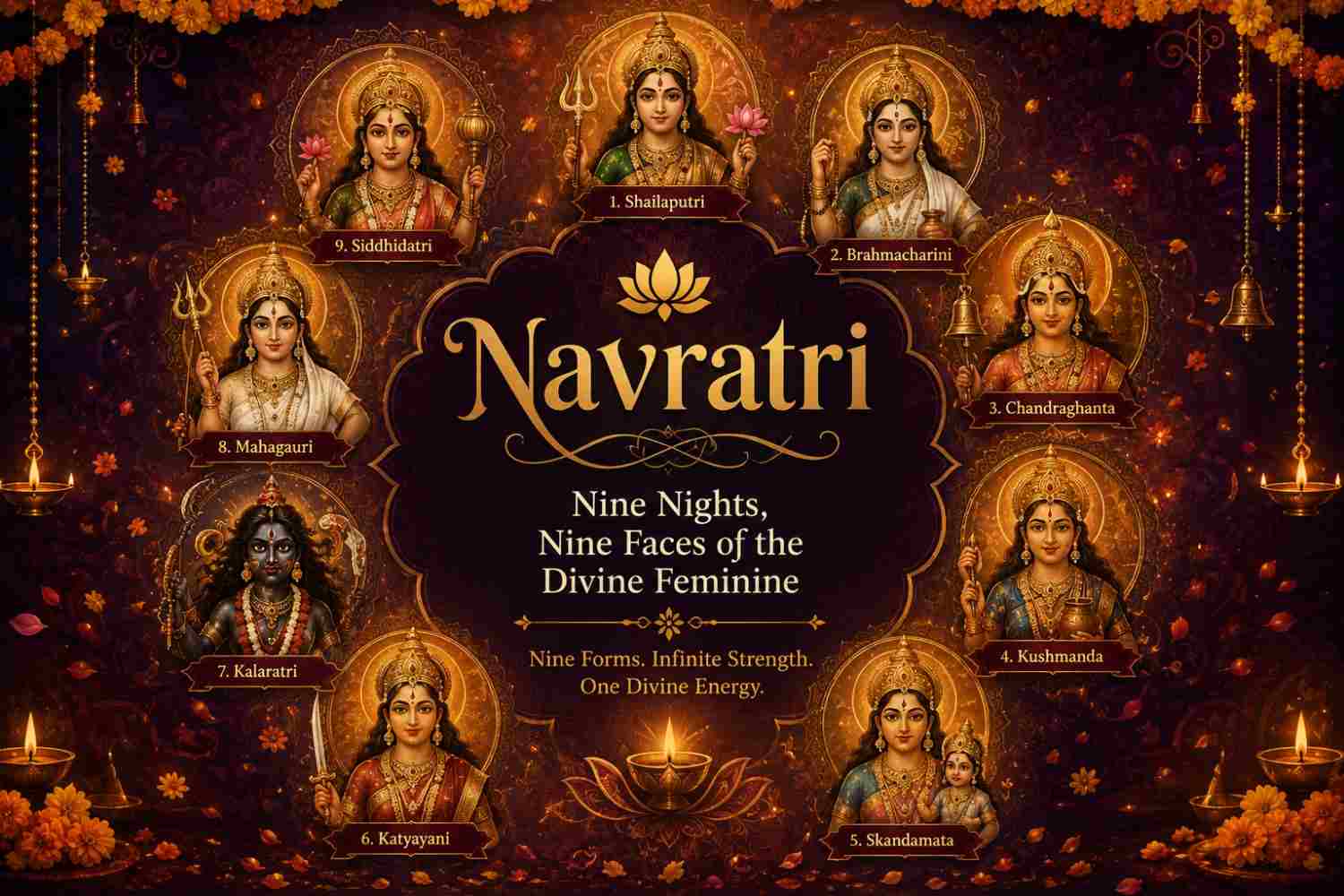
Navratri: Nine nights, nine faces of Shakti
The first indication of Navratri usually comes not from any temple. This could be a spontaneous display of a tiny kalash in the corner of your house, the planting of new barley seeds into the moist so