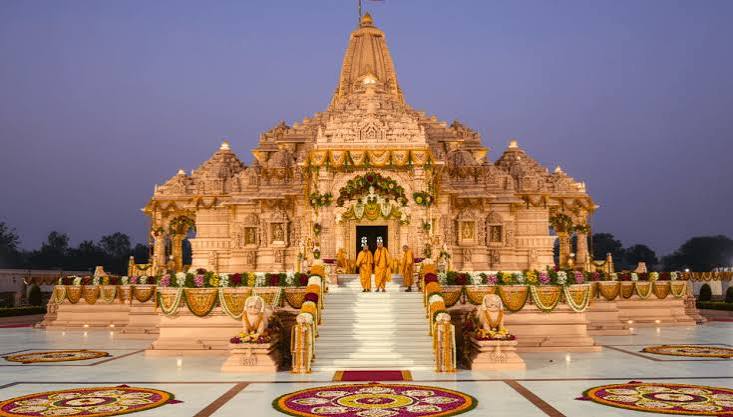
Ram Janmabhoomi
Dedicated to Bhagwan Shri Ram (Ram Lalla)
- Secure Online Booking
- Verified Pandits
- Zero Hidden Fees
- 24x7 Dedicated Guide
- Consecrated Prasad
What's Included
All services, accommodations, and amenities covered in this package
- Assistance with official Aarti passes and darshan queue coordination
- Dedicated local pilgrimage guide in Ayodhya
- Private AC car transfers within Ayodhya
- Assistance at pilgrim facilitation center lockers
About This Temple
Situated in the revered ancient city of Ayodhya along the banks of the sacred Saryu River, the grand Shri Ram Janmabhoomi Mandir marks the eternal birthplace of Bhagwan Shri Ram. Designed in the majestic classical Nagara architectural style by the esteemed Chandrakant Sompura family, the temple stands as a monumental masterpiece of Indian temple craft. The three-storey structure is constructed entirely without iron, steel, or modern mortar; instead, it is meticulously assembled from interlocking blocks of rose-tinted Bansi Paharpur sandstone quarried in Rajasthan, resting upon a deep fly-ash and roller-compacted concrete foundation. Inside the resplendent sanctum sanctorum (Garbhagriha), inlaid with pristine white Makrana marble, rests the divine 51-inch idol of five-year-old Balak Ram (Ram Lalla Virajman), masterfully sculpted from ancient Krishna Shila (black granite) by Arun Yogiraj. Pilgrimage custom in Ayodhya strictly dictates that devotees first take a holy purifying dip in the Saryu River at Ram Ki Paidi, seek the protective blessings and permission of Lord Hanuman at Hanuman Garhi, and then proceed into the Janmabhoomi complex for the life-transforming darshan of Maryada Purushottam Shri Ram. Every year during Ram Navami, thousands assemble to witness the miraculous Surya Tilak, where concentrated solar rays crown the forehead of Ram Lalla.
Day-by-day sacred itinerary will be customized to your darshan schedule and arrival timings.
The HRDYAM Difference
Unmatched VIP darshan, lineage pandits, and curated pilgrimage comfort
Got Questions?
Frequently Asked Questions
The temple opens for morning darshan from 6:30 AM to 12:00 PM and reopens for afternoon and evening darshan from 2:00 PM to 9:30 PM. The complex operates in continuous morning and evening time slots to facilitate smooth crowd flow across the Janmabhoomi Path.
Three primary aartis are conducted daily: Shringar Aarti at 6:30 AM, Bhog Aarti at 12:00 PM, and Sandhya Aarti at 7:30 PM. Free official passes for attending the aartis are released through the Shri Ram Janmbhoomi Teerth Kshetra Trust portal. Devotees must reserve passes in advance using an Aadhaar card or government photo ID.
Mobile phones, smartwatches, cameras, electronic keys, leather belts, and large bags are strictly prohibited inside the main temple premises. The pilgrim facilitation centre (PFC) provides extensive free locker counters where devotees safely deposit electronic devices and shoes before proceeding through the security scanners.
The most comfortable weather for pilgrimage is between October and March. The two most spectacular festivals are Ram Navami (March-April), when the divine Surya Tilak illuminates the idol's forehead, and Diwali (October-November), when Ayodhya lights over 2 million earthen lamps during the grand Deepotsav on the Saryu Ghats.
Ayodhya is directly accessible via the Maharishi Valmiki International Airport (AYJ), connected to major metro cities including Delhi, Mumbai, Bengaluru, and Ahmedabad. The redeveloped Ayodhya Dham Junction railway station is located just 2.5 km from the shrine, with ample electric autos and taxis available.
By age-old Ayodhya tradition, pilgrims first visit the Saryu River (Ram Ki Paidi) for holy waters and snan. Next, devotees visit Hanuman Garhi temple to seek the guardian deity Lord Hanuman's blessings. Following this, pilgrims proceed to the Shri Ram Janmabhoomi Mandir, followed by visits to Kanak Bhawan and Dashrath Mahal.