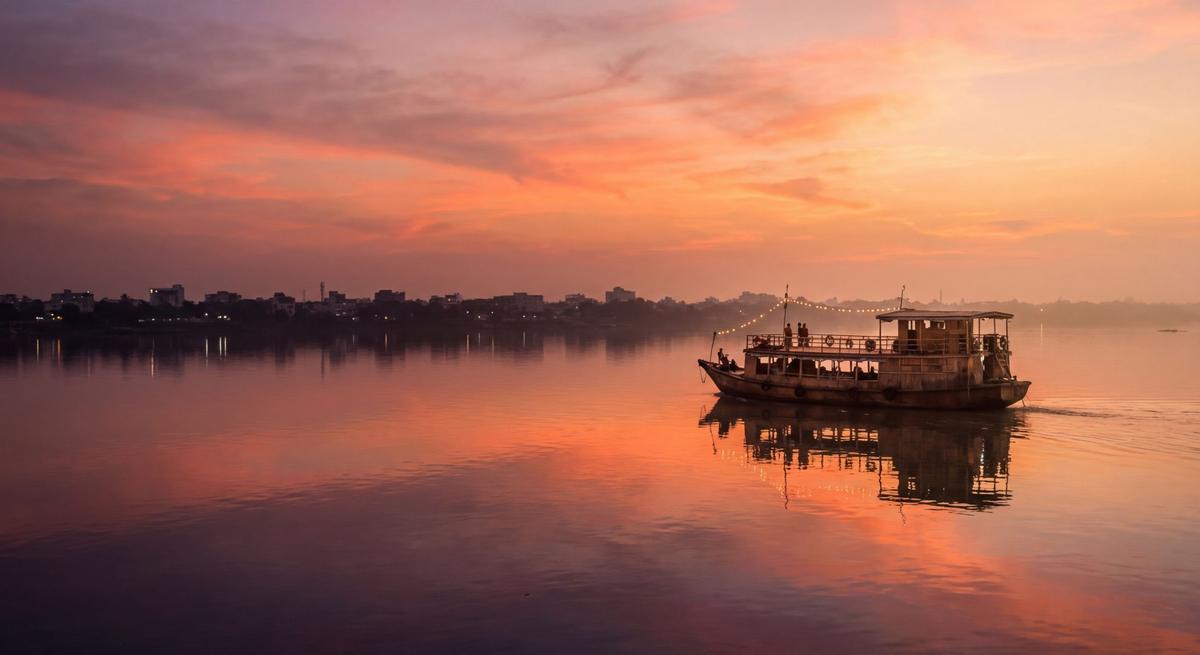
Manikarneswar Temple
Dedicated to Lord Shiva
About This Temple
Manikarneswar Devalaya crowns Manikhalaya hill at Rajaduar in North Guwahati, reached by a climb of roughly a hundred steps from the temple compound gate. The shrine is dedicated to Lord Shiva and has a layered history. The original stone temple is attributed to the Pala dynasty of Kamrup and dated to the tenth or eleventh century, and its distinctive star-shaped ground plan still survives. The brick temple standing today was raised on that older base in 1755 AD by Ahom king Rajeswar Singha, who also endowed arrangements for regular worship. The Rajaduar name, meaning the king's gateway, comes from the Ahom military period. During Rudra Singha's preparations against the Mughals, the pass cut between the Manikarneswar and Chandra Bharati hillocks was the route by which the king reached the Brahmaputra for naval movements from his residence to the north. Early mediaeval sculpture, including an Uma Maheswar panel, has been recovered from the site, and the hilltop gives fine views over the river.
What's Included
All services, accommodations, and amenities covered in this package
Day-by-day sacred itinerary will be customized to your darshan schedule and arrival timings.
The HRDYAM Difference
Unmatched VIP darshan, lineage pandits, and curated pilgrimage comfort
How it Works
Effortless planning, dedicated concierge support, and seamless pilgrimage experiences.
Choose Yatra
Select your sacred destination or fill a short form to share your dates and group size.
Personal Curation
Our yatra experts customize your VIP darshan passes, comfort stays, and private transit.
Start Journey
Experience divine connection with dedicated yatra captains and verified local pandits.
Let us help you plan your next sacred journey
Perfect Pilgrimage come True
Connect with our Astrologers
Enhance your spiritual journey with personalised guidance from our expert Vedic astrologers.

Tanmay Gupta
4+ yrs experience

Shivangi Sharma
5+ yrs experience

Dr Vaibhav Shri
6+ yrs experience

Dr. Aaadietya Pandey
35+ yrs experience
Got Questions?
Frequently Asked Questions
Manikarneswar Temple stands on Manikhalaya hill at Rajaduar in North Guwahati, Assam, reachable by ferry across the Brahmaputra or by road via the Saraighat bridge.
The present brick temple was built in 1755 AD by Ahom king Rajeswar Singha, raised upon the star-shaped stone base of a much older Pala-era temple.
The original stone temple is attributed to the Pala dynasty of Kamrup and dated to around the tenth to eleventh century CE. Its star-shaped ground plan still survives beneath the later brick structure.
The temple is dedicated to Lord Shiva, worshipped as a Shiva Linga in the sanctum.
Rajaduar means the king's gateway. During Ahom king Rudra Singha's campaigns against the Mughals, the pass between the Manikarneswar and Chandra Bharati hillocks served as the king's route to the Brahmaputra for naval journeys.
About a hundred steps lead from the compound entrance up to the temple at the top of the hillock.
The temple is generally open from around 6:00 AM to 6:00 PM daily, with extended hours during Maha Shivaratri.
The climb of roughly a hundred steps makes it moderately demanding. Visitors with limited mobility should plan for a slow ascent with rest stops.
Early mediaeval sculpture recovered from the site includes an Uma Maheswar panel depicting Shiva and Parvati, consistent with the tenth to eleventh century date of the original temple.
Aswaklanta, Dirgheshwari, Doul Govinda, and Rudreswar temples are all in North Guwahati and are commonly visited on the same circuit.