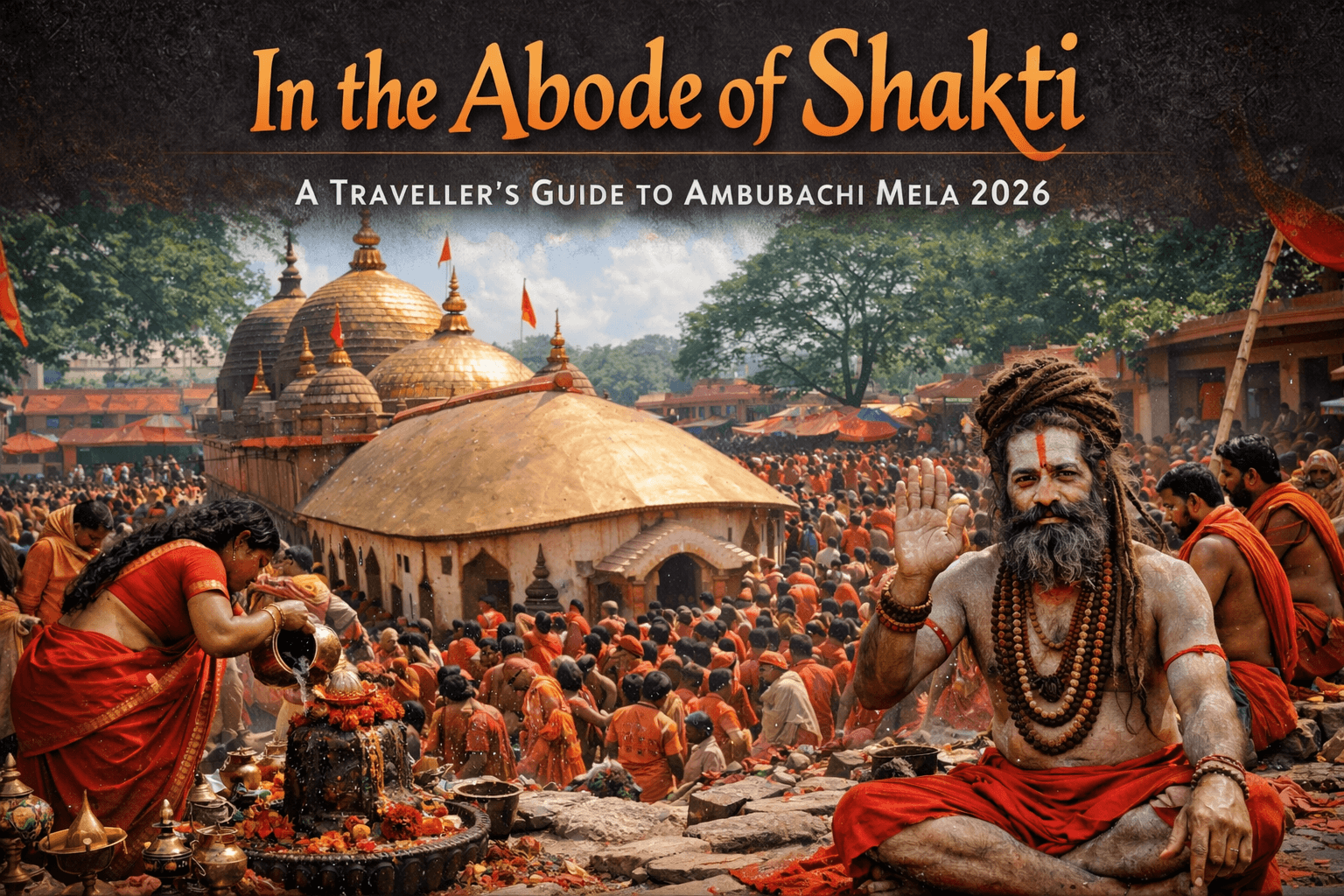
In the Abode of Shakti: A Traveller’s Guide to Ambubachi Mela 2026

Hrdyam
Hrdyam was born from a simple yet powerful belief that no elder should have to give up their spiritual dreams because of age, health, or distance from family. We are not just a travel company. We are compassionate care providers dedicated to assisting senior citizens in fulfilling their spiritual aspirations with dignity, safety, and comfort. At Hrdyam, every journey is thoughtfully designed around the traveler’s physical abilities, medical needs, and emotional pace. From personalized itineraries and senior-friendly accommodations to trained caregivers and real-time family updates, we take complete responsibility so families can have complete peace of mind.
- 1.The Story of Kamakhya Temple: Womanhood, Fertility, and ‘The Bleeding Goddess’
- 2.Ambubachi Mela: A Fusion of Faith, Tradition, and Culture
- 3.Ambubachi Prasad: A Blessing of Divine Grace & Love
- 4.Ambubachi Mela 2026: A Hands-On Guide for Travellers
- 5.Festival Dates
- 6.How to Reach
- 7.Where to Stay
- 8.Tips for Pilgrims & Travellers
- 9.Experience Ambubachi Mela in 2026 with Hrdyam
A visit to Kamakhya Temple during the Ambubachi Mela is an experience of a lifetime. Chaotic, spiritual, deeply symbolic, and unmissable for all Shakti devotees and Tantra sadhakas, this 4-day festival honours the menstrual cycle of the goddess herself. In this blog, we tell you how to prepare for Ambubachi Mela 2026.
In the month of June, the premises of the famous Kamakhya Temple become a gathering hub for mystics, tantric ascetics, Aghori and Naga sadhus, sanyasis, householders, and curious travellers who arrive from across the country and various parts of the world.

It is the season of Ambubachi Mela – a highly revered sacred festival that honours and celebrates the menstrual period of the goddess Kamakhya – a time when Devi enters a period of 3-days of silence and rest.
The word ‘Ambubachi’ comes from the Sanskrit ‘Ambu’, meaning ‘water’ and ‘Vaci’, meaning ‘to flow’. It is a symbolic reference to the monsoon season (when the festival usually takes place), the swelling of the mighty Brahmaputra River, and the fertility and regenerative powers of the Earth.
In India, the monsoons season is a time when nature rests and renews itself, which is why most cultures stop agricultural and spiritual activities during this season.
The Story of Kamakhya Temple: Womanhood, Fertility, and ‘The Bleeding Goddess’
Situated atop the beautiful Nilachal Hills in Guwahati, Assam, is the highly revered Kamakhya Temple. One of the 51 Shaktipeeths and among the four Adi Shakti Peeths, it is the sacred shrine of the presiding goddess of the temple Devi Kamakhya or Kameshvari – the Indian goddess of desire, fertility, and creation. It is the abode of the Great Mother Adi Shakti herself.
According to Puranic texts, the yoni of Devi Sati, the first wife and consort of Shiva, fell here, and hence the Devi was named ‘The Bleeding Goddess’, and the place came to be associated with fertility and the divine feminine.

The temple is believed to have been first built by Kama Deva (the god of eros, desire, and pleasure) with the help of Vishwakarma (the god of architecture and engineering). The present temple, believed to have been constructed over the ruins of the earlier one, was built sometime in the 16th century by the great King Nara Narayan of the Koch dynasty of Assam, under the supervision of his brother Chilarai.
Kamakhya Temple is one of the central seats of Shakta Tantra – one of India’s oldest mystical and spiritual traditions – and it is visited throughout the year by devotees and followers from various spiritual lineages. The temple’s inner sanctum or Garbhagriha, located below ground level, does not have a traditional idol of the goddess.
Rather, it features a 10-inch-deep, natural yoni-shaped cleft in the bedrock that is perpetually kept moist by a deep underground spring, which serves as the primary object of worship. It is believed that the cleft is a volcanic depression in the bedrock, and there is a deep underground source of water that eventually connects with the Brahmaputra River.
Ambubachi Mela: A Fusion of Faith, Tradition, and Culture
One of India’s holiest religious gatherings and the most significant Tantric festival in India often referred to as ‘The Mahakumbh of the East,’ Ambubachi Mela is the time when the goddess goes through her annual menstrual cycle.
Thus, the festival establishes a strong symbolic link between the feminine, nature, fertility, and the divine. For three days, the temple’s inner sanctum remains closed as it is believed that the goddess enters a period of rest and renewal.
During this period, devotees observe strict discipline, keep fasts, and perform various rituals and sadhana. On the fourth day, after observing purification rituals, the temple’s doors reopen to devotees eagerly awaiting to welcome the Mother Goddess.

It is believed that this is a highly auspicious time as the goddess’s energy is replenished and she attains her complete power. So, people come from near and far to pay homage, make offerings, and seek her blessings during the festival.
A great wave of joy, devotion, and spiritual fervour permeates the temple premises during this time. The sweet smell of incense and flowers, the rush of visitors coming and going, and the sound of devotees praying and holy men chanting or playing sacred instruments create an ethereal and vibrant atmosphere that deeply touches the soul and leaves a lasting impression on everyone.
Beyond the spiritual side, Ambubachi Mela is also a cultural celebration of Assam’s rich heritage. During the Mela, one can witness many folk artists and local performers showcasing their music recitals and dance performances, while some simply sit, introspect, and soak everything in a state of blissful union with the divine.
Ambubachi Prasad: A Blessing of Divine Grace & Love
At Ambubachi Mela, everyone gathers like children seeking the blessings of the Great Mother. People from various backgrounds, traditions, and walks of life come to witness and honour the feminine and the sacred cycle of life, and to partake in a grand celebration of the great life-giving force of nature and the Earth itself. And so, the festival is more than a religious or spiritual event. It is a vibrant tapestry of life itself.
At the end of the festival, a consecrated offering, or prasad, is given to devotees to establish a connection between them and the divine. Known as ‘Ambubachi Prasad’, this deeply venerated, sacred blessing signifies divine grace and protection.

Angodak: Sacred water that is collected from the Garbhagriha or sanctum sanctorum, which houses a deep, underground water spring.
Rakta Bastra: A small piece of red cloth that was placed on the goddess during the menstruation period.
Ambubachi Mela 2026: A Hands-On Guide for Travellers
Given below is a comprehensive, hands-on guide for travellers planning to visit the Ambubachi Mela in 2026. We can help you plan your trip and create a detailed itinerary.

Festival Dates
According to the Indian lunar calendar, this year’s dates for Ambubachi Mela are 22-25 June 2026. But the exact timings may vary slightly.
Try to reach Guwahati at least a day or two before the festival starts to avoid any inconvenience.
Day 1: 22 June 2026 – At sunset, the temple doors will close.
Day 2 and Day 3: 23 - 24 June 2026 – The inner sanctum will remain closed for devotees. Cultural and spiritual events will be organised.
Day 4: 25 June 2026 – The temple will reopen the doors for devotees in the evening or next day early in the morning. This is the primary day of darshan and distribution of prasad.
How to Reach
Guwahati is well connected to all major Indian cities by air, rail, and road.
By Air
You can book a direct or connecting flight to Guwahati. The LGBI (Lokpriya Gopinath Bordoloi International) airport is located 20 km from the temple.
By Train
If you travel by train to Guwahati, you can get down at either the Kamakhya Junction or the Guwahati Railway Station.
By Road
Guwahati city is well-connected via national highways. Within the city, you will easily find buses, autos, and taxis that will drop you at the foothills. During the festival, private vehicles are not allowed within the temple premises due to security concerns. So, you will have to walk the rest of the distance.
Where to Stay
You will find many comfortable, safe, and sanitized hotels near Kamakhya Temple. You can also opt for private guesthouses via Airbnb or premium luxury hotels if you prefer a more relaxed, ambient environment. Usually, most places have an in-house restaurant or catering service. You will also find good eating joints within a 1-km radius.
Pre-book your stay at least 10-12 days before your arrival.

Tips for Pilgrims & Travellers
The festival is held during the peak of summer and draws a large crowd of people. Here are some tips that will help you during your visit.
Wear light cotton clothes, and dress modestly.
Carry an umbrella or a raincoat since the monsoon season typically starts during this time.
Avoid wearing expensive jewellery and carrying other valuables, as the area is densely crowded.
You have to remove your footwear in designated areas at the foothill. From here, you have to walk barefoot to the temple premises.
Carry a water bottle and stay hydrated. You may also carry some light fruits (unless you are fasting).
If you are using any medication, be sure to carry your medicines with you, as it may take longer than expected for you to complete your temple visit.
Respect local culture and traditions.
Experience Ambubachi Mela in 2026 with Hrdyam
Experience this sacred mega event with us. Immerse yourself in a journey of cosmic energy, divine blessings, and spiritual awakening, and have an unforgettable experience with Hrdyam.
Key features of our spiritual tour packages:
Hassle-free temple tour.
Well-trained guides and constant support.
Luxury stays at 4-star or 5-star hotels.
24x7 personal caretaker (for senior citizens).
Dedicated and hygienic concierge services.
Exclusive offers and easy cancellations.
Hrdyam offers specially curated, customer-centric spiritual travel packages. We identify your needs, key challenges, and specific requirements and plan itineraries and pilgrimage accordingly to ensure you have a comfortable, safe, and stress-free experience throughout.
Tags
More Articles
View all
Concept of Spiritual Revirgination
Intro Summary For ages, Sanatana Dharma has had purity, spirituality, Ayurveda, and sacred rites like the Haldi ceremony. These old techniques now re-vision contemporary perspectives. The concept of S
What is Hrdyam?
There’s a quieter shift taking place in a world where travel is so often limited to checklists and hurried schedules. More people are looking for meaning today, not simply motion. They are not tourist
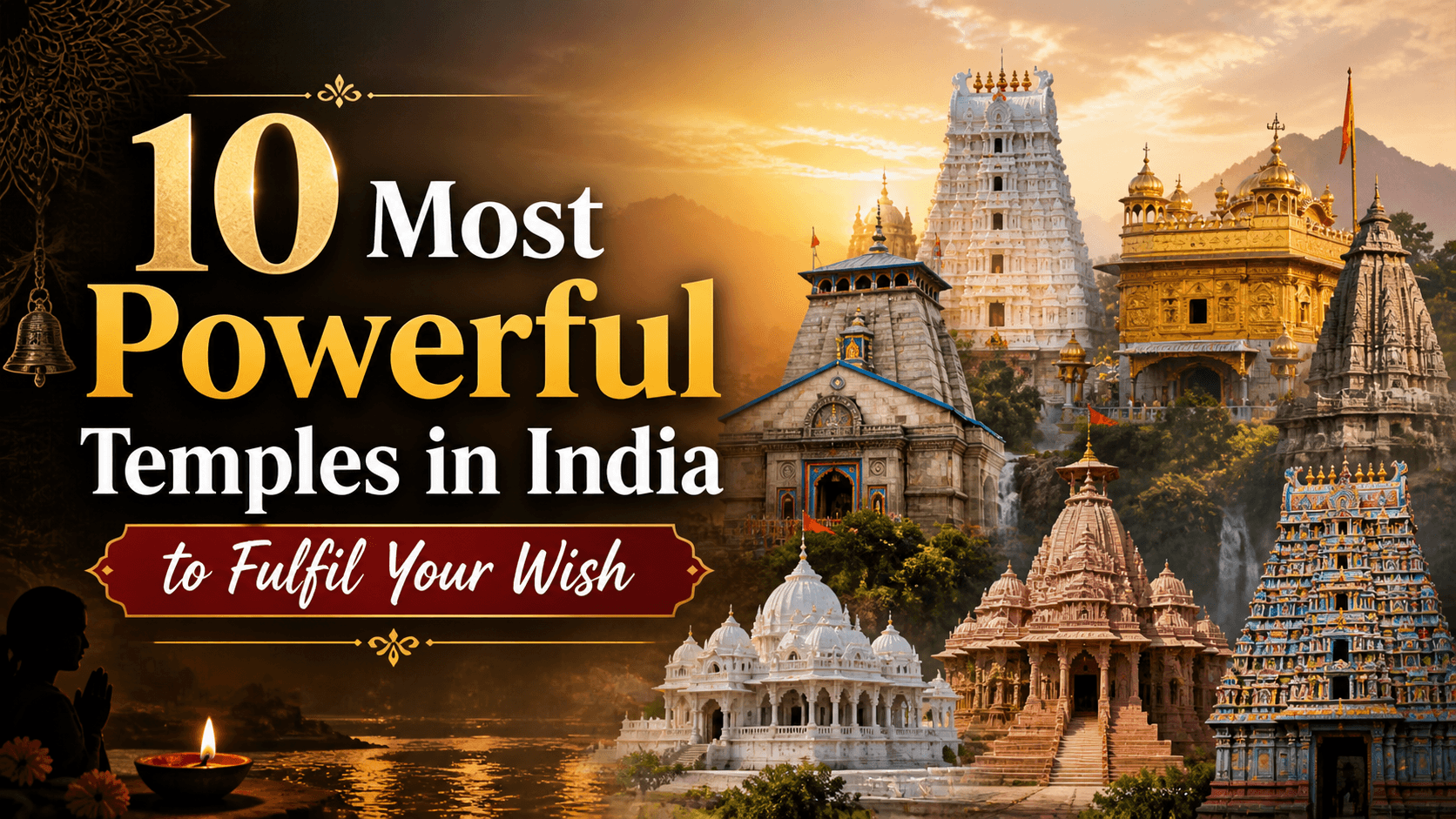
10 Most Powerful Temples in India to Fulfil Your Wish
India is recognised as the place of spirituality where ancient traditions and holy energies still guide millions of believers. Every powerful temple, from the Himalayas to the southern beaches, has it
Ready to Start Your Journey?
Let us help you plan your perfect spiritual or wellness retreat across India's most sacred destinations.
- 1.The Story of Kamakhya Temple: Womanhood, Fertility, and ‘The Bleeding Goddess’
- 2.Ambubachi Mela: A Fusion of Faith, Tradition, and Culture
- 3.Ambubachi Prasad: A Blessing of Divine Grace & Love
- 4.Ambubachi Mela 2026: A Hands-On Guide for Travellers
- 5.Festival Dates
- 6.How to Reach
- 7.Where to Stay
- 8.Tips for Pilgrims & Travellers
- 9.Experience Ambubachi Mela in 2026 with Hrdyam
Ready to Start Your Journey?
Let us help you plan your perfect spiritual or wellness retreat across India's most sacred destinations.